Unlocking Broader Horizons: Manastu’s Technology Across India’s Innovation Landscape
Manastu Space’s advancements in green propulsion are not confined to satellite maneuvering—they signal a transformative wave across India’s space, defense, and technology sectors. The company’s mini-thruster engine, lauded for its efficiency and safety, is poised to influence a spectrum of applications, from small satellites and CubeSats to unmanned aerial vehicles (UAVs). This aligns with India’s strategic push for affordable, high-impact solutions, reinforcing the nation’s emergence as a global innovation hub. The following sections explore how Manastu’s technology is catalyzing change, supported by policy initiatives, academic research, and real-world collaborations.
Catalyzing Next-Generation Spacecraft and UAVs
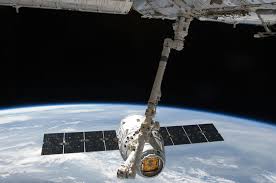
Manastu’s green propulsion system, originally designed for satellites, holds significant promise for India’s burgeoning small satellite and UAV markets. As the Indian government accelerates its focus on cost-effective, scalable space missions, the demand for safer, more efficient thrusters has surged.
In the private sector, startups like Agnikul Cosmos and Skyroot Aerospace are leveraging indigenous propulsion systems to develop next-generation launch vehicles. Skyroot’s Vikram series, for instance, utilizes modular propulsion units for rapid deployment and reusability, demonstrating the commercial viability of homegrown innovation. Manastu’s I-Booster, with its non-toxic propellant, could be adapted for CubeSats and UAVs used in disaster management, precision agriculture, and defense surveillance.
Policy-Driven Ecosystem: IN-SPACe and Atmanirbhar Bharat
The Indian government’s policy framework is instrumental in nurturing such technological advancements. The establishment of the Indian National Space Promotion and Authorisation Centre marks a paradigm shift, enabling private players to collaborate with ISRO and access critical infrastructure. IN-SPACe’s mandate includes streamlining regulatory approvals and fostering public-private partnerships, which have already resulted in joint technology demonstrations and shared launch facilities.
Under the Atmanirbhar Bharat (Self-Reliant India) initiative, indigenous technology development is prioritized, reducing dependence on foreign suppliers and enhancing national security. The National Space Policy 2023 further codifies these objectives, outlining incentives for startups and academic spin-offs. As Dr. Pawan Goenka, Chairman of IN-SPACe, notes, “India’s future in space depends on a robust, collaborative ecosystem where government, industry, and academia work in synergy to drive innovation and commercialization.”
Academic Leadership and Research Synergies
India’s premier academic institutions are pivotal in advancing propulsion technologies and fostering entrepreneurship. The Indian Institute of Technology Bombay (IIT Bombay) and the Indian Institute of Science (IISc) have established dedicated research centers focused on advanced materials, propulsion, and satellite systems. Manastu Space itself is a product of this ecosystem, having originated as a student-led project at IIT Bombay.
These institutions not only provide technical expertise but also serve as incubators for startups, offering mentorship, seed funding, and access to state-of-the-art laboratories. Such initiatives ensure a steady pipeline of talent and innovation, reinforcing India’s competitive edge in the global space economy.
Real-World Impact: Workforce Safety and Community Benefits
The adoption of green propulsion technologies like Manastu’s I-Booster has tangible benefits for India’s space workforce and local communities. Traditional propellants such as hydrazine pose significant health risks, requiring extensive safety protocols and specialized handling. By transitioning to non-toxic alternatives, operational costs are reduced and workplace safety is markedly improved.
A compelling example comes from ISRO’s launch facilities in Sriharikota, where technicians previously donned heavy protective gear to handle hazardous fuels. With the introduction of safer propellants, these workers now operate in less restrictive environments, enhancing both efficiency and morale. Moreover, the cost savings realized through greener operations can be redirected towards community development and educational outreach in space-centric regions.
Expert Perspectives: The Indian Innovation Imperative
Indian thought leaders consistently emphasize the strategic importance of indigenous innovation. Dr. K. Sivan, former ISRO Chairman, has underscored the need for sustainable, cost-effective technologies to maintain India’s leadership in the space sector. Prof. Rangan Banerjee, Director of IIT Bombay, points to the critical role of academic-industry partnerships in nurturing startups like Manastu Space, stating, “The convergence of research, entrepreneurship, and policy support is key to translating laboratory breakthroughs into national assets.”
Industry voices, including Manastu’s co-founders Tushar Jadhav and Ashtesh Kumar, advocate for streamlined regulatory processes and greater investment in R&D. Their journey—from a campus initiative to a nationally recognized enterprise—demonstrates the transformative potential of India’s innovation ecosystem when bolstered by supportive policies and institutional mentorship.
—
This comprehensive integration of technology, policy, research, and community engagement underscores the far-reaching impact of Manastu’s innovations, positioning India at the forefront of sustainable and inclusive space exploration.