Inside The Smart Water Technology That’s Building Intelligent Water Networks While Saving 2 Billion kWh of Energy
Using sensors, automation and artificial intelligence, a real-time digital infrastructure platform is helping utilities detect leaks, predict equipment failures, optimise water distribution and improve energy efficiency across cities and villages.
Updated on: 02 July 2026

Sector

Solution

Technology

State of Origin
Disclaimer:
Features ‘as is’ submissions and neither constitutes endorsement, certification, recommendation, or validation by NITI Aayog nor makes NITI Aayog liable in any manner.
Impact Metrics
2B+ kilowatt-hours of electricity saved
through AI-powered monitoring, automation, and smart infrastructure projects across water and public utility networks.
20+ years of continuous operation
for automated multistage water supply schemes, zonal pumping stations, and drinking water tube wells in Uttarakhand.
15+ years of reliable operation
of AI-enabled SCADA automation for Chandigarh's drinking water tube wells.
Predictive AI for water infrastructure
helping utilities detect leaks early, forecast demand, optimize pumping schedules, and prevent equipment failures before service disruptions occur.
Every drop of water counts.
In the current age, where droughts have become rampant across India — studies suggest around 85 percent of districts in 13 states are now considered high-risk drought zones — this adage holds even more weight. And, in order to conserve every drop, in a literal sense, Anil Agrawal of Ahmedabad-based CIMCON came up with a solution.
His model uses sensors, automation and artificial intelligence to help cities, towns and villages monitor water networks, pumping stations, street lights and other public infrastructure in real time.
By giving utilities continuous visibility into their systems, the company helps detect leaks early, optimise energy use, predict equipment failures and ensure more dependable delivery of water and electricity.
A digital nervous system for the city
How can real-time monitoring of pumps, valves and reservoirs help a city?
According to CIMCON’s digital infrastructure results, it helps reduce water losses, save energy to the tune of more than 2 billion kilowatt-hours of electricity, and improve the reliability of drinking water, irrigation and public lighting systems across India.
As it expands into AI-powered predictive maintenance, flood forecasting and digital twins, CIMCON aims to build infrastructure that works so seamlessly people no longer have to think about whether water or electricity will be available—they can simply rely on it.
At the heart of CIMCON’s technology is a simple idea: infrastructure should be able to communicate before something goes wrong.
To achieve this, the company has built an intelligent monitoring system that functions like a ‘digital nervous system’ for cities. Sensors and communication devices are installed across water pipelines, pumping stations, reservoirs, street lights and other public infrastructure, continuously collecting operational data and transmitting it to a central command centre in real time.
The system tracks a wide range of parameters depending on the application. In water networks, sensors monitor pressure, flow rates, reservoir levels and water quality indicators such as pH, chlorine concentration and turbidity.
This constant stream of data gives utility operators complete visibility over assets that were once managed almost entirely through manual inspections. Instead of waiting for field workers to report a problem, authorities can instantly identify abnormal conditions, locate leakages through pressure drops, monitor water quality, and ensure that supply is reaching intended areas.
Artificial intelligence adds another layer of intelligence by analysing historical and real-time data to identify patterns that humans may miss.
Rather than reacting to equipment failures, utilities can predict when pumps, valves or motors are likely to malfunction and schedule maintenance before disruptions occur. This predictive approach not only reduces downtime but also extends the lifespan of expensive infrastructure while lowering maintenance costs.
The same technology also improves energy efficiency. Large pumps that transport water consume significant amounts of electricity, but AI-driven automation ensures they operate only under optimal conditions and at the right speed.
Similarly, CIMCON’s smart lighting systems remotely monitor street lights, automate switching schedules and adjust brightness during low-traffic hours, reducing unnecessary energy consumption without affecting public safety.
Blending AI into water conservation
Artificial intelligence is increasingly emerging as a powerful tool for tackling one of the world’s most urgent challenges: water conservation. While CIMCON came up with the ingenious solution, all across the world researchers are attempting to innovate in this regard.
A study explores the Smart Gamified Water Conservation System (SGWCS), an integrated platform that combines Internet of Things (IoT) sensors, AI-powered analytics and behavioural science to help monitor water use, detect leaks and encourage people to consume water more responsibly.
The system uses smart water meters to collect real-time data from homes, industries and municipal water networks. AI then analyses this information to forecast water demand, identify unusual consumption patterns that may indicate leaks or faults, and help utilities optimise water distribution before problems arise.
By shifting from reactive maintenance to predictive management, such systems can reduce water wastage, improve operational efficiency and ensure more reliable water supplies.
Beyond infrastructure, the platform also applies AI to influence human behaviour.
Through a mobile application, users receive personalised recommendations, reminders and gamified challenges that encourage water-saving habits. During field deployments in Raipur, India, this approach increased user participation by 28 percent and reduced residential water consumption by an average of 12.5 percent.
While still an emerging approach, SGWCS illustrates how AI can support sustainable water management by combining real-time monitoring, predictive decision-making and citizen engagement. As water scarcity intensifies globally, integrated AI-driven systems like these could play an important role in helping communities, utilities and governments conserve water more effectively.
Other examples lie in CIMCON’s suite of SCADA (Supervisory Control and Data Acquisition) and automation solutions that enable utilities to remotely monitor, control and optimise water infrastructure across cities, towns and villages.
Its systems are designed to manage the entire water supply chain from bore-wells and tube wells to pumping stations, overhead tanks, water treatment plants and distribution networks through a single, centralised platform.
At the source, CIMCON’s SCADA solutions continuously monitor critical electrical and mechanical parameters, including voltage, current, discharge pressure, flow rates, valve operations, overload conditions and bearing temperatures.
This real-time data enables operators to identify faults immediately while ensuring the safe operation of bore-wells and minimising outages, helping maintain an uninterrupted supply of potable water. The systems support a range of water sources, including tube wells, rainy wells and percolation wells.
The success of these solution lies in their longstanding impact.
Automation projects for multistage high-head water supply schemes and zonal pumping stations have been operating successfully for more than 20 years. Water and sewage treatment plants have remained under automated operation and maintenance for over 10 years. Drinking water tube wells in Uttarakhand have been managed through SCADA systems for more than 20 years, while similar automation systems in Chandigarh have been operating continuously for over 15 years, highlighting the durability and scalability of CIMCON’s infrastructure technology.
The scaling of these solutions
Artificial intelligence has the potential to transform water conservation from a reactive exercise into a proactive public service.
Today, AI-powered platforms are already helping utilities monitor water networks in real time, detect leaks before they become major losses, predict equipment failures, optimise pumping schedules and improve energy efficiency.
Companies such as CIMCON have demonstrated how sensors, automation and AI can make water infrastructure more reliable by giving authorities continuous visibility into pipelines, reservoirs and pumping stations. Instead of relying on manual inspections or waiting for complaints, utilities can anticipate problems and intervene before households experience disruptions.
The next challenge is scaling these capabilities so they benefit communities everywhere, not just a handful of cities. This requires moving beyond isolated smart city projects towards interoperable, low-cost digital infrastructure that can be adopted by municipalities of different sizes.
Affordable sensors, cloud-based analytics and edge computing can make AI-driven water management accessible even to resource-constrained local governments. Open data standards and public-private partnerships can further accelerate adoption while reducing implementation costs.
AI also has a role beyond infrastructure. Smart water meters and mobile applications can provide households with personalised insights into consumption, notify users about leaks and encourage conservation through behavioural nudges and gamification.
Early deployments of such systems have shown that AI-powered engagement can meaningfully reduce household water use while increasing public participation in conservation efforts.
Looking ahead, integrating AI with satellite imagery, weather forecasts and climate models could help predict droughts, optimise irrigation schedules and manage reservoirs more effectively. Digital twins of water networks could enable planners to simulate future demand and test interventions before implementing them on the ground.
Ultimately, scaling AI for water conservation is about improving quality of life. Reliable access to water means fewer hours spent collecting it, lower operating costs for utilities, greater resilience to climate change and healthier communities.
When deployed responsibly and made accessible to all, AI can become an invisible but essential layer of public infrastructure that helps ensure every drop of water is used wisely.
Sources:

Share Your Story Today, Shape Viksit Bharat Tomorrow
Got an idea, innovation, or experience that's making a difference? Share your story now and ignite India's transformation because your voice can drive the future forward!
Disclaimer:
Features ‘as is’ submissions and neither constitutes endorsement, certification, recommendation, or validation by NITI Aayog nor makes NITI Aayog liable in any manner.
Resources to Replicate This Idea
BUILD YOUR OWN INTERVENTION
Handpicked stories tailored just for you
Explore stories that inspire, inform, and ignite new ideas across tech, innovation, and real-world impact

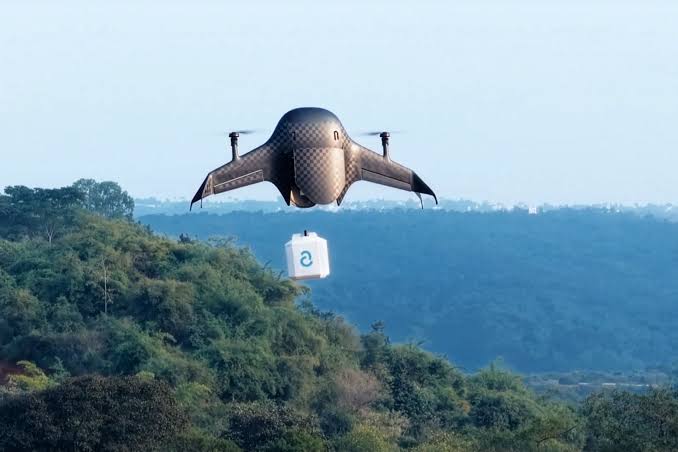
Pilotless Cargo Flights with Zero Failures: Reimagining Diagnostic Logistics in Indian Cities
An energy-efficient autonomous aircraft combining vertical take-off with fixed-wing cruise has completed over 1,000 flights carrying diagnostic samples between hospitals,...
Read More