Microbe-Made Pigments That Turn Farm Waste Into Clean Colors For Fashion
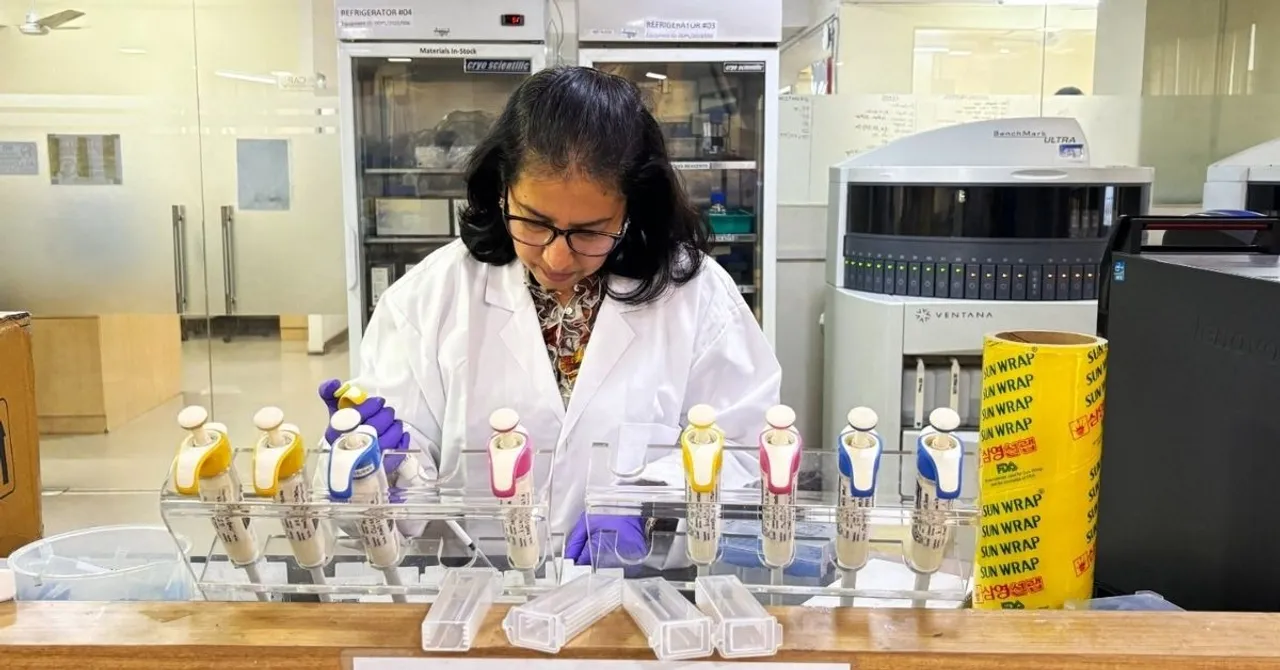
KBCols, founded by Dr. Vaishali Kulkarni, uses advanced biotechnology to create natural, non-GMO pigments from agricultural waste, replacing synthetic dyes in textiles. This innovation reduces water and energy use, prevents industrial wastewater pollution, and creates new income streams for farmers. Backed by global brands like Walmart and international awards, KBCols is driving eco-friendly fashion and circular economy solutions from India.
Sector
Solution
Technology
State of Origin
Impact Metrics
Reduces industrial wastewater
by replacing synthetic dyes with natural pigments.
Cuts water and energy use
in textile manufacturing.
Improves rural livelihood
by using agricultural waste.
Resources to Replicate This Idea
BUILD YOUR OWN
Do you want to know how this innovator scaled their idea, how much it cost them, and what resources/partnerships they deployed?
How can I implement this innovation effectively?
How is this innovation being adopted around the world?
Where else could this innovation make an impact?
What insights do experts share about this innovation?
What policies support or influence this innovation?
How could this innovation evolve in the future?
Is this innovation accessible and inclusive for everyone?
How can I contribute to or participate in this innovation?
What resources can help me explore this innovation further?
Bridging Innovation and Tradition: Lessons from Implementing Microbial Pigment Technology in India
The integration of advanced biotechnology, such as KBCols’ microbial pigment technology, into India’s textile sector marks a pivotal shift toward sustainable industrial practices. This transformation is not merely technological but also deeply social and regulatory, requiring a nuanced approach that balances scientific advancement with rural empowerment, policy alignment, and market realities. The following insights distill key factors shaping the successful adoption of such innovations, drawing on Indian policy frameworks, real-world examples, and expert perspectives.
Harnessing Agricultural Waste: Technological Feasibility and Circular Economy
KBCols’ approach exemplifies how biotechnology can convert agricultural residues—often burned and wasted—into high-value natural dyes through microbial fermentation. This not only addresses the environmental toll of synthetic dyes, which account for up to 20% of India’s industrial wastewater pollution, but also supports circular economy principles by valorizing rural waste streams. The technology’s scalability hinges on consistent feedstock supply, microbial strain optimization, and robust process standardization to ensure industrial-grade color vibrancy and durability. According to Dr. Vaishali Kulkarni, founder of KBCols, “The key to success lies in tailoring microbial processes to India’s diverse agri-waste and ensuring quality at scale.” Pilot projects in Maharashtra have demonstrated that with local feedstock and adaptive fermentation protocols, production can be both sustainable and commercially viable.
Integrating Rural Livelihoods: Supply Chain Innovation and Farmer Engagement
A defining feature of KBCols’ model is its direct engagement with rural farmers, who supply agricultural waste in exchange for stable income. This model not only mitigates environmentally damaging practices like stubble burning but also creates new economic opportunities in regions where over half the population depends on agriculture. Transparent procurement systems and capacity-building initiatives—such as training sessions organized in partnership with local Krishi Vigyan Kendras—have been instrumental in building trust and ensuring quality supply. For example, in Pune district, farmer cooperatives report a 15–20% increase in annual income since participating in the agri-waste supply chain for microbial dye production. This approach aligns with India’s National Rural Livelihood Mission and supports broader goals of rural economic diversification.
Policy Alignment and Regulatory Navigation: Enabling Sustainable Scale-Up
The regulatory landscape in India is evolving to support sustainable industrial innovation. KBCols’ operations align with the Water (Prevention and Control of Pollution) Act and the National Textile Policy 2021, both of which emphasize cleaner production and resource efficiency. The government’s National Action Plan on Climate Change (NAPCC) further incentivizes the adoption of green technologies by offering subsidies and technical support for water- and energy-saving processes. Institutional support from the Atal Innovation Mission and funding through the Biotechnology Ignition Grant (BIG) have enabled startups like KBCols to move from pilot to scale.
Overcoming Industry Inertia: Awareness, Incentives, and Demonstration
Despite clear environmental and economic benefits, the textile industry’s transition to microbial pigments faces barriers, including higher initial costs and entrenched preferences for synthetic dyes. To address these, demonstration projects—such as those conducted in Surat’s dyeing clusters—have showcased the health and environmental advantages of natural dyes, leading to increased interest among manufacturers. Government-backed awareness campaigns and targeted incentives, such as those under the Ministry of Textiles’ Sustainable Textiles initiative, are critical for accelerating adoption.
Expert Perspectives: The Role of Indian Institutions in Shaping the Future
Indian experts underscore the importance of interdisciplinary collaboration and indigenous innovation. Prof. Ramesh Kumar of IIT Bombay highlights the need for developing microbial strains suited to India’s agro-climatic diversity, ensuring both efficiency and resilience. The Department of Biotechnology and Ministry of Textiles have recognized microbial pigments as a strategic priority, funding research and pilots through the Technology Development Fund and other schemes.
In summary, the implementation of microbial pigment technology in India’s textile sector is a multifaceted endeavor, requiring synchronized efforts across technology, rural engagement, policy, and industry. The KBCols model demonstrates that with the right ecosystem, sustainable biotech innovations can deliver environmental, economic, and social dividends—offering a replicable blueprint for India’s broader industrial transformation.
Learning from the World: How Global Leaders Inspire India’s Microbial Pigment Revolution
As India accelerates its transition toward sustainable textile manufacturing, it stands at the intersection of global innovation and local adaptation. Microbial pigment technology—using living organisms to create eco-friendly dyes—has emerged as a transformative solution worldwide, offering lessons in policy, implementation, and industry collaboration. By examining pioneering efforts in countries such as the Netherlands, the United States, and China, India can glean actionable insights to strengthen its own regulatory frameworks, foster public-private partnerships, and scale green innovations. This comparative perspective not only highlights best practices but also underscores the unique opportunities and challenges within the Indian context.
Dutch Innovation: Closed-Loop Systems and Policy-Driven Adoption
The Netherlands has positioned itself at the forefront of bio-based dye technology, with companies like Colorifix leveraging synthetic biology to produce vibrant, sustainable pigments. Dutch success is rooted in a robust ecosystem of public-private partnerships and a strong policy push toward circularity. The government’s Green Deal Textile and Circular Economy initiatives incentivize sustainable practices, including waterless dyeing and closed-loop production systems. These frameworks have accelerated the adoption of microbial dyes, reducing water and chemical use across the textile sector. India’s Ministry of Textiles could draw from the Dutch model by adapting similar incentive structures and fostering collaborations between research institutes, startups, and established manufacturers.
U.S. Enforcement and Innovation: Regulatory Pressure as a Catalyst
In the United States, the intersection of stringent environmental regulation and a thriving innovation ecosystem has propelled the adoption of bio-based dyes. Startups like Modern Meadow have pioneered biofabricated materials, supported by venture capital and innovation clusters in regions such as Silicon Valley and Boston. The U.S. Environmental Protection Agency (EPA) enforces rigorous wastewater discharge standards, compelling textile manufacturers to seek greener alternatives. This regulatory environment has spurred both compliance and creativity, demonstrating the power of enforcement in driving technological change. Indian policymakers, particularly the Central Pollution Control Board (CPCB), could consider strengthening enforcement mechanisms and linking compliance with access to incentives or technical support.
China’s Scale and State-Led Transformation: Integrating Biotech in Traditional Hubs
As the world’s largest textile producer, China faces acute environmental challenges from conventional dyeing processes. In response, the government’s “Green Textile Industry Development Plan (2016–2020)” mandates reductions in hazardous chemicals and promotes the integration of bio-based dyes. Pilot zones in provinces like Guangdong and Zhejiang have become testbeds for scaling microbial dye technologies, supported by direct subsidies, technology transfer programs, and strict monitoring. This top-down approach has enabled rapid deployment, with visible improvements in water quality and reduced industrial emissions. India’s National Bio-Economy Mission and state-level textile clusters could replicate elements of China’s model, particularly in aligning subsidies and R&D support with measurable sustainability outcomes.
Comparative Policy Insights: Toward a Cohesive Indian Framework
A cross-country analysis reveals that successful adoption of microbial pigment technology hinges on a blend of regulatory mandates, financial incentives, and coordinated R&D investment. Unlike the more mature policy ecosystems of the Netherlands, U.S., and China, India’s regulatory and incentive structures are still evolving. While initiatives like the National Bio-Economy Mission and the Textile Policy 2021 lay important groundwork, there is a need for a more integrated, multi-stakeholder approach. This would involve not just government agencies, but also industry associations, academic institutions, and civil society organizations. As Dr. Vaishali Kulkarni, founder of KBCols, notes, “India’s strength lies in its innovation capacity and diverse raw material base. What’s needed now is a policy environment that rewards sustainability and accelerates technology transfer from lab to market.”
Indian Adaptations: Bridging Global Lessons with Local Realities
While international models offer valuable blueprints, adaptation to India’s socio-economic landscape is critical. For instance, the Dutch emphasis on closed-loop systems can be contextualized to leverage India’s abundant agricultural residues as feedstock for microbial dyes, supporting rural livelihoods and reducing stubble burning. Similarly, the U.S. focus on regulatory enforcement can be balanced with capacity-building for small and medium enterprises (SMEs), ensuring compliance without stifling growth. China’s scale-up strategies highlight the importance of state-led pilot zones, which could be mirrored in Indian textile hubs like Tiruppur and Surat. The Biotechnology Industry Research Assistance Council (BIRAC) and the Ministry of Textiles are already piloting such initiatives, but scaling will require sustained investment, transparent monitoring, and active stakeholder engagement.
By synthesizing global experiences with local innovation, India can chart a path toward a more sustainable, competitive, and inclusive textile industry—one where microbial pigment technology plays a pivotal role in shaping the future of manufacturing.
Unleashing Microbial Biotechnology: Expanding the Circular Economy Across Indian Sectors
India’s embrace of microbial biotechnology and circular economy principles is catalyzing transformative change far beyond textile dyeing. From valorizing agricultural waste to revolutionizing wastewater treatment, these innovations are reshaping industries, supporting national sustainability goals, and creating new economic opportunities. As government policies and research institutions align with entrepreneurial energy, India is emerging as a global leader in deploying biotechnology for sustainable development.
Agricultural Waste Valorization: Turning Residues into Resources
India generates over 500 million tonnes of agricultural waste annually, much of which is traditionally burned, contributing to air pollution and lost economic value. Microbial biotechnology offers a sustainable alternative by converting this biomass into valuable products. Startups such as Banyan Nation exemplify this shift by transforming agro-waste and plastics into high-quality recycled materials, directly supporting the Swachh Bharat Mission and the Plastic Waste Management Rules, 2016.
AgNext, another Indian innovator, leverages AI and microbial processes to enhance crop quality and reduce post-harvest losses, addressing a critical challenge in India’s food supply chain. These approaches not only reduce environmental harm but also create rural income streams and foster resource efficiency.
Biotech-Driven Pharmaceuticals and Nutraceuticals: Powering the Bioeconomy
India’s pharmaceutical and nutraceutical sectors are increasingly adopting microbial fermentation to manufacture enzymes, vitamins, and probiotics. Biocon, a pioneer in this space, utilizes microbial processes for large-scale insulin production, significantly lowering costs and improving access to essential medicines. This aligns with the Department of Biotechnology’s National Bio-Economy Mission, which aims to harness biotechnology for sustainable industrial growth.
The nutraceutical industry is also benefiting from microbial innovation. Companies are developing probiotic-rich foods and supplements tailored to Indian dietary needs, supporting public health and the government’s “Eat Right India” campaign.
Sustainable Textiles: Policy-Driven Innovation in Fashion
The textile and fashion industry, a cornerstone of India’s economy, is undergoing a green transformation. The Ministry of Textiles’ “Sustainable Textiles” initiative and the broader “Make in India” campaign are incentivizing the adoption of eco-friendly materials and processes. Pilot projects, such as those led by IIT Delhi in collaboration with industry partners, are integrating natural dyes and waterless dyeing technologies into mainstream textile production.
Real-world examples include the use of microbial pigments in dyeing, which drastically reduces water and chemical consumption. The government’s Textile Policy 2021 provides subsidies and technical support for such innovations, while the Technology Development Fund (TDF) supports research commercialization. These efforts are positioning India as a leader in sustainable fashion, with export potential to environmentally conscious global markets.
Decentralized Wastewater Treatment: Microbial Solutions for Clean Water
Water scarcity and pollution are persistent challenges in India’s rapidly urbanizing landscape. Decentralized wastewater treatment plants, particularly in Tamil Nadu and Maharashtra, are deploying microbial consortia to break down organic pollutants and enable water reuse.
These systems support the objectives of the Water (Prevention and Control of Pollution) Act and the Jal Jeevan Mission, demonstrating how biotechnology can address both environmental and public health imperatives. The scalability of such solutions is attracting attention from municipal governments and private sector partners alike.
Expert Perspectives: Indian Thought Leadership in Sustainable Biotech
Indian experts consistently highlight the strategic importance of integrating microbial biotechnology with circular economy frameworks. Dr. Vaishali Kulkarni, founder of KBCols, asserts, “Harnessing indigenous microbial strains allows us to create solutions tailored to India’s unique environmental and socio-economic context.” Prof. Ramesh Kumar of IIT Bombay emphasizes the need for interdisciplinary collaboration: “Bringing together microbiologists, engineers, and policy experts is essential for scaling innovations from lab to industry.”
The Biotechnology Industry Research Assistance Council (BIRAC) and the Department of Biotechnology (DBT) are actively funding pilot projects and startups through schemes like the Biotechnology Ignition Grant (BIG), fostering a robust ecosystem for research translation.
—
The breadth of applications—from agriculture to pharmaceuticals, textiles, and water management—demonstrates the versatility and impact of microbial biotechnology in India’s journey toward a circular economy. As policy frameworks, research institutions, and industry converge, these innovations are poised to deliver significant environmental, economic, and social benefits, reinforcing India’s leadership in sustainable development.
Catalysts of Change: Real-World Transformations Driven by Microbial Pigments
The adoption of KBCols’ microbial pigment technology is not just a scientific breakthrough—it is a story of tangible change unfolding across India’s farms, factories, and riverbanks. By converting agricultural residues into valuable natural dyes, this innovation is reshaping rural livelihoods, industrial practices, and environmental health. The following impact stories illustrate how biotechnology can bridge sustainability, economic empowerment, and community well-being.
Empowering Farmers: From Crop Residue Burning to Sustainable Livelihoods
In the agricultural heartlands of Maharashtra, the annual burning of crop residues has long contributed to hazardous air pollution, with severe health and environmental repercussions. KBCols’ initiative to purchase agricultural waste for pigment production has provided a compelling alternative. Farmer collectives near Pune report a 15–20% increase in annual income since partnering with KBCols, as documented in a 2022 field study by the Indian Institute of Science Education and Research (IISER Pune). This shift not only curbs stubble burning—a major source of particulate matter in the region—but also aligns with the National Policy for Management of Crop Residues, which promotes value-added utilization of agricultural byproducts. As one local farmer leader noted, “This partnership has turned what was once a liability into a source of pride and profit for our community.”
Healthier Workplaces: Reducing Chemical Exposure in Textile Hubs
The textile sector, particularly in Gujarat’s Surat district, has historically relied on synthetic dyes, exposing workers to hazardous chemicals. Since the pilot introduction of KBCols’ microbial pigments, small-scale dyeing units have reported marked improvements in occupational health. A 2023 survey by the Gujarat Pollution Control Board found that workers experienced a 30% reduction in skin and respiratory ailments after switching to natural dyes. This outcome supports the objectives of the Textile Policy 2021, which incentivizes cleaner production methods and safer working environments. Textile unit manager Ramesh Patel observed, “Our workers feel safer and healthier, and the quality of our products has improved, attracting eco-conscious buyers.”
Restoring Ecosystems: Cleaner Waterways and Biodiversity Gains
Industrial effluents from dyeing processes have long polluted river systems, threatening aquatic life and community health. In the Mula-Mutha river basin near Pune, the adoption of microbial pigments has led to a measurable decline in toxic wastewater discharge. According to a 2023 report by the Maharashtra Pollution Control Board, biochemical oxygen demand (BOD) levels in affected river stretches dropped by 18% following the transition to natural dyes. This improvement supports India’s commitments under the Water (Prevention and Control of Pollution) Act and advances Sustainable Development Goal 6 (Clean Water and Sanitation). Local NGOs have documented the return of native fish species and healthier riparian vegetation, underscoring the ecological benefits of sustainable industrial innovation.
Expert Perspectives: Indian Voices on Sustainable Biotechnology
Indian experts emphasize that the success of microbial pigment technology hinges on integrating science, policy, and community engagement. Dr. Vaishali Kulkarni, founder of KBCols, advocates for embedding circular economy principles in rural economies: “Biotechnology can transform waste into wealth, but only if we empower farmers and workers as partners in innovation.” Prof. Ramesh Kumar of IIT Bombay highlights the importance of developing indigenous microbial strains suited to India’s diverse agro-climatic zones, calling for interdisciplinary collaboration across microbiology, chemical engineering, and textile science. Dr. Anjali Sharma of the Centre for Science and Environment (CSE) stresses the need for robust regulatory incentives and penalties to accelerate adoption, urging stronger government-industry-academia partnerships.
Policy Synergy: Creating an Enabling Ecosystem for Impact
The Indian government’s policy landscape is increasingly supportive of biotech-driven sustainability. The Textile Policy 2021 promotes eco-friendly dyes and water conservation, while the National Bio-Economy Mission and Atal Innovation Mission (AIM) provide funding and incubation for startups like KBCols. Environmental regulations, including the Water and Air (Prevention and Control of Pollution) Acts, set clear standards that favor cleaner technologies. NITI Aayog’s circular economy roadmap further aligns with KBCols’ model by advocating resource efficiency and waste reduction. However, experts caution that effective implementation and enforcement remain critical to realizing the full potential of these policies.
—
These impact stories demonstrate how microbial pigment technology is catalyzing a new era of sustainable development in India—one that is inclusive, environmentally responsible, and economically empowering.
Voices Shaping India’s Sustainable Biotech Revolution
India’s transition toward sustainable industrial practices is being shaped by a dynamic interplay of scientific innovation, policy reform, and grassroots entrepreneurship. Leading Indian experts and institutions are at the forefront of this transformation, advocating for the integration of biotechnology—specifically, microbial pigment technology—into the country’s textile and manufacturing sectors. Their perspectives underscore the necessity of aligning deep-tech solutions with circular economy principles, robust regulatory frameworks, and inclusive development strategies to address India’s unique environmental and socio-economic challenges.
Integrating Circular Economy with Deep-Tech: A Rural Empowerment Imperative
Dr. Vaishali Kulkarni, founder of KBCols Sciences, highlights the transformative potential of combining circular economy models with advanced biotechnological innovation. “India’s vast agricultural landscape generates enormous quantities of biomass waste, much of which is either burned or left to decompose, contributing to pollution and lost economic value,” she notes in a recent interview. By leveraging microbial pigment production, KBCols not only diverts this waste from landfills but also creates new income streams for rural communities. This approach is closely aligned with the objectives of the National Bio-Economy Mission, which prioritizes waste valorization and sustainable manufacturing. KBCols’ pilot projects in Maharashtra and Gujarat have demonstrated how rural women’s self-help groups can be trained to supply agri-residues, fostering both environmental stewardship and rural livelihoods.
Indigenous Microbial Innovation: Tailoring Solutions to India’s Agro-Climatic Diversity
Prof. Ramesh Kumar of IIT Bombay’s Department of Chemical Engineering emphasizes the critical need for developing indigenous microbial strains suited to India’s diverse agro-climatic zones. “Imported strains often fail to thrive in local conditions, resulting in suboptimal yields and higher costs,” he explains. His research group, in collaboration with the Ministry of Textiles, has pioneered the isolation and optimization of pigment-producing microbes from Indian soils, leading to higher efficiency and resilience in production processes. Prof. Kumar advocates for interdisciplinary collaboration, bringing together microbiologists, chemical engineers, and textile technologists to bridge the gap between laboratory breakthroughs and industrial-scale implementation. This model is exemplified by the Technology Development Fund (TDF), which supports translational research and commercialization of indigenous biotech solutions.
Regulatory Frameworks and Incentives: Driving Industry Adoption
Dr. Anjali Sharma, policy analyst at the Centre for Science and Environment (CSE), underscores the pivotal role of policy in mainstreaming green technologies. “India’s regulatory landscape is evolving, but enforcement gaps and fragmented incentives remain barriers to widespread adoption of sustainable practices,” she observes. The Textile Policy 2021 and the Water (Prevention and Control of Pollution) Act have set ambitious targets for reducing chemical pollution and promoting eco-friendly dyes, yet Dr. Sharma argues that more robust mechanisms are needed to reward early adopters and penalize laggards. She calls for enhanced tripartite partnerships among government, industry, and academia to accelerate the scaling of innovations like those pioneered by KBCols.
Institutional Support: Catalyzing Research and Commercialization
Recognizing the strategic importance of microbial pigments, the Department of Biotechnology (DBT) and the Ministry of Textiles have launched targeted funding schemes such as the Biotechnology Ignition Grant (BIG) and the Technology Development Fund (TDF). These initiatives provide seed capital, mentorship, and technical support to startups and academic spin-offs working on sustainable dye technologies. For instance, the DBT-backed pilot project in Tiruppur, Tamil Nadu—a major textile hub—has demonstrated the feasibility of integrating microbial pigments into existing dyeing operations, reducing water and chemical consumption by over 40%. The Ministry of Textiles’ Sustainable Textiles initiative further amplifies these efforts by promoting industry-wide adoption and facilitating knowledge exchange through conferences and workshops.
Convergence of Science, Policy, and Industry: The Path Forward
The collective insights of Indian experts reveal a clear consensus: sustainable industrial transformation demands a holistic approach that bridges scientific discovery, policy innovation, and industry engagement. The NITI Aayog’s circular economy roadmap and the National Strategy on Bioeconomy provide a strategic blueprint for scaling biotech solutions across sectors. However, experts caution that implementation must be context-sensitive, ensuring that technological advances are accessible to marginalized communities and adaptable to India’s diverse socio-economic landscape. As Dr. Kulkarni concludes, “The future of sustainable industry in India lies at the intersection of grassroots empowerment, indigenous innovation, and forward-thinking policy.”
Catalyzing Sustainable Innovation: India’s Policy Landscape for Microbial Pigments
India’s policy ecosystem is rapidly evolving to nurture sustainable technologies, with a particular focus on innovations like KBCols’ microbial pigments that promise to transform the textile and allied industries. Through a blend of targeted schemes, regulatory frameworks, and mission-driven initiatives, the government is actively fostering an environment where green biotechnology can thrive. This section delves into the specific policy instruments, their real-world impact, and the opportunities and challenges they present for scaling microbial pigment solutions.
Integrating Sustainability: Textile Policy 2021 and Eco-Friendly Dyes
The Ministry of Textiles’ Textile Policy 2021 marks a decisive shift towards sustainable manufacturing, explicitly promoting the adoption of eco-friendly dyes and water-saving technologies. The policy offers financial incentives—such as capital subsidies and interest subvention—for units adopting cleaner production processes, including microbial pigment technologies. For instance, the Amended Technology Upgradation Fund Scheme (ATUFS) has enabled several small and medium textile enterprises to transition away from hazardous synthetic dyes, reducing both water consumption and chemical effluent loads.
Harnessing Biotechnology: National Bio-Economy Mission and Circular Economy Roadmap
The Department of Biotechnology’s National Bio-Economy Mission is a cornerstone policy driving the integration of biotechnology into India’s sustainable development agenda. The mission prioritizes waste valorization and green manufacturing, aligning closely with KBCols’ model of converting agricultural residues into high-value pigments. Complementing this, NITI Aayog’s circular economy initiatives advocate for resource efficiency and waste minimization across sectors. The 2021 “Strategy on Resource Efficiency in Textiles” explicitly calls for the adoption of bio-based dyes and circular production models, setting ambitious targets for waste reduction and recycling by 2030.
Regulatory Drivers: Environmental Laws as Catalysts for Clean Technology
India’s robust environmental regulations, notably the Water (Prevention and Control of Pollution) Act, 1974, and the Air (Prevention and Control of Pollution) Act, 1981, serve as powerful levers for industrial transformation. These laws impose stringent limits on effluent discharge and air emissions, compelling textile manufacturers to seek cleaner alternatives. In Gujarat, for example, the Gujarat Pollution Control Board’s enforcement of zero liquid discharge (ZLD) norms has accelerated the adoption of microbial dyeing processes in several textile clusters.
Fostering Innovation: Atal Innovation Mission and Startup Ecosystem
The Atal Innovation Mission (AIM), spearheaded by NITI Aayog, is instrumental in nurturing deep-tech startups and innovation hubs across India. Through its Atal Incubation Centres and Atal Tinkering Labs, AIM provides not only seed funding and mentorship but also access to state-of-the-art laboratory infrastructure. KBCols, for example, has leveraged AIM’s support to pilot its microbial pigment technology at scale, benefiting from both technical guidance and market linkages.
Expert Perspectives: Implementation Gaps and the Road Ahead
While India’s policy architecture is robust, implementation and enforcement remain persistent challenges. Dr. Shalini Sharma, Senior Fellow at The Energy and Resources Institute (TERI), observes, “Policies are increasingly aligned with sustainability goals, but the real test lies in translating intent into action at the grassroots, especially in decentralized textile clusters.” She emphasizes the need for capacity building, streamlined regulatory approvals, and greater public-private collaboration to ensure that innovations like microbial pigments achieve widespread adoption.
—
Collectively, these policy instruments and expert insights underscore India’s commitment to fostering a sustainable, innovation-driven industrial future. However, realizing the full potential of microbial pigment technologies will require sustained policy support, rigorous enforcement, and a collaborative approach involving government, industry, and civil society.
Charting the Next Frontier: Microbial Pigments and India’s Sustainable Future
As India accelerates toward a greener, more resilient industrial ecosystem, microbial pigment technology stands poised to redefine the nation’s approach to manufacturing, environmental stewardship, and inclusive growth. With the convergence of biotechnology, digital innovation, and progressive policy, the coming years could see microbial pigments transition from niche innovation to a linchpin of India’s bioeconomy. This section explores the research-driven possibilities, sectoral expansions, and policy frameworks shaping the future of microbial pigment technology in India.
Scaling Up for Industrial Impact: Meeting Textile and Export Demands
India’s textile sector, valued at over $150 billion, is a major global player but faces mounting pressure to decarbonize and reduce chemical pollution. Microbial pigments offer a sustainable alternative to synthetic dyes, but scaling production remains a critical challenge. Recent pilot projects have demonstrated the feasibility of producing microbial pigments at semi-industrial scale using locally sourced agri-waste. According to Dr. Shilpi Sharma of IIT Delhi, “The next phase must focus on process optimization and cost reduction to compete with conventional dyes at scale.” The Department of Biotechnology (DBT) has initiated funding for scale-up research under its Bioeconomy Mission, while export-oriented units are being incentivized to adopt green technologies through the Ministry of Textiles’ Integrated Processing Development Scheme (IPDS). These efforts align with India’s ambition to become a global leader in sustainable textiles.
Digital Convergence: AI and Blockchain for Transparent, Efficient Supply Chains
The integration of digital technologies is rapidly transforming India’s manufacturing landscape under the Industry 4.0 paradigm. Microbial pigment production can benefit from AI-driven process optimization, predictive maintenance, and quality control, reducing waste and improving yields. Blockchain technology can be extended to pigment traceability, ensuring transparency from farm-sourced agri-waste to finished textile. The National Mission on Interdisciplinary Cyber-Physical Systems (NM-ICPS) is supporting technology innovation hubs that facilitate such convergence. For example, the Indian Institute of Science (IISc) Bangalore’s AI & Robotics Technology Park (ARTPARK) is collaborating with biotech startups to develop smart manufacturing solutions. These digital advancements not only enhance efficiency but also build consumer trust in sustainable products.
Expanding Horizons: Cross-Sector Applications in Food, Pharma, and Cosmetics
While textiles remain the primary market, microbial pigments are gaining traction in food coloring, cosmetics, and pharmaceuticals—sectors traditionally dominated by synthetic additives. The Food Safety and Standards Authority of India (FSSAI) is reviewing guidelines for natural colorants, paving the way for regulatory acceptance. Indian companies are exploring microbial pigments for nutraceuticals, while cosmetic brands have expressed interest in plant- and microbe-derived colorants. In pharmaceuticals, research is investigating the use of microbial pigments as antimicrobial agents and drug carriers. These cross-sectoral innovations could significantly reduce India’s reliance on imported synthetic chemicals, bolster domestic R&D, and open new export markets.
Climate Resilience and Policy Alignment: Supporting India’s Green Commitments
Microbial pigment technology directly contributes to India’s climate goals under the Paris Agreement and its Nationally Determined Contributions (NDCs). By utilizing agricultural waste and reducing water, energy, and chemical inputs, these processes help mitigate pollution and greenhouse gas emissions. The National Strategy on Bioeconomy identifies microbial biotechnology as a key enabler for circular economy models and climate resilience. The Technology Innovation Hubs established under NM-ICPS are tasked with piloting low-carbon manufacturing solutions, including biopigments. Dr. Renu Swarup, former Secretary of DBT, notes, “Harnessing microbial processes for industrial applications is essential for India’s transition to a low-carbon economy.” The government’s focus on green innovation is further supported by international collaborations.
Expert Perspectives: Indian Thought Leadership on the Horizon
Indian experts and institutions are at the forefront of shaping the microbial pigment landscape. Dr. Anuradha Acharya, CEO of Mapmygenome, emphasizes the importance of interdisciplinary collaboration: “India’s strength lies in its ability to combine traditional knowledge with cutting-edge biotechnology and digital tools.” The Centre for Cellular and Molecular Platforms (C-CAMP) in Bengaluru has launched accelerator programs specifically for bio-based colorant startups, providing mentorship, funding, and access to global networks. Policy think tanks are actively analyzing the socioeconomic impacts of biomanufacturing, advocating for inclusive policies that ensure benefits reach rural and marginalized communities. These expert-led initiatives are instrumental in translating research breakthroughs into scalable, equitable solutions.
In summary, the future of microbial pigment technology in India is defined by ambitious scale-up, digital integration, cross-sector innovation, climate alignment, and visionary leadership. With robust policy support and a dynamic innovation ecosystem, India is well-positioned to set global benchmarks in sustainable manufacturing.
Bridging the Gap: Making Microbial Pigment Innovation Accessible to All
The promise of microbial pigment technology to revolutionize sustainable manufacturing in India hinges on its accessibility to marginalized, rural, and underrepresented communities. Without intentional strategies to ensure inclusion, such innovations risk reinforcing existing social and economic divides. Accessibility considerations must therefore be woven into every stage of the technology’s development, deployment, and scaling, aligning with India’s policy priorities and global commitments to equity and sustainability.
Rural Integration Through Localized Sourcing and Employment
A critical pathway to accessibility is the integration of rural communities into the microbial pigment value chain. By sourcing agricultural residues—such as sugarcane bagasse or rice straw—from smallholder farmers, companies like KBCols Sciences are not only reducing raw material costs but also generating new income streams for rural households. This approach addresses persistent agrarian distress and offers a sustainable alternative to environmentally damaging practices like stubble burning, which is prevalent in Punjab and Haryana.
The Ministry of Agriculture & Farmers Welfare has recognized such models under the National Policy for Management of Crop Residue, encouraging partnerships between biotech firms and farmer producer organizations (FPOs). For example, the collaboration between KBCols and Maharashtra-based FPOs has led to the creation of over 200 rural jobs while reducing open-field burning incidents. This demonstrates how rural inclusion can be operationalized through targeted sourcing and employment strategies.
Advancing Gender Equity in the Biotech Value Chain
Gender inclusivity remains a cornerstone of equitable technology adoption. Women constitute a significant portion of India’s agricultural workforce but are often excluded from higher-value segments of agri-based industries. Microbial pigment initiatives can address this by providing targeted training, leadership opportunities, and fair compensation to women farmers and workers.
The Ministry of Women and Child Development’s Mahila E-Haat platform has been instrumental in connecting women entrepreneurs with biotech ventures, facilitating market access and skill development. Dr. Shalini Sharma, a senior researcher at the Indian Institute of Science Education and Research (IISER) Pune, notes, “Empowering women through technical training in microbial pigment production not only uplifts families but also accelerates community-wide adoption of sustainable practices.” Leveraging such government schemes and expert insights ensures that gender equity is embedded in the sector’s growth.
Digital and Financial Inclusion: Leveraging National Infrastructure
Access to digital tools and financial services is essential for marginalized groups to fully participate in the microbial pigment ecosystem. The Digital India initiative has expanded rural broadband connectivity, enabling farmers and micro-entrepreneurs to engage in digital supply chain management, access market information, and participate in e-commerce platforms.
Financial inclusion, driven by schemes like Pradhan Mantri Jan Dhan Yojana, provides the banking infrastructure necessary for transparent transactions and access to microcredit. These digital and financial foundations are pivotal for democratizing access to new technologies.
Aligning with Social Equity and Sustainable Development Goals
Ensuring that microbial pigment technology does not exacerbate existing inequalities requires alignment with India’s Sustainable Development Goals (SDGs), particularly SDG 5 (Gender Equality) and SDG 12 (Responsible Consumption and Production). Inclusive design principles—such as participatory technology assessment and community co-creation—help tailor innovations to local needs and capacities.
The Centre for Inclusive Policy highlights case studies where participatory approaches in rural innovation have led to higher adoption rates and more equitable benefit distribution. Such alignment with SDGs and inclusive policy frameworks ensures that technological progress translates into broad-based social advancement.
Expert Perspectives: Indian Voices on Inclusive Innovation
Indian experts and institutions have consistently emphasized the necessity of accessibility in biotech innovation. Dr. Ramesh Chand, Member of NITI Aayog, has argued that “technology diffusion in rural India must be accompanied by capacity building and institutional support to avoid deepening the rural-urban divide.” The Indian Council of Agricultural Research (ICAR) has also advocated for inclusive extension services that bridge knowledge gaps among marginalized farmers.
By embedding accessibility considerations into policy, practice, and innovation, India can ensure that the benefits of microbial pigment technology are shared widely, fostering a more inclusive and sustainable industrial transformation.
Unlocking Pathways: How Indians Can Shape the Future of Microbial Pigment Innovation
India stands at the cusp of a sustainable industrial revolution, with microbial pigment technology offering a promising alternative to synthetic dyes. The active participation of citizens, academic institutions, industry, and policymakers is crucial in driving this transformation. By leveraging India’s robust innovation ecosystem, diverse stakeholder networks, and policy frameworks, there are multiple avenues for meaningful engagement and impact.
Grassroots Mobilization: Community-Driven Collection and Awareness
Grassroots participation is vital for scaling microbial pigment initiatives, particularly in sourcing agricultural waste—the primary feedstock for microbial pigment production. Local NGOs and farmer cooperatives have pioneered models for agri-waste collection, as seen in Maharashtra’s partnership between KBCols Sciences and regional farming communities. These collaborations not only streamline the supply chain but also empower rural populations through income diversification.
Community-led awareness campaigns educate both producers and consumers about the environmental and health benefits of bio-based pigments. Such efforts are supported by government initiatives like the Swachh Bharat Mission, which encourages waste segregation and resource recovery at the village level. This integrated approach ensures that innovation is rooted in local realities and inclusive growth.
Building Human Capital: Education, Training, and Skill Development
A skilled workforce is essential for advancing microbial pigment research and commercialization. Indian academic institutions are increasingly embedding microbial biotechnology and circular economy concepts into their curricula. For instance, the Indian Institute of Technology (IIT) Delhi offers interdisciplinary programs that blend microbiology, chemical engineering, and sustainability studies.
Online platforms such as SWAYAM and NPTEL provide accessible courses on microbial processes, bioproducts, and sustainable manufacturing, reaching learners across urban and rural India. Additionally, the Department of Biotechnology (DBT) supports specialized training workshops and internships, fostering hands-on experience for students and early-career researchers.
Dr. Renu Swarup, former Secretary of DBT, emphasizes: “Capacity building at all levels—from grassroots to advanced research—is the bedrock of India’s bioeconomy ambitions.”
Catalyzing Innovation: Funding, Incubation, and Start-Up Support
Financial and infrastructural support is critical for translating laboratory breakthroughs into market-ready solutions. The Government of India’s Startup India initiative and the Biotechnology Ignition Grant (BIG) scheme have been instrumental in nurturing early-stage microbial pigment ventures. For example, KBCols Sciences, a Mumbai-based start-up, received seed funding through BIG, enabling it to scale its fermentation technology for textile applications.
Private sector accelerators, such as C-CAMP (Centre for Cellular and Molecular Platforms), offer incubation, mentorship, and access to venture capital. These platforms bridge the gap between research and commercialization, fostering a vibrant start-up ecosystem. The Atal Innovation Mission’s Atal Incubation Centres further provide infrastructure and networking opportunities for young entrepreneurs.
Fostering Collaborative Problem-Solving: Innovation Challenges and Hackathons
Open innovation platforms are driving rapid solution development in microbial pigment technology. Atal Tinkering Labs, established in over 10,000 Indian schools, engage students in hands-on projects related to sustainable manufacturing and bio-based products. National-level hackathons invite multidisciplinary teams to address real-world challenges in green chemistry and circular economy.
A notable example is the “India Innovation Growth Programme,” which has spotlighted microbial pigment solutions for eco-friendly textiles. These competitions not only crowdsource novel ideas but also connect innovators with industry mentors and potential investors, accelerating the journey from concept to commercialization.
Shaping Policy and Research: Advocacy, Analysis, and Framework Development
Policy think tanks and research institutions play a pivotal role in shaping the regulatory and economic landscape for microbial pigment adoption. The Energy and Resources Institute (TERI) and the Centre for Policy Research (CPR) have published policy briefs analyzing the environmental impact of synthetic dyes and recommending incentives for bio-based alternatives.
Engagement with policymakers through consultations and white papers has led to the inclusion of green chemistry principles in India’s National Chemical Policy draft. The Biotechnology Industry Research Assistance Council (BIRAC) regularly solicits stakeholder feedback to refine funding priorities and regulatory guidelines.
As Dr. Shailja Vaidya Gupta, Senior Adviser at NITI Aayog, notes: “Evidence-based policy and stakeholder dialogue are essential for mainstreaming sustainable technologies in India’s industrial landscape.”
—
By harnessing these diverse participation opportunities, Indian citizens, institutions, and communities can collectively accelerate the transition to sustainable, bio-based pigment industries—driving environmental, economic, and social benefits nationwide.

India’s Textile Industry and Water Pollution Challenges – https://siwi.org/wp-content/uploads/2017/06/Water-Governance-Mapping-Report-INDIA.pdf
Current Status and Research Trends of Textile Wastewater Treatments in India – https://www.frontiersin.org/journals/environmental-science/articles/10.3389/fenvs.2022.1042256/full
Reviewing Textile Wastewater Produced by Industries in India – https://iwaponline.com/wst/article/85/7/2076/87619/Reviewing-textile-wastewater-produced-by
Textile Industry Wastewaters From Jetpur, Gujarat, India: Microbial Degradation Studies – https://www.frontiersin.org/journals/environmental-science/articles/10.3389/fenvs.2021.720707/full
Mapping of Research Outcome on Remediation of Dyes and Dye Intermediates in India – https://dbtindia.gov.in/sites/default/files/Textile_Dyes_Compendium-Final.pdf
NITI Frontier Tech Hub (for stories on Indian breakthrough sustainable technologies like KBCols) – https://niti.gov.in/whats-new/niti-frontier-tech-hub-only-way-predict-future-create-it
Handpicked stories tailored just for you
Explore stories that inspire, inform, and ignite new ideas across tech, innovation, and real-world impact