Nagpur is Building Connected, Technology-Enabled Learning Spaces in Maharashtra's Villages
D.R.E.A.M. Rooms transforms rural education in Nagpur by converting village buildings into smart libraries with digital tools, improving access to learning, STEM education, and digital literacy for 2,00,000+ beneficiaries.
Updated on: 05 June 2026

Sector

Solution

Technology

State of Origin
Impact Metrics
2,00,000+ beneficiaries
across rural Nagpur, including students, women, youth, farmers, SHGs, and elderly citizens.
100% village-level access shift
for many users who earlier depended on urban libraries for study and digital resources.
Women’s digital inclusion improved
with increased access to government schemes, information, and online services in safe spaces.
The D.R.E.A.M. (Dedicated Reading Rooms for Empowerment, Awareness and Motivation) initiative by Zilla Parishad Nagpur in Maharashtra addresses a structural gap in rural education infrastructure—limited access to modern, inclusive, and technology-enabled learning spaces within villages. Spearheaded under the leadership of Vinayak Mahamuni, CEO of Zilla Parishad Nagpur, the initiative responds to a long-standing challenge where students in rural areas had to travel to nearby towns for libraries, digital content, or competitive exam preparation resources.
This dependence not only created financial and time burdens but also weakened consistent study habits. Simultaneously, multiple government buildings in villages remained underutilised, representing untapped public infrastructure that could be reimagined for community learning.
Student voice as design input—building from ground realities
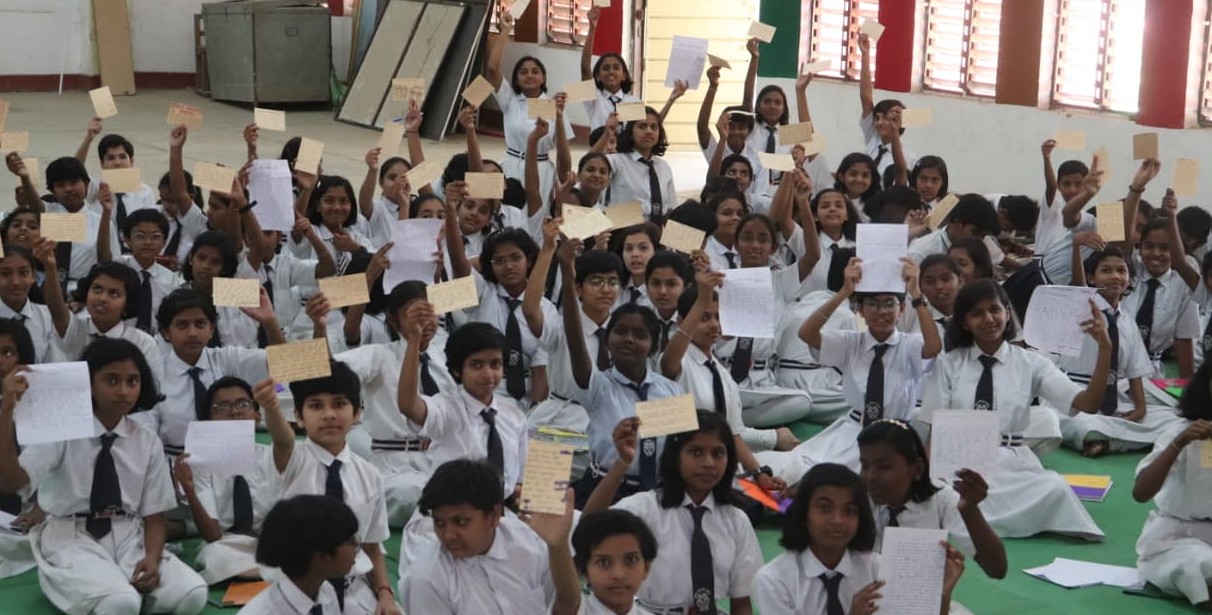
A defining feature of the initiative is its participatory design approach. Insights were gathered through essay and drawing competitions conducted across schools and colleges, where students articulated their vision of a “dream library.” Their responses consistently highlighted the need for computers, internet access, diverse reading material, comfortable seating, and a motivating learning environment.
This bottom-up data collection became a critical input for infrastructure design, ensuring that the final solution was not assumption-driven but grounded in user expectations. The involvement of Vedant Pathak, CM Fellow, further strengthened this approach through on-ground innovation and implementation support.
Digital learning infrastructure—turning libraries into smart classrooms
At the core of the D.R.E.A.M. Rooms model is a compact but high-impact digital infrastructure layer deployed across renovated village libraries. Each unit is equipped with smart televisions, computers, Wi-Fi connectivity, and curated digital learning access.
The smart TVs function as shared digital classrooms, enabling students to access recorded lectures, government educational content, online courses, and live expert sessions. This has effectively extended classroom learning beyond school hours and physical boundaries.
Computers and internet access enable personalised learning pathways, allowing students to revisit concepts, practice skills, and prepare for competitive examinations. This shift from passive classroom instruction to self-directed digital learning marks a significant behavioural and pedagogical transformation in rural education settings.
Collaborative and scalable learning—connecting villages through technology
One of the most innovative dimensions of the project is its use of shared digital infrastructure for multi-village learning. Through smart screens and networked connectivity, multiple villages can simultaneously participate in workshops, awareness programmes, expert lectures, and interactive sessions.
This creates a distributed classroom model where learning is no longer confined to a single physical space. Instead, knowledge delivery becomes scalable across geographies, reducing inequality in access to quality teaching resources.
Additionally, the integration of STEM kits within libraries introduces experiential learning. Students engage with hands-on scientific models and problem-solving tools, strengthening conceptual understanding and encouraging curiosity-driven exploration.
Infrastructure reuse and governance innovation—repurposing public assets
A significant component of the initiative is the adaptive reuse of unused or deteriorating government buildings. Instead of constructing new infrastructure, existing structures have been renovated and converted into functional learning hubs.
This approach has improved efficiency in public asset utilisation while minimising capital expenditure. To ensure sustainability, each library is governed by a Village Library Committee (VLC), which includes the Sarpanch, teachers, and student representatives. The committee reports monthly to block-level administration, creating a structured accountability loop for maintenance, usage, and performance monitoring.
CCTV systems installed across facilities further strengthen safety and operational transparency, ensuring that the spaces remain secure and community-friendly.
Impact—access, inclusion, and behavioural transformation
The initiative has now reached over 2,00,000+ beneficiaries across rural Nagpur, including students, women, farmers, self-help groups, youth, and elderly citizens.
One of the most measurable outcomes is the reduction in travel time and cost for students who earlier depended on distant urban libraries. With access now available within village boundaries, study routines have become more consistent and less financially burdensome.
Library usage has increased significantly, driven by the availability of approximately 700 curated books per centre, digital infrastructure, and STEM-based learning tools. Students are increasingly using these spaces for competitive exam preparation, academic support, and skill development.
A particularly important social impact has been the enhanced participation of women. Safe and accessible library environments have enabled women to independently use digital tools to access government schemes, welfare programmes, and livelihood information, contributing to grassroots empowerment.
The repurposing of unused buildings into active learning centres has also strengthened community ownership of public infrastructure. Libraries have evolved into multi-functional knowledge hubs, supporting not only education but also awareness programmes and community discussions.
Community ownership and sustainability—building a scalable model
The success of the D.R.E.A.M. Rooms model lies in its integration of technology with participatory governance. By combining digital infrastructure with local decision-making structures, the initiative ensures both usability and sustainability.
With active involvement from local committees, continuous stakeholder engagement, and technology-enabled learning systems, the model demonstrates how frontier education infrastructure can be effectively deployed in rural contexts without dependency on large-scale new construction.
Overall, the D.R.E.A.M. Rooms initiative represents a scalable framework for transforming rural libraries into smart, inclusive, and community-owned learning ecosystems—bridging the gap between aspiration and access in rural education.
Share Your Story Today, Shape Viksit Bharat Tomorrow
Got an idea, innovation, or experience that's making a difference? Share your story now and ignite India's transformation because your voice can drive the future forward!
Resources to Replicate This Idea
BUILD YOUR OWN INTERVENTION
Handpicked stories tailored just for you
Explore stories that inspire, inform, and ignite new ideas across tech, innovation, and real-world impact

Safe Access: India’s Community-Verified Digital Locator for HIV Prevention Services
Safe Access is a free, community-driven Indian platform that helps people locate verified PrEP and PEP providers nearby. By mapping...
Read More