New Zinc-Based Battery System Promises 100+ Hours of Electricity Storage Capacity
While interest in renewable energy is growing, storing this energy for long periods remains a challenge. Chennai-based startup Sthyr has designed a zinc–air battery model wherein excess electricity can be stored with minimal energy loss.
Updated on: 31 August 2026

Sector

Solution

Technology

State of Origin
Disclaimer:
Impact Metrics
First Zinc Regeneration Unit opened
at pilot facility in Chennai.
~50% reduction in energy costs
possible if innovation is scaled for clean energy storage.
As concerns about global warming grow, energy consumption and generation across the world are changing and, consequently, so is the demand for reliable power storage technology. This is particularly the case in countries dedicated to expanding their renewable energy infrastructure, such as India.
While the generation of electricity via fossil fuels can be controlled, renewable energy generation from sources such as solar or wind is more difficult to predict. Thus, there is often a large time gap between renewable energy generation and usage. A surplus in generating this energy can damage the security of electrical grids, and must be curtailed, while shortages will force more reliance on fossil fuels.
Sthyr Energy Private Limited of Chennai, Tamil Nadu is addressing these problems with a novel zinc–air energy storage model. Founded by Gunjan Kapadia, Akhil Kongara, and Muhammad Hamdan in 2024, this startup is developing a way to back up clean power for long periods, boosting the viability of a green energy transition in India.
How does zinc–air storage work?
The core chemical reaction underlying zinc–air storage technology is oxidation, the everyday process that causes phenomena as common as rust.
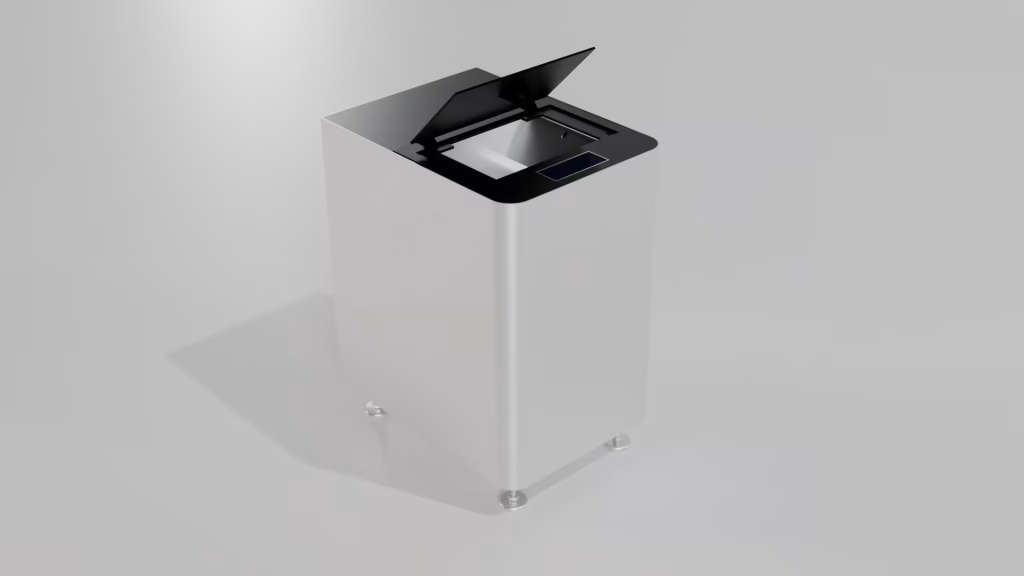
First, Sthyr routes excess electricity into Zinc Regeneration Units (ZRUs), industrial facilities that convert zinc oxide powder into pure zinc. This pure zinc is deposited on non-reactive plates that can be put into storage.
Then, when required, these zinc plates are exposed to oxygen in what is called a zinc–air battery, resulting in the formation of zinc oxide and the generation of electricity. The resulting zinc oxide can be used as input in ZRUs, repeating the entire cycle.
The primary benefit of this system is that zinc plates are stable and dense, minimizing energy loss over time.
Investment in the innovation
So far, ~INR 10 crore has been invested in the early research and development stage of this innovation, along with the creation of intellectual property licenses and other supplementary steps.
The initial partners who provided support with the technical development were IIT Madras (~INR 3 crore) and DST-IMPRINT + Ashok Leyland (~INR 3 crore). In addition, the Indian government’s Promoting Innovations in Individuals, Start-ups and MSME (PRISM) program provided a grant of INR 1.96 crore and Speciale Invest brought in a seed investment of ~USD 1 million.
Toyota Tsusho, Hindustan Zinc, TCS, and HDFC Bank have been important partners for product evaluation and system validation.
Readiness for commercialization
Following months of development, Sthyr has opened its first Zinc Regeneration Unit at a pilot facility in Chennai. This facility is using a 100% renewable-energy microgrid to test the viability of the zinc–air storage system in practical applications. All of the assorted technology has been developed indigenously, with Sthyr holding eight patents at different stages of confirmation.
Since the startup is in the testing stage, it has not yet commercialized its innovation. By accumulating evidence of success at the Chennai facility, it can build a strong case for usage in data centers, defence, disaster management, and power backups in remote locations.
Results from early testing
According to the data available from Sthyr, electricity can be stored in a zinc–air battery system for more than 100 hours, and the innovation could even be adopted in multi-seasonal energy storage. Expanding the storage capacity will only need greater quantities of zinc, rather than crossing any further technological milestone.
Between May and December 2025, about 2.3 TWh of solar energy had to be curtailed across the country due to inadequate storage capacity. On the other hand, every 1 GWh of clean energy can save 2.5 lakh liters of diesel that would have been used in electrical generators. These numbers indicate that expanding renewable energy storage capacity can mean a considerable step towards energy sovereignty for India.
In the long term, given enough investment in infrastructure, Sthyr estimates that storing clean power would bring its cost down to INR 15–20/kWh in contrast to the ~INR 35–40/kWh for diesel-based power.
Potential for scaling
Building confidence in zinc–air storage will require more testing and validation with partners, of whom government partners will add the most legitimacy from a business perspective, especially in the initial years. Support from policymakers could increase access to capital and facilitate more demonstration programs, justifying the heavy investment typical for battery technology in the initial years. Interested state governments could also aid innovations such as Sthyr’s by strengthening the supply chain for zinc in India, lowering the costs of procurement even further.
Through the adoption of green energy storage, India can not only align with UN SDG goals but also improve access to electricity in remote areas, improve the industrial capacity of the country, and create more jobs for thousands of engineers and researchers.
Share Your Story Today, Shape Viksit Bharat Tomorrow
Got an idea, innovation, or experience that's making a difference? Share your story now and ignite India's transformation because your voice can drive the future forward!
Disclaimer:
Resources to Replicate This Idea
BUILD YOUR OWN INTERVENTION
Handpicked stories tailored just for you
Explore stories that inspire, inform, and ignite new ideas across tech, innovation, and real-world impact

How AI Diagnostics Are Reaching India’s Frontline Health Workers
AffEx equips rural health workers with an AI-powered point-of-care screening kit — testing hemoglobin, blood pressure, ECG, and cardiac and...
Read More