Sustainable Air Cooling: The IoT-Powered Device Fighting Heatwaves
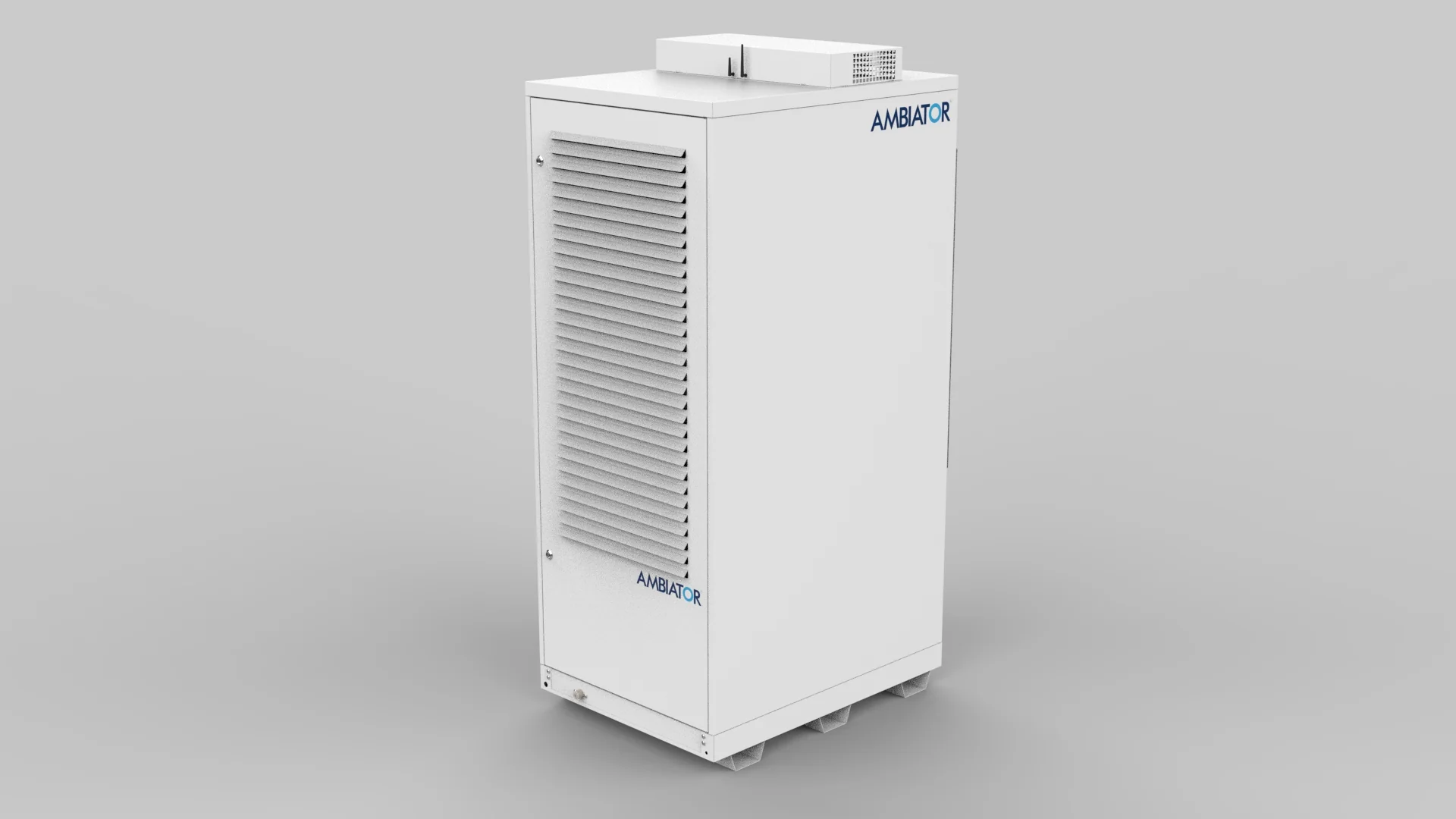
Developed by engineers in Hyderabad, the Ambiator is an eco-friendly AC alternative that cuts electricity bills by 80% using smart evaporative cooling and IoT sensors. It runs on tap water, uses 5x less water than coolers, and can be powered by solar energy. With India facing rising heatwaves, this low-cost, sustainable tech offers a cooling revolution.
Share



Sector

Solution

Technology

State of Origin
Disclaimer:
Features ‘as is’ submissions and neither constitutes endorsement, certification, recommendation, or validation by NITI Aayog nor makes NITI Aayog liable in any manner.
Impact Metrics
80% reduction
in electricity bills, cutting cooling load by 80%.
5 times less water
than air coolers, cooling air by 8-12°C.
Improves air quality
by pulling 100% outside air and filtering pollutants.
Resources to Replicate This Idea
BUILD YOUR OWN INTERVENTION
Additional Research
How can I implement this innovation effectively?
How is this innovation being adopted around the world?
Where else could this innovation make an impact?
Who has seen real results from using this innovation?
What insights do experts share about this innovation?
What policies support or influence this innovation?
How could this innovation evolve in the future?
Is this innovation accessible and inclusive for everyone?
How can I contribute to or participate in this innovation?
What resources can help me explore this innovation further?
Turning Innovation into Impact: Lessons from Implementing Eco-Friendly Cooling in India
India stands at a pivotal moment in its quest for sustainable cooling solutions. As climate change intensifies heatwaves and urbanization accelerates, the deployment of technologies like the Ambiator—a locally developed, IoT-enabled, energy-efficient cooling device—offers a blueprint for addressing both environmental and socioeconomic challenges. Yet, translating innovation into widespread impact requires more than technological prowess; it demands a nuanced understanding of infrastructure, policy, and community engagement. This section delves into the practical realities of implementing eco-friendly cooling technologies in India, drawing on research, policy frameworks, and real-world case studies.
Integrating Technology with Local Infrastructure: The Ambiator Experience
The Ambiator, engineered by a Hyderabad-based team, exemplifies the power of frugal innovation tailored to Indian conditions. Unlike conventional air conditioners, the Ambiator is designed for easy integration with existing home infrastructure, operating via standard phone charging sockets. This minimizes installation hurdles and leverages the country’s expanding digital ecosystem. However, successful deployment hinges on robust IoT networks and reliable water supply—factors that vary significantly across urban and rural settings.
Pilot programs have proven essential in validating performance under diverse climatic and socioeconomic conditions. For example, the Telangana State Renewable Energy Development Corporation (TSREDCO) partnered with local startups to pilot the Ambiator in government schools and health centers, demonstrating not only energy savings but also improved indoor air quality and comfort for vulnerable populations. Such pilots underscore the importance of context-specific adaptation and ongoing technical support.
Policy Catalysts: Regulatory Sandboxes and Public-Private Partnerships
India’s evolving policy landscape is increasingly supportive of sustainable cooling innovation. The National AI Strategy and the Digital India initiative have established a foundation for integrating smart technologies into public infrastructure. Regulatory sandboxes—temporary, controlled environments where startups can test new solutions—have emerged as a powerful tool for accelerating adoption while safeguarding public interests. The Ministry of Electronics and Information Technology (MeitY) has championed this approach, enabling companies like the Ambiator’s developers to refine their products in real-world settings before full-scale rollout.
Public-private partnerships (PPPs) further amplify impact. Under the Smart Cities Mission, cities such as Pune and Surat have collaborated with technology firms to deploy IoT-enabled cooling systems in municipal buildings, reducing energy consumption and setting benchmarks for replication nationwide. These initiatives align with the National Cooling Action Plan (NCAP), which targets a 20–25% reduction in cooling demand by 2037–38.
Learning from Global and Domestic Precedents
Internationally, Singapore’s “Cooling Singapore” project and the UAE’s Masdar City offer compelling models for integrating advanced cooling technologies with urban planning. These efforts highlight the value of cross-sector collaboration, government-backed innovation hubs, and incentives for green technology adoption. In India, NITI Aayog’s Frontier Technologies Hub serves a similar function, fostering dialogue between innovators, policymakers, and industry leaders to accelerate the diffusion of sustainable cooling solutions.
Academic institutions are also pivotal. IIT Madras, for instance, has developed and field-tested low-energy cooling systems tailored for rural schools and clinics, demonstrating both affordability and scalability. These collaborations bridge the gap between laboratory research and real-world application, ensuring that innovations are both technically sound and socially relevant.
Expert Perspectives: The Imperative of Localized, Scalable Solutions
Indian experts consistently emphasize the need for solutions that are both scalable and sensitive to local realities. Dr. Ashok Jhunjhunwala of IIT Madras advocates for leveraging India’s strengths in frugal engineering and digital technology, noting, “India’s diversity demands adaptable, low-cost cooling solutions that can be rapidly scaled through public-private collaboration.” The Ministry of Electronics and Information Technology echoes this sentiment, stressing the importance of responsible AI and IoT deployment, ethical frameworks, and broad stakeholder engagement.
Scaling Up: Pathways for Broader Adoption
Looking ahead, the challenge lies in moving from successful pilots to widespread adoption. Government programs like the Pradhan Mantri Ujjwala Yojana and the National Rural Livelihood Mission offer templates for reaching underserved populations, while digital inclusion initiatives such as Common Service Centres (CSCs) can facilitate awareness and distribution. Funding and incubation opportunities through the Atal Innovation Mission and Startup India further enable entrepreneurs to scale their solutions.
Ultimately, India’s journey toward sustainable cooling will be defined by its ability to harmonize technological innovation, policy support, and community engagement—a model with the potential to inspire heat-vulnerable regions worldwide.
Charting a Global Path: Innovations and Lessons in Sustainable Cooling
As the world faces escalating temperatures and urban heat challenges, nations are racing to develop sustainable cooling solutions that balance comfort, energy efficiency, and environmental responsibility. From Singapore’s data-driven urban cooling to the UAE’s renewable-powered cities, global initiatives offer valuable blueprints for India’s own journey. By examining international strategies and adapting them to local contexts, India can accelerate its transition toward equitable and climate-resilient cooling.
Integrated Urban Cooling: Lessons from Singapore and the UAE
Singapore’s “Cooling Singapore” project exemplifies how advanced technology can transform urban environments. Leveraging real-time sensor networks and sophisticated modeling, the initiative optimizes city-wide cooling, mitigates urban heat islands, and reduces energy consumption. The approach is holistic—combining urban planning, green infrastructure, and public engagement to create livable spaces even in tropical climates.
Similarly, the UAE’s Masdar City demonstrates the power of passive cooling and renewable energy integration. Designed as a model for sustainable urban living, Masdar employs shaded walkways, wind towers, and solar energy to maintain comfortable indoor and outdoor conditions with minimal reliance on conventional air conditioning. These examples underscore the effectiveness of marrying technology, design, and policy for climate adaptation.
Policy Frameworks: Cross-Sector Collaboration and Regulatory Innovation
Global leaders in sustainable cooling emphasize the importance of robust policy frameworks that foster innovation and cross-sector collaboration. Singapore’s regulatory sandboxes allow startups to pilot new technologies in real-world settings, while Australia incentivizes green building certifications and energy-efficient retrofits through government grants and tax benefits.
India is increasingly adopting similar mechanisms. The National Cooling Action Plan (NCAP) sets ambitious targets for reducing cooling demand and promoting energy-efficient technologies. Regulatory sandboxes, such as those supported by NITI Aayog, enable Indian startups to test innovations like the Ambiator in diverse environments, accelerating their path to market.
Local Adaptation: India’s Decentralized and Inclusive Approach
Unlike the centralized urban planning seen in Singapore or the UAE, India’s vast and varied landscape necessitates adaptable, low-cost solutions. The Ambiator, a frugal innovation designed for Indian conditions, exemplifies this approach by offering affordable, energy-efficient cooling suitable for both urban and rural settings. Academic institutions such as IIT Madras are pioneering scalable cooling technologies tailored to local needs, often in partnership with industry and government.
India’s Smart Cities Mission and Digital India initiatives further support the deployment of IoT-enabled cooling, particularly in underserved regions. By focusing on inclusivity and scalability, India is crafting a unique model that addresses both climate and social equity.
Expert Perspectives: Indian Thought Leadership in Sustainable Cooling
Indian experts are at the forefront of reimagining cooling for a warming world. Dr. Ashok Jhunjhunwala of IIT Madras emphasizes the need for frugal engineering and digital innovation, advocating for public-private partnerships to drive widespread adoption. “India’s strength lies in its ability to innovate at scale and cost,” he notes, urging policymakers to prioritize regulatory support and community engagement.
The Ministry of Electronics and Information Technology (MeitY) echoes this sentiment, calling for responsible AI and IoT deployment in energy management. Their guidelines stress transparency, accountability, and stakeholder participation—principles that are increasingly embedded in India’s policy landscape.
Bridging Global and Local: Toward a Climate-Resilient Future
India’s evolving strategy reflects a synthesis of global best practices and indigenous innovation. By learning from international models—such as Singapore’s data-driven urban cooling and the UAE’s renewable-powered design—while prioritizing local adaptation and inclusivity, India is poised to become a leader in sustainable cooling. The convergence of policy support, technological advancement, and community participation will be critical in achieving the dual goals of climate resilience and social equity.
By embracing a globally informed yet locally grounded approach, India can chart a path that not only cools its cities and villages but also sets an example for heat-vulnerable regions worldwide.
Expanding the Reach of Sustainable Cooling: Transformative Applications Across India
As India faces mounting challenges from rising temperatures and energy demands, sustainable cooling technologies like the Ambiator are finding critical applications beyond residential settings. Their integration into public infrastructure, industry, and community spaces is reshaping how India approaches comfort, productivity, and environmental stewardship. This section explores the diverse, research-backed applications of such innovations, drawing on real-world examples, policy frameworks, and expert insights to illustrate their transformative potential.
Integrating Cooling Technologies in Public Infrastructure
India’s public sector is increasingly recognizing the value of energy-efficient cooling in essential services. Government schools, hospitals, and transportation hubs are particularly vulnerable to heat stress, which can compromise health, learning outcomes, and operational efficiency. Deploying low-energy cooling systems in these environments not only reduces electricity consumption but also enhances user comfort and safety.
For instance, the Delhi government has piloted passive and hybrid cooling solutions in select public schools, resulting in improved classroom attendance and student performance during peak summer months. Similarly, Indian Railways has experimented with energy-efficient cooling in waiting halls at major stations, contributing to lower operational costs and improved passenger experiences. These efforts align with national initiatives such as the Smart Cities Mission and the National Mission on Sustainable Habitat, which prioritize sustainable infrastructure upgrades across urban India.
Academic-Industry Collaboration: Catalyzing Scalable Solutions
Academic institutions are at the forefront of developing and testing innovative cooling technologies tailored to Indian contexts. The Indian Institute of Technology (IIT) Madras, for example, has pioneered low-energy cooling systems designed for both rural and urban applications, emphasizing affordability and scalability. A notable case study from IIT Madras highlights the successful deployment of such solutions in rural Tamil Nadu, where community centers equipped with advanced cooling systems reported a marked decrease in heat-related illnesses and energy expenses.
These collaborations often extend to industry partners, facilitating the transition from laboratory prototypes to market-ready products. The synergy between academia and industry is further supported by government-backed incubators and regulatory sandboxes, which provide real-world testing environments and accelerate the adoption of sustainable technologies.
Real-World Impact: Empowering Communities and Institutions
The adoption of eco-friendly cooling technologies is already yielding measurable benefits across India, particularly in heat-prone regions. In Rajasthan and Andhra Pradesh, early implementation of evaporative and hybrid cooling systems in schools and community centers has led to significant reductions in electricity bills—up to 70% in some cases—and improved indoor air quality. A school in Jodhpur, for example, reported not only lower energy consumption but also higher student attendance during extreme heat periods, underscoring the direct link between thermal comfort and educational outcomes.
Non-governmental organizations such as the SELCO Foundation have documented how affordable cooling solutions can be life-changing for low-income and marginalized populations. Their fieldwork in rural Karnataka demonstrates that access to sustainable cooling improves health, productivity, and overall quality of life.
Policy Frameworks Driving Adoption and Innovation
India’s evolving policy landscape is instrumental in scaling sustainable cooling technologies. The National Cooling Action Plan (NCAP), launched by the Ministry of Environment, Forest and Climate Change, sets ambitious targets to reduce cooling demand and promote energy-efficient alternatives. Complementary initiatives such as the Digital India and Smart Cities Missions provide platforms for integrating IoT-enabled cooling systems into urban infrastructure.
The Ministry of Electronics and Information Technology (MeitY) has issued guidelines for responsible deployment of AI and IoT in energy management, emphasizing transparency, accountability, and data privacy. Regulatory sandboxes, championed by NITI Aayog and other agencies, allow startups to pilot innovative cooling solutions in controlled environments, fostering a culture of experimentation and rapid iteration.
Expert Perspectives: Indian Thought Leadership on Sustainable Cooling
Indian experts consistently highlight the need for solutions that are both technologically advanced and contextually relevant. Dr. Ashok Jhunjhunwala, Professor at IIT Madras and a leading voice in sustainable innovation, emphasizes the importance of “frugal engineering” and leveraging digital technologies to create affordable, scalable cooling systems. He notes, “India’s strength lies in its ability to innovate under constraints—public-private partnerships and regulatory support are key to mainstreaming sustainable cooling.”
Institutions like the Centre for Science and Environment (CSE) and the Energy and Resources Institute (TERI) also advocate for community-driven approaches and robust policy frameworks to ensure equitable access.
—
By embedding sustainable cooling technologies across public infrastructure, industry, and community spaces, India is not only addressing immediate climate and energy challenges but also setting a precedent for inclusive, scalable innovation. These related applications—grounded in research, policy, and real-world impact—offer a blueprint for other heat-stressed nations seeking resilient, people-centric solutions.
Transforming Lives Through Sustainable Cooling: Real-World Impact Across India
As India faces intensifying heatwaves and rising energy demands, eco-friendly cooling technologies are emerging as lifelines for millions. Their adoption is not only mitigating the effects of extreme temperatures but also driving social, economic, and environmental transformation—particularly in vulnerable and underserved communities. The following impact stories, grounded in research and policy, illustrate how innovative cooling solutions are reshaping lives and setting new benchmarks for sustainable development in India.
Demonstrated Energy Savings and Enhanced Well-being
Pilot projects across Rajasthan and Andhra Pradesh have showcased the tangible benefits of sustainable cooling. In Jodhpur, a government school partnered with local NGOs to install evaporative cooling systems. This intervention led to a remarkable 70% reduction in electricity consumption during peak summer months. More importantly, the improved indoor environment resulted in higher student attendance and better learning outcomes, as children were less likely to fall ill or suffer from heat-induced fatigue. Similar outcomes have been reported in rural Andhra Pradesh, where low-income households using solar-powered coolers experienced lower utility bills and improved respiratory health due to better air quality.
Empowering Marginalized Communities: Health and Productivity Gains
Access to affordable cooling is increasingly recognized as a matter of survival for India’s marginalized populations. Field studies reveal that women, elderly individuals, and outdoor workers are disproportionately affected by heat stress. In rural Karnataka, for example, the deployment of low-cost, solar-powered cooling devices in anganwadis (childcare centers) and primary health clinics has reduced incidences of heat-related illnesses and improved maternal and child health outcomes. Additionally, agricultural workers report increased productivity and fewer heat-induced work stoppages, underscoring the economic benefits of inclusive cooling solutions.
Policy Catalysts: National Cooling Action Plan and Beyond
India’s policy framework is actively fostering the adoption of sustainable cooling technologies. The National Cooling Action Plan (NCAP), launched by the Ministry of Environment, Forest and Climate Change, sets ambitious targets to reduce cooling demand by 20–25% by 2037–38 and promote energy-efficient, climate-friendly alternatives. The plan prioritizes affordable access for vulnerable groups and encourages research and innovation in frugal cooling solutions. Complementary initiatives, such as the Smart Cities Mission and Digital India, are integrating Internet of Things (IoT) and artificial intelligence (AI) to optimize energy use in urban infrastructure. Regulatory sandboxes allow startups to pilot new technologies in real-world settings, accelerating the path from innovation to impact.
Expert Perspectives: Indian Innovation at the Forefront
Indian thought leaders are championing the need for context-specific, scalable cooling solutions. Dr. Ashok Jhunjhunwala, Professor at IIT Madras and a pioneer in frugal engineering, emphasizes, “India’s unique climate and socio-economic diversity demand innovations that are both affordable and adaptable. Public-private partnerships and regulatory support are critical to mainstreaming these technologies.” The SELCO Foundation echoes this sentiment, highlighting the importance of community engagement and decentralized energy systems. Meanwhile, MeitY’s guidelines on responsible AI and IoT deployment underscore the need for ethical frameworks, transparency, and stakeholder participation to ensure that technological advances translate into equitable benefits.
Scaling Up: The Road Ahead for Sustainable Cooling
The future of sustainable cooling in India is marked by both promise and urgency. NITI Aayog’s Frontier Technologies Hub is piloting next-generation solutions, including AI-driven energy management and decentralized renewable energy systems, with the goal of making India a global leader in affordable, scalable cooling. The integration of renewable energy, digital monitoring, and community-based distribution models is set to further reduce costs and expand access. As India pursues its net-zero emissions target by 2070, these innovations will be central to achieving climate resilience and social equity.
—
These impact stories underscore the transformative potential of sustainable cooling technologies in India. By aligning grassroots innovation, robust policy support, and expert guidance, India is charting a path toward a cooler, healthier, and more equitable future.
Voices Shaping India’s Cooling Revolution: Insights from Leading Experts
India’s quest for sustainable cooling is being shaped by a diverse array of expert voices, each emphasizing the need for solutions tailored to the country’s unique climate, socioeconomic landscape, and technological strengths. From pioneering engineers to government policymakers, Indian thought leaders are advocating for a collaborative, innovation-driven approach that leverages frugal engineering, digital technology, and robust policy frameworks. Their perspectives underscore the importance of integrating local context, ethical considerations, and community engagement to ensure that cooling solutions are both effective and equitable.
Frugal Engineering and Scalable Innovation: Dr. Ashok Jhunjhunwala’s Vision
Dr. Ashok Jhunjhunwala, Professor at IIT Madras and a leading authority on sustainable technology, has long championed the concept of frugal engineering—developing high-impact solutions at low cost, specifically for the Indian context. According to Dr. Jhunjhunwala, “India’s strength lies in its ability to innovate within constraints. By focusing on affordability and scalability, we can democratize access to cooling technologies without compromising on efficiency or sustainability.”
His work with the IIT Madras Research Park exemplifies this philosophy, fostering collaborations between academia, industry, and startups to accelerate the commercialization of energy-efficient cooling systems. One notable initiative is the development of low-energy air conditioning units that utilize advanced sensors and IoT integration, reducing energy consumption by up to 40%. These efforts align with the broader objectives of India’s National Cooling Action Plan (NCAP), which seeks to reduce cooling demand and promote indigenous innovation.
Ethical AI and IoT Deployment: Policy Guidance from MeitY
The Ministry of Electronics and Information Technology (MeitY) has emerged as a key policy driver in the responsible deployment of artificial intelligence (AI) and Internet of Things (IoT) technologies for energy management. In its guidelines for AI and IoT, MeitY emphasizes the need for transparency, accountability, and data privacy, particularly as these technologies become integral to smart cooling solutions in urban and rural settings.
MeitY’s framework calls for the establishment of ethical review boards and stakeholder consultation processes to ensure that innovations do not exacerbate existing inequalities or compromise user rights. The ministry’s approach is exemplified by regulatory sandboxes, which allow startups to test new cooling technologies in controlled, real-world environments before full-scale deployment. This model not only encourages experimentation but also ensures that solutions are rigorously evaluated for safety, efficacy, and social impact.
Integrating Technology, Policy, and Community: The Triple Helix Approach
Experts across academia and government consistently highlight the necessity of integrating technological innovation with supportive policy and active community participation—a model often referred to as the “triple helix.” Dr. Ritu Verma, an energy policy researcher at The Energy and Resources Institute (TERI), notes, “Technological breakthroughs alone are insufficient. We need policies that incentivize adoption and community engagement strategies that build trust and awareness.”
This approach is evident in pilot projects such as the Smart Cities Mission’s deployment of IoT-enabled cooling systems in Pune and Surat, where municipal authorities, local businesses, and citizen groups collaborate to optimize energy use and reduce urban heat islands. The success of these initiatives has informed policy recommendations for scaling similar models nationwide, as outlined in the NCAP and the Smart Cities Mission documentation.
Real-World Impact: Case Studies from Indian Cities
The city of Hyderabad offers a compelling example of expert-driven, scalable cooling solutions. Under the Telangana State Renewable Energy Development Corporation (TSREDCO), public-private partnerships have facilitated the installation of solar-powered cooling units in government schools, reducing classroom temperatures by up to 5°C and improving student well-being. These initiatives are guided by research from institutions like the Indian Institute of Science (IISc), which provides data-driven insights on energy savings and health outcomes.
Similarly, the Delhi government’s Heat Action Plan integrates early warning systems with community outreach to protect vulnerable populations during heatwaves. These case studies demonstrate the tangible benefits of expert-led, context-sensitive interventions.
Building Capacity for the Future: Education and Research Initiatives
Indian experts stress the importance of building a robust pipeline of talent and research capacity to sustain innovation in cooling technologies. The Atal Innovation Mission, in partnership with premier institutions such as IITs and NITs, is fostering interdisciplinary research centers focused on sustainable energy and climate adaptation. These centers serve as incubators for next-generation solutions, from AI-driven energy management platforms to affordable, modular cooling devices suitable for rural deployment.
Educational initiatives are also expanding, with universities integrating sustainable cooling into engineering and public policy curricula. This ensures that future policymakers, engineers, and entrepreneurs are equipped with the knowledge and skills to address India’s evolving cooling needs.
—
By synthesizing technological ingenuity, ethical governance, and community engagement, Indian experts are charting a path toward sustainable, inclusive cooling solutions. Their perspectives offer a blueprint for policymakers and innovators seeking to balance economic growth, environmental stewardship, and social equity in the face of rising temperatures.
Driving Sustainable Cooling: Policy Innovations and Pathways in India
India stands at a pivotal juncture in its pursuit of sustainable cooling solutions, as rising temperatures and rapid urbanization intensify the demand for energy-efficient technologies. The government’s proactive policy framework—anchored by the National Cooling Action Plan (NCAP)—is shaping a future where cooling is not only accessible and affordable but also environmentally responsible. This section delves into the evolving policy landscape, the integration of digital technologies, and the mechanisms enabling innovation, with a focus on real-world applications and expert insights.
National Cooling Action Plan: Blueprint for Climate-Responsive Cooling
Launched in 2019, the National Cooling Action Plan (NCAP) is India’s flagship policy response to the surging need for sustainable cooling. The NCAP sets ambitious targets: reducing cooling demand by 20–25% and refrigerant demand by 25–30% by 2037–38, while doubling the energy efficiency of cooling appliances. The plan emphasizes a multi-sectoral approach, spanning residential, commercial, and transport sectors, and encourages the adoption of alternative refrigerants with low global warming potential.
A notable example is the integration of energy-efficient air conditioning in government buildings and public infrastructure, as seen in the Energy Efficiency Services Limited (EESL) initiatives. These programs have resulted in significant energy savings and set benchmarks for private sector adoption. The NCAP also aligns with India’s commitments under the Kigali Amendment to the Montreal Protocol, reinforcing the country’s leadership in climate action.
Digital India and Smart Cities: Catalyzing IoT-Enabled Cooling Solutions
The convergence of the Digital India initiative and the Smart Cities Mission has accelerated the deployment of IoT-based cooling solutions, such as the Ambiator—a smart, energy-efficient air cooling system. These missions provide the digital infrastructure necessary for real-time monitoring and optimization of energy use, enabling cities like Pune and Surat to pilot smart cooling projects in public spaces and transport hubs.
The Ministry of Electronics and Information Technology (MeitY) has issued comprehensive guidelines for responsible AI and IoT deployment, emphasizing transparency, accountability, and data privacy. Regulatory sandboxes, such as those established by NITI Aayog and MeitY, allow startups to test innovations in controlled, real-world environments, fostering a culture of experimentation. According to Dr. Neeta Verma, former Director General of the National Informatics Centre, “Regulatory sandboxes are crucial for balancing innovation with public safety, especially in emerging sectors like smart cooling.”
Inclusive Access: Bridging the Cooling Divide
Equitable access to sustainable cooling remains a core policy challenge, particularly for rural and marginalized communities disproportionately affected by extreme heat. The government has drawn on successful models like the Pradhan Mantri Ujjwala Yojana and the National Rural Livelihood Mission to extend the reach of clean, affordable technologies. For instance, solar-powered cooling units have been piloted in rural Rajasthan, providing relief to farmers and reducing post-harvest losses.
Inclusive design principles—such as low-cost installation, minimal maintenance, and compatibility with decentralized renewable energy—are being embedded in new cooling technologies. The Common Service Centres (CSCs) under the Digital India program have played a pivotal role in raising awareness and facilitating adoption in remote areas.
Fostering Innovation: Incubators, Sandboxes, and Policy Support
India’s innovation ecosystem is increasingly oriented towards sustainable cooling, with government-backed incubators and regulatory sandboxes providing critical support. The Atal Innovation Mission and Startup India initiative offer funding, mentorship, and market access to startups developing next-generation cooling solutions. Notably, the International Advanced Research Centre for Powder Metallurgy and New Materials (ARCI) in Hyderabad has partnered with startups to develop phase-change materials for passive cooling.
Educational institutions are integrating sustainable cooling into engineering and architecture curricula, while research collaborations—such as those between IIT Madras and industry partners—are advancing AI-driven energy management systems. “Collaboration between academia, industry, and government is essential for scaling frugal, context-specific cooling innovations,” notes Dr. Radhika Khosla, Associate Professor at the University of Oxford and a leading researcher on India’s cooling transition.
Expert Perspectives: Charting the Path Forward
Indian experts and institutions are at the forefront of shaping policy and technological innovation in sustainable cooling. The NITI Aayog’s Frontier Technologies Hub is actively exploring AI-driven energy management and decentralized renewable energy integration, aligning with India’s net-zero vision for 2070. “India’s approach to sustainable cooling is unique in its emphasis on affordability, scalability, and climate resilience,” observes Dr. Ajay Mathur, Director General of the International Solar Alliance.
These efforts position India not only as a domestic leader but also as a potential global exporter of frugal, scalable cooling technologies—offering solutions to other heat-vulnerable regions worldwide.
In summary, India’s policy content for sustainable cooling is marked by ambitious targets, digital integration, inclusive access, and a robust innovation ecosystem—setting a precedent for climate-responsive development both nationally and globally.
Charting India’s Path to Sustainable Cooling Leadership
As India faces the dual challenge of rising temperatures and rapid urbanization, the future of sustainable cooling is poised at a transformative juncture. Emerging technologies, innovative policy frameworks, and inclusive design principles are converging to redefine how the nation addresses thermal comfort, energy efficiency, and climate resilience. With strategic investments and cross-sector collaboration, India stands on the cusp of not only meeting its domestic cooling needs but also setting global benchmarks for affordable, scalable, and sustainable solutions.
Harnessing Advanced Technologies for Scalable Impact
The integration of artificial intelligence (AI), Internet of Things (IoT), and renewable energy is revolutionizing the sustainable cooling landscape in India. AI-driven energy management systems are optimizing energy consumption in real time, reducing both costs and environmental impact. For example, smart cooling devices like the Ambiator leverage sensor networks and predictive analytics to adjust cooling output based on occupancy and weather patterns, significantly enhancing efficiency.
India’s push for decentralized renewable energy—exemplified by the Ministry of New and Renewable Energy’s rooftop solar initiatives—further supports the deployment of off-grid cooling solutions in rural and peri-urban areas. The synergy between digital innovation and clean energy is enabling scalable models that can be replicated across heat-vulnerable regions, both within India and globally.
Policy Innovations Driving Inclusive Access
Ensuring that sustainable cooling technologies reach India’s most vulnerable populations requires robust policy interventions. The National Cooling Action Plan (NCAP), launched by the Ministry of Environment, Forest and Climate Change, sets ambitious targets for reducing refrigerant demand and improving energy efficiency by 2037–38. The NCAP emphasizes affordable access, indigenous innovation, and skill development, positioning India as a leader in climate-responsive policy.
Complementary programs such as the Pradhan Mantri Ujjwala Yojana and the National Rural Livelihood Mission (NRLM) offer valuable frameworks for last-mile delivery and community engagement. By leveraging these models, policymakers can facilitate the distribution of low-cost, low-maintenance cooling solutions to rural, gender-diverse, and marginalized groups.
Exporting Frugal Innovation: India as a Global Cooling Hub
India’s tradition of frugal engineering—developing high-impact solutions at low cost—positions it uniquely to address global cooling challenges. Startups and research institutions are pioneering affordable, energy-efficient cooling technologies that are gaining international attention. For instance, the Ambiator, developed by an Indian startup, uses evaporative cooling and advanced materials to deliver comfort at a fraction of the energy consumption of conventional air conditioners.
As climate change intensifies heatwaves across Africa, Southeast Asia, and the Middle East, India’s expertise in scalable, context-appropriate cooling solutions is increasingly sought after. The government’s support for technology exports, coupled with international collaborations under the International Solar Alliance, is paving the way for Indian innovations to benefit millions worldwide.
Expert Perspectives: Indian Voices Shaping the Future
Indian experts and institutions are at the forefront of sustainable cooling research and advocacy. Dr. Ajay Mathur, Director General of the International Solar Alliance and former head of The Energy and Resources Institute (TERI), emphasizes, “India’s approach to sustainable cooling must balance affordability, efficiency, and climate goals. Our innovations can serve as templates for other developing economies.”
Academic institutions such as the Indian Institute of Technology (IIT) Delhi and the Centre for Science and Environment (CSE) are conducting field studies on passive cooling, urban heat mitigation, and the socio-economic impacts of cooling access. Their research informs both national policy and international best practices, ensuring that India’s solutions are grounded in evidence and tailored to local realities.
Fostering Grassroots Participation and Innovation
The democratization of sustainable cooling innovation is critical for widespread adoption. Government-backed incubators provide platforms for entrepreneurs to develop, test, and scale novel cooling technologies. Educational institutions are integrating sustainable cooling modules into engineering and architecture curricula, nurturing the next generation of climate-tech leaders.
Citizen engagement is equally vital. Community-led pilot projects empower local stakeholders to co-design and maintain cooling solutions. NGOs and advocacy groups are mobilizing public support for policy reforms and raising awareness about the health and productivity benefits of thermal comfort.
In sum, India’s journey toward sustainable cooling is marked by technological ingenuity, policy foresight, and inclusive action. By leveraging its strengths and fostering collaborative ecosystems, the nation is well-positioned to lead the global transition to climate-resilient cooling solutions.
Bridging the Cooling Divide: Prioritizing Accessibility in India’s Heat Resilience
As India faces escalating temperatures and more frequent heatwaves, ensuring that sustainable cooling technologies reach every segment of society is not just a technical challenge—it is a matter of equity and public health. Marginalized groups, including rural populations, women, and low-income communities, are disproportionately vulnerable to heat stress yet often lack access to affordable, effective cooling solutions. Addressing these disparities requires intentional design, targeted policy interventions, and inclusive implementation strategies that leave no one behind.
Designing for Inclusion: Low-Cost, Low-Maintenance Solutions
Research underscores that affordability and ease of use are paramount for widespread adoption of cooling technologies among underserved groups. Innovations such as solar-powered fans, passive cooling architecture (like cool roofs), and low-cost evaporative coolers have shown promise in pilot projects across states like Telangana and Rajasthan.
The Indian government’s Eco-Niwas Samhita (Energy Conservation Building Code for Residential Buildings) encourages the use of locally available materials and passive design features, making sustainable cooling more accessible for low-income housing.
Policy Pathways: Leveraging Existing Social Schemes
India’s robust network of social welfare programs provides a foundation for scaling access to sustainable cooling. The Pradhan Mantri Ujjwala Yojana (PMUY), which has successfully distributed over 90 million LPG connections to women in below-poverty-line households, demonstrates the power of targeted delivery mechanisms. Similarly, the National Rural Livelihood Mission (NRLM) has facilitated the formation of self-help groups that can serve as conduits for awareness and distribution of cooling technologies.
The Ministry of Rural Development’s initiatives, such as the Deendayal Antyodaya Yojana, increasingly integrate climate resilience into rural development strategies. By embedding cooling access within these frameworks, policymakers can ensure that vulnerable populations are prioritized.
Digital Inclusion: Expanding Awareness and Access
Digital infrastructure is a critical enabler for bridging the accessibility gap. India’s Common Service Centres (CSCs)—a network of over 500,000 digital access points—play a pivotal role in disseminating information about government schemes, facilitating applications for subsidies, and providing technical support for new technologies. Digital platforms also support remote monitoring and maintenance of cooling devices, reducing service barriers for users in remote locations. The Digital India initiative continues to expand these capabilities, fostering a more inclusive ecosystem for technology adoption.
Gender and Social Equity: Addressing Unique Vulnerabilities
Women and marginalized communities often bear the brunt of heat-related health risks due to occupational exposure and limited decision-making power in household spending. Programs like the Mahila Kisan Sashaktikaran Pariyojana (MKSP) under NRLM are beginning to address these gaps by integrating climate adaptation and access to sustainable technologies into women’s self-help group activities.
Expert Perspectives: Indian Leadership in Inclusive Cooling
Indian researchers and institutions are at the forefront of developing context-specific solutions for equitable cooling. Dr. Arunabha Ghosh, CEO of CEEW, emphasizes, “India’s cooling challenge is fundamentally a question of access. Policies must prioritize the needs of the most vulnerable, ensuring that innovations are both affordable and scalable.”
The National Centre for Cold-chain Development (NCCD) highlights the importance of integrating cooling access into broader development goals, such as food security and public health. Their work with state governments on solar-powered cold storage units for smallholder farmers exemplifies how targeted interventions can yield both economic and social benefits.
By centering accessibility in the design and deployment of sustainable cooling technologies, India can advance its social equity objectives while building resilience against a warming climate.
Unlocking India’s Pathways to Sustainable Cooling: Diverse Avenues for Engagement
India’s escalating demand for cooling—driven by rapid urbanization, rising temperatures, and expanding middle-class aspirations—presents both a challenge and an opportunity. Addressing this need sustainably requires active participation from citizens, entrepreneurs, academic institutions, and communities. By leveraging policy frameworks, engaging in innovation ecosystems, and fostering grassroots involvement, stakeholders can collectively drive the transition toward energy-efficient and climate-resilient cooling solutions.
Catalyzing Innovation through Government-Backed Platforms
The Indian government has established a robust ecosystem to nurture sustainable cooling innovations, particularly through flagship initiatives such as the Atal Innovation Mission (AIM) and Startup India. AIM has set up over 10,000 Atal Tinkering Labs and more than 50 Atal Incubation Centres, providing startups with mentorship, funding, and access to advanced prototyping facilities. These platforms encourage entrepreneurs to develop and pilot energy-efficient cooling technologies, such as solar-powered air conditioners and low-GWP refrigerants.
A notable example is the Clean Energy International Incubation Centre (CEIIC) in Delhi, which, in partnership with the Department of Biotechnology and Tata Trusts, supports startups working on sustainable cooling solutions. Regulatory sandboxes, as promoted by NITI Aayog, further allow innovators to test new products under real-world conditions with temporary regulatory relaxations, accelerating the path from lab to market.
Integrating Sustainable Cooling into Education and Research
Academic institutions play a pivotal role in mainstreaming sustainable cooling through curriculum development and applied research. The Indian Institute of Technology (IIT) Madras, for instance, has launched dedicated research programs on passive cooling and thermal comfort, collaborating with international partners under the India Cooling Action Plan (ICAP). The All India Council for Technical Education (AICTE) encourages engineering colleges to incorporate modules on green building design and low-energy cooling systems.
Furthermore, the National Skill Development Corporation (NSDC) has introduced specialized training for technicians in the installation and maintenance of efficient cooling appliances, ensuring a skilled workforce for the sector. By embedding sustainability principles in education, institutions are equipping the next generation of engineers, architects, and policymakers to champion climate-responsive cooling practices.
Grassroots Mobilization and Community-Led Initiatives
Community engagement is essential for scaling sustainable cooling solutions, particularly in rural and low-income urban areas. NGOs such as SELCO Foundation have pioneered the deployment of solar-powered cooling for agricultural cold chains, enhancing livelihoods and reducing post-harvest losses. Citizen-led campaigns, like the “Cool Roof Challenge” in Hyderabad, mobilize residents to adopt reflective roofing materials, which can lower indoor temperatures by up to 5°C and reduce energy consumption.
Local governments are increasingly partnering with resident welfare associations (RWAs) to implement pilot projects on passive cooling and urban greening. These initiatives not only demonstrate the efficacy of sustainable technologies but also foster behavioral change at the community level, amplifying impact through collective action.
Policy Advocacy and Public Participation
Active citizen participation in policy formulation and monitoring is crucial for the success of India’s sustainable cooling agenda. The Ministry of Environment, Forest and Climate Change (MoEFCC) regularly invites public comments on draft policies, such as the India Cooling Action Plan and amendments to the Energy Conservation Building Code (ECBC). Civil society organizations, including the Centre for Science and Environment (CSE), facilitate public consultations and disseminate research findings to inform evidence-based policymaking.
Advocacy efforts have led to the inclusion of affordable cooling as a priority in national missions like the Pradhan Mantri Awas Yojana (PMAY), ensuring that energy-efficient cooling is accessible to economically weaker sections. By participating in public hearings, submitting policy recommendations, or joining citizen science initiatives, individuals can directly influence the trajectory of sustainable cooling in India.
Expert Perspectives: Insights from Indian Leaders
Indian experts underscore the importance of multi-stakeholder collaboration in advancing sustainable cooling. Dr. Ajay Mathur, Director General of the International Solar Alliance and former head of TERI, notes, “India’s leadership in sustainable cooling will depend on our ability to integrate innovation, policy, and community action.”
The Indian Society of Heating, Refrigerating and Air Conditioning Engineers (ISHRAE) provides technical guidance and certification programs to promote best practices in the sector. According to ISHRAE’s recent policy brief, “Capacity building and local innovation are key to achieving the targets set by the India Cooling Action Plan.”
By drawing on the expertise of leading institutions and practitioners, stakeholders can access credible knowledge, build partnerships, and contribute meaningfully to India’s sustainable cooling transition.
—
Through coordinated efforts across innovation, education, community action, policy advocacy, and expert collaboration, India’s stakeholders have multiple, actionable pathways to participate in and shape the future of sustainable cooling.
Ambiator 5TR – https://solve.mit.edu/challenges/2024-global-climate-challenge/solutions/86719
How solar-powered AMBIATOR 5 AC cools ambient temperature by 10-15 degrees Celsius – https://newsmeter.in/hyderabad/how-solar-powered-ambiator-5-ac-cools-ambient-temperature-by-10-15-degrees-c-734770
Decoding Evaporative Air Coolers report by Alliance for an Energy Efficient Economy (AEEE) – https://aeee.in/wp-content/uploads/2021/06/Decoding-Evaporative-Air-Coolers-Report.pdf
NITI Frontier Tech Hub (for India’s tech breakthroughs including eco-friendly cooling) – https://niti.gov.in/whats-new/niti-frontier-tech-hub-only-way-predict-future-create-it
Handpicked stories tailored just for you
Explore stories that inspire, inform, and ignite new ideas across tech, innovation, and real-world impact