The Indian Innovation Targeting Air Pollution by Capturing Particulate Matter, Thus Improving Public Health
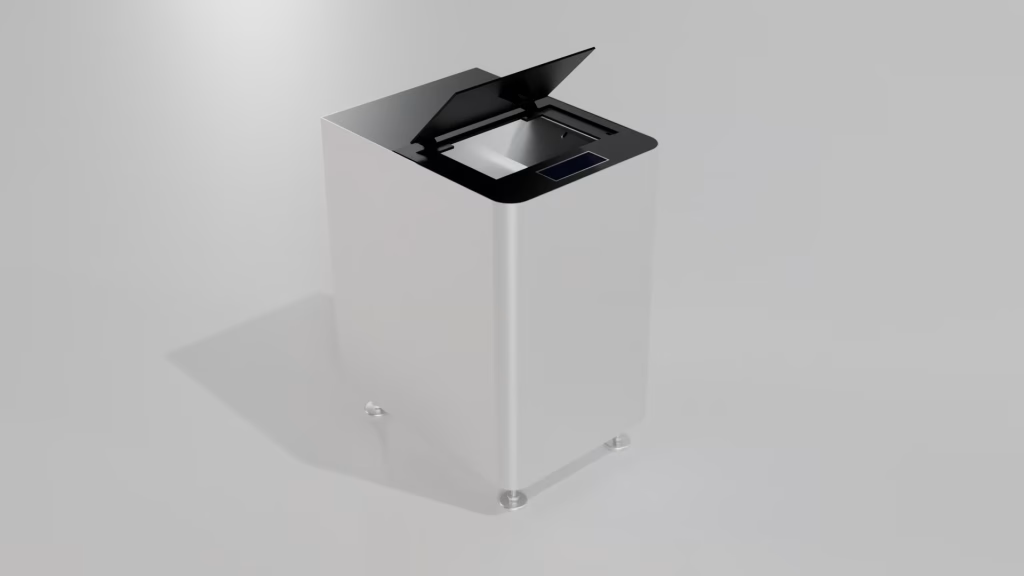
Praan has developed an indigenous, filterless air purification technology that captures harmful particulate matter without disposable filters, making clean air more accessible for large industrial and public spaces. As air pollution continues to threaten public health, its scalable innovation could help create healthier workplaces and cities across India.
Updated on: 20 July 2026

Sector

Solution

Technology

State of Origin
Impact Metrics
1,300 cubic feet per minute purification rate
allowing MK II systems to rapidly clean the air in large industrial spaces with high pollution loads.
Filterless capture of particulate matter
allowing harmful dust to be collected without altering its chemical composition for potential industrial reuse.
100,000 ug/m3 particulate matter handling capacity
enabling Praan's MK II to purify air in highly polluted industrial environments with extreme dust concentrations.
Industrial dust recovery for reuse
capturing particulate matter without altering its chemical composition, enabling circular manufacturing practices.
Particulate matter (PM) is one of the most harmful forms of air pollution.
Think of this as microscopic solid particles and liquid droplets that can be inhaled deep into the lungs and, in some cases, even enter the bloodstream. These particles are made up of dust, acids, organic chemicals, metals and soot, and originate from sources including vehicle emissions, industrial processes, construction activity, burning of fossil fuels, tobacco smoke, wildfires and dust storms.
They are invisible to the naked eye and range in size from PM10 (10 μm or less in diameter), PM2.5 (2.5 μm or less in diameter) and ultrafine PM0.1 (Less than 0.1 μm). The smallest particles pose the greatest health risk because they penetrate further into the body. The WHO (World Health Organization) cites it as one of the leading environmental causes of mortality worldwide.
Studies identify PM as the air pollutant most strongly associated with human disease, reasoning that long-term exposure significantly increases the risk of cardiovascular disease, while short-term spikes in pollution can trigger heart attacks, strokes and other acute cardiovascular events within days.
One of the primary reasons PM is so dangerous is that it triggers widespread inflammation and oxidative stress throughout the body. Fine and ultrafine particles can bypass the body’s natural defences in the nose and throat, reaching the deepest parts of the lungs where they damage lung tissue and impair normal respiratory function. Some particles are small enough to cross into the bloodstream. In cities and rural areas alike, exposure to particulate matter worsens asthma, chronic obstructive pulmonary disease (COPD) and other lung conditions.
Simple interventions such as using high-efficiency air filtration systems can significantly reduce health risks. And, an Indian startup is paving the way to cleaner air.
Making clean air accessible to everyone
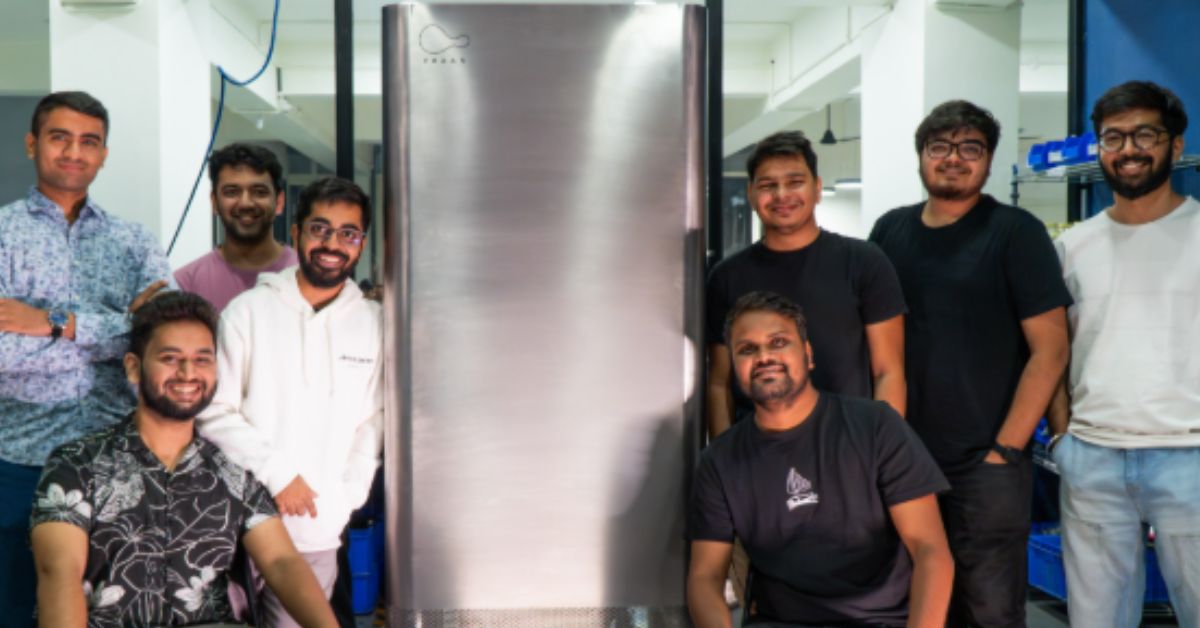
Founded by Angad Daryani, Praan is a Mumbai-based deep-tech startup tackling one of the world’s biggest challenges: air pollution. Inspired by his childhood experiences with asthma and growing up in a world increasingly threatened by climate change, Angad set out to create technology that could make clean air accessible to everyone, not just those who could afford premium air purifiers.
A child prodigy who built his first robot at eight, a low-cost 3D printer at thirteen, and an e-reader for the visually impaired at fifteen, Angad has always been driven by solving real-world problems through engineering.
While studying electrical engineering at the Georgia Institute of Technology, Angad began developing a filterless air purification system capable of cleaning air in large public and industrial spaces. Unlike conventional purifiers that rely on disposable filters, Praan’s technology uses electrical charge dispersion and airflow optimisation to separate particulate matter from polluted air, eliminating recurring filter replacement costs. This made the solution practical for high-pollution environments such as factories, schools and public spaces.
Dissecting the technology
Praan’s air purification technology is based on two core principles: electrical charge dispersion and airflow optimisation, which work together to remove harmful particulate matter without disposable filters. The system first uses powerful fans to draw polluted air into the purifier. Inside the unit, airborne particles such as dust, soot and fine particulate matter pass through a confined chamber where they are electrically charged.
Once charged, the particles become responsive to carefully controlled electric fields generated within the device.
Instead of trapping pollutants inside a physical filter, these electric fields pull the charged particles away from the moving air stream and direct them into a dedicated collection chamber. The purified air is then released back into the environment while the collected dust accumulates in a removable tray.
Because no filter gradually clogs with contaminants, the system avoids frequent filter replacements, significantly reducing maintenance costs and ensuring consistent purification performance even in environments with extremely high pollution levels.
Airflow optimisation is equally important to the technology. Rather than relying on a single purifier, these devices operate as a coordinated network that continuously captures pollutants at different locations, creating a hyperlocal clean-air zone. This combination of electrostatic particle separation and intelligent airflow management enables efficient, large-scale purification suitable for factories, warehouses, schools and other expansive indoor or semi-enclosed spaces.
Praan’s first major product, MKOne, was designed for outdoor environments such as school campuses and residential complexes. It was later followed by the MK-II, an industrial-grade purifier capable of handling particulate concentrations of up to 100,000 µg/m³ while delivering a purification capacity of 1,300 cubic feet per minute, eight times greater than its predecessor.
Through indigenous innovation, Praan aims to make clean air accessible while contributing to a healthier and more sustainable future.
Praan’s solutions that are cleaning India’s air
Praan has developed an indigenous portfolio of advanced air purification technologies designed for both industrial and indoor environments. Its flagship industrial solution, MK II (Mach 2), is a filterless air purification system that actively draws in polluted air, electrically separates particulate matter using Praan’s patent-pending technology, collects the pollutants in a removable chamber, and releases cleaner air back into the surrounding environment. With a purification capacity of 1,300 cubic feet per minute, the systems are deployed as interconnected clusters that can be strategically positioned based on a site’s unique pollution patterns. The units continuously monitor environmental conditions in real time, enabling performance optimisation, air quality reporting, and early identification of potential workplace safety concerns. The collected dust also retains its original chemical composition, allowing manufacturers to reuse it as raw material, supporting circular manufacturing practices.

For homes, offices and commercial spaces, Praan has developed HIVE, a smart indoor air purifier that combines medical-grade H14 filtration with an array of environmental sensors. These include sensors for PM1.0, PM2.5, PM10, volatile organic compounds (VOCs), carbon dioxide, temperature, humidity and ambient sound.
How particulate matter is worsening health in cities
Air pollution has become one of the most pressing public health challenges facing cities worldwide. According to global estimates (2022), it is responsible for one in every nine deaths, causing approximately 6.7 million deaths annually, with over 4 million linked to outdoor fine particulate matter (PM2.5) alone.
As urban populations continue to grow, the burden of polluted air is becoming increasingly concentrated in cities, where dense traffic, industrial activity, power generation, waste burning and household fuel combustion contribute to poor air quality.
By 2050, nearly 68 percent of the world’s population is expected to live in urban areas, making clean air a critical challenge for city planners. Rapid urbanisation, particularly in low- and middle-income countries, has led to rising emissions while placing millions more people at risk of chronic exposure to harmful pollutants.
Research suggests that, in the current context, almost everyone lives in areas where PM2.5 levels exceed the World Health Organization’s recommended limit of 5 µg/m³, while more than half of the global population is exposed to concentrations above even the WHO’s least stringent interim target.
The health impacts of urban air pollution are extensive. Pregnant women exposed to polluted air face a higher likelihood of premature births and low birth weight babies, while children are more vulnerable to asthma, respiratory infections and impaired lung development. Air pollution also reduces life expectancy, increases healthcare costs, lowers workplace productivity and places significant economic burdens on cities.
Nitrogen dioxide (NO₂), largely produced by vehicle exhaust, power plants and industrial facilities, is one of the defining pollutants of urban environments. Because city residents often live close to busy roads, they experience much higher NO₂ exposure than rural populations. Beyond directly irritating the lungs and worsening asthma, NO₂ also contributes to the formation of ground-level ozone and particulate matter, amplifying overall air pollution.
Despite growing awareness, many cities lack adequate air quality monitoring systems. According to the WHO, 40 percent of countries have no ground-level particulate matter monitors, creating major gaps in pollution data, particularly in developing regions.
Emerging technologies such as satellite-based monitoring and AI-powered environmental sensing are helping cities better understand pollution patterns and identify hotspots. Combined with cleaner transport systems, improved urban planning, industrial emission controls and stronger environmental policies, these technologies are becoming essential tools in reducing pollution exposure and creating healthier, more sustainable cities.
Beyond industry, Praan’s HIVE indoor purification systems can improve air quality in schools, hospitals, offices and public buildings, creating healthier indoor environments for vulnerable populations such as children and the elderly. Coupled with AI-powered monitoring and real-time environmental data, the technology can also help city authorities better understand pollution patterns and make informed planning decisions.
As India pursues cleaner, smarter and more sustainable urban development, scaling indigenous innovations like Praan can complement emission reduction policies, strengthen climate resilience and contribute to healthier, more liveable cities while supporting the country’s broader environmental and public health goals.

Share Your Story Today, Shape Viksit Bharat Tomorrow
Got an idea, innovation, or experience that's making a difference? Share your story now and ignite India's transformation because your voice can drive the future forward!
Resources to Replicate This Idea
BUILD YOUR OWN INTERVENTION
Handpicked stories tailored just for you
Explore stories that inspire, inform, and ignite new ideas across tech, innovation, and real-world impact

How AI Diagnostics Are Reaching India’s Frontline Health Workers
AffEx equips rural health workers with an AI-powered point-of-care screening kit — testing hemoglobin, blood pressure, ECG, and cardiac and...
Read More