6 Lakh Liters/Hour of Water Saved During Inspections: How Robotics is Revolutionizing India's WASH Infrastructure
Indian cities face several challenges in the maintenance of water, sanitation, and hygiene (WASH) infrastructure. Chennai-based startup Solinas is using robotics to diagnose pipeline faults and fix sewage overflow issues quickly and efficiently.
Updated on: 31 August 2026

Sector

Solution

Technology

State of Origin
Disclaimer:
Impact Metrics
~INR 6–8 lakh saved
every 100 m when inspecting pipelines for faults.
200 m range within pipelines
for robots that identify faults such as leaks.
Manual scavenging countered
by using robots to break down sludge in sewage.
The rapid growth of India’s cities is placing a heavy burden on the existing water and waste management infrastructure. On the one hand, 35–50% of water provided by municipal authorities can be lost due to leaks, contamination, and other pipeline faults. On the other, the accumulation of sludge in manholes and sewers leads to more frequent flooding and subsequent health concerns.
Addressing either of these problem categories can be highly expensive for public authorities. This is not only because of the technical challenges involved but also because fixing infrastructure disrupts regular urban activities.
What if faults in urban water and sanitation could be addressed using robotics and AI? Solinas, founded in 2018, is a Chennai-based startup that operates robots capable of entering pipelines, storm drains, and manholes to detect problems before they become major liabilities for cities. Launched by IIT Madras alumni Divanshu Kumar and Moinak Banerjee, this startup offers solutions that both save costs as well as guarantee worker safety.
How do Solinas’ solutions work?
Solinas has designed two primary robot classes: Homosep, for sanitation work, and Endobot, for entering pipelines.
Over time, as waste material accumulates in sewers, it congregates to form sludge, which hardens over time. When the volume of sludge becomes high, it can clog the sewage system, leading to the flooding of surrounding areas. In many cases, when flooded manholes are located in narrow streets that regular machines cannot access, human workers are forced to enter them and manually break down the sludge with sharp tools.
This practice, known as manual scavenging, has been banned since 2013 in India, but enforcement remains incomplete. Solinas’ Homosep robot is designed as a humane replacement for manual scavenging, being capable of entering manholes and breaking down the accumulated sludge with a rapidly spinning blade. The robot is also equipped with sensors that can detect toxic gases in sewage, preventing health problems for nearby urban citizens.
The second robot class, Endobot, is built to crawl into pipelines of different diameters and inspect them for any faults—such as cracks or holes—using high-resolution video cameras, sensors, and a GIS system. Connected to the surface via tethered wires, each Endobot can cover a pipeline 200 m in length and then provide a report grading the overall pipeline health on a scale from 1 to 5. It can also inspect storm water drains to detect clogs that cause flooding during heavy rains.
In some cases, the startup uses AI analyzers rather than manual detection to parse the video footage from its robot cameras. All the underground infrastructure navigated by Solinas’ robots during operations is digitized.
Where is Solinas active?
Solinas’ products are used in more than 15 Indian states, with the main regions being Tamil Nadu, Karnataka, Telangana, Andhra Pradesh, Maharashtra, Uttar Pradesh, and Delhi-NCR. They have also been deployed abroad in West and Southeast Asia.
Impact of using Solinas’ robots
Replacing even 1 km of a 90 mm wide pipeline can cost a state government INR 1.5–2.5 crore, and moreover, frequent replacements will lower the lifetime of the pipeline as a whole. Using Endobots can help identify exactly where faults are so that municipal authorities do not excavate and open up any more pipelines than truly necessary.
While normal manual inspections of pipelines would take 3–5 days, and require digging at least 7 pits every 100 m, Solinas can complete inspections in mere hours after digging a single pit. This difference alone can save ~INR 6–8 lakh in inspection costs and 6 lakh liters of water per hour, both while reducing the disturbance to traffic systems and business activities in urban spaces.
Homosep, on the other hand, directly supports the movement to end manual scavenging and safeguard the dignity of waste management workers. Since it can be operated from the surface, it requires no human contact with toxic sludge and can be used to mitigate the risks of flooding. The robot’s grabber bucket can hold up to 17 liters of waste or silt per cycle and the machine as a whole can store 90 liters.
Solinas’ business model
Solinas follows flexible B2B2G, B2G, and B2B models, working with major urban contractors, directly with municipal corporations, and manufacturing companies, respectively, as required.
The startup was incubated at IIT Madras, following which it raised close to USD 5.5 million via Kiro and Bela Ventures during series A funding. Roughly 60–70% of projects that it undertakes with the Homosep system come with support from CSR funders.
Potential for expansion
Innovation in the area of water, sanitation, and hygiene (WASH) is crucial to ensure the health of India’s urban infrastructure. Startups such as Solinas demonstrate that there is already interest in this regard, but these startups’ access to projects is largely dependent on the priorities of individual municipal corporations or businesses.
By issuing central directives on improving the country’s water and sanitation infrastructure, and supporting these directives with financial backing, policymakers can create further incentives for WASH startups. This, in turn, can boost the quality of life and health in cities, allowing more citizens to see the benefits of economic growth.
Share Your Story Today, Shape Viksit Bharat Tomorrow
Got an idea, innovation, or experience that's making a difference? Share your story now and ignite India's transformation because your voice can drive the future forward!
Disclaimer:
Resources to Replicate This Idea
BUILD YOUR OWN INTERVENTION
Handpicked stories tailored just for you
Explore stories that inspire, inform, and ignite new ideas across tech, innovation, and real-world impact

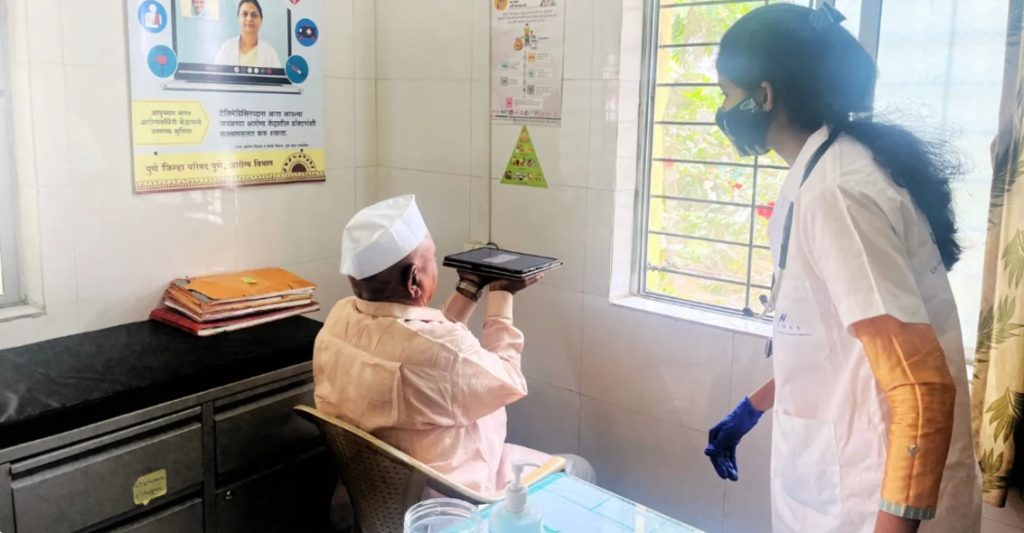
How AI Diagnostics Are Reaching India’s Frontline Health Workers
AffEx equips rural health workers with an AI-powered point-of-care screening kit — testing hemoglobin, blood pressure, ECG, and cardiac and...
Read More