With 48,000+ Vehicles in 12 Cities, This Startup is Popularizing E-Bikes in India
Electric bikes help not only gig workers but also thousands of daily commuters who lack first- and last-mile transport options in India. This startup is using e-bikes with swappable batteries to make transit even faster.
Updated on: 30 September 2026

Sector

Solution

Technology

State of Origin
Disclaimer:
Features ‘as is’ submissions and neither constitutes endorsement, certification, recommendation, or validation by NITI Aayog nor makes NITI Aayog liable in any manner.
Impact Metrics
2.4 billion km
traveled by e-bikes.
>68 million kg of CO2 savings
achieved.
Rapid battery swapping
at stations located every 2 km.
12,000+ women drivers
empowered through access to easy transport.
As India’s cities grow ever larger and more busy, traffic congestion and air pollution are ever-worsening problems. In order to address this, there must be a society-level reduction in the usage of large vehicles and shift to public transport—the most efficient alternative in terms of both costs and travel time.
However, even in cities with well-developed public buses and metro lines, first- and last-mile connectivity remains limited. Thus, rather than change transit options multiple times, daily commuters and delivery personnel opt for private transport.
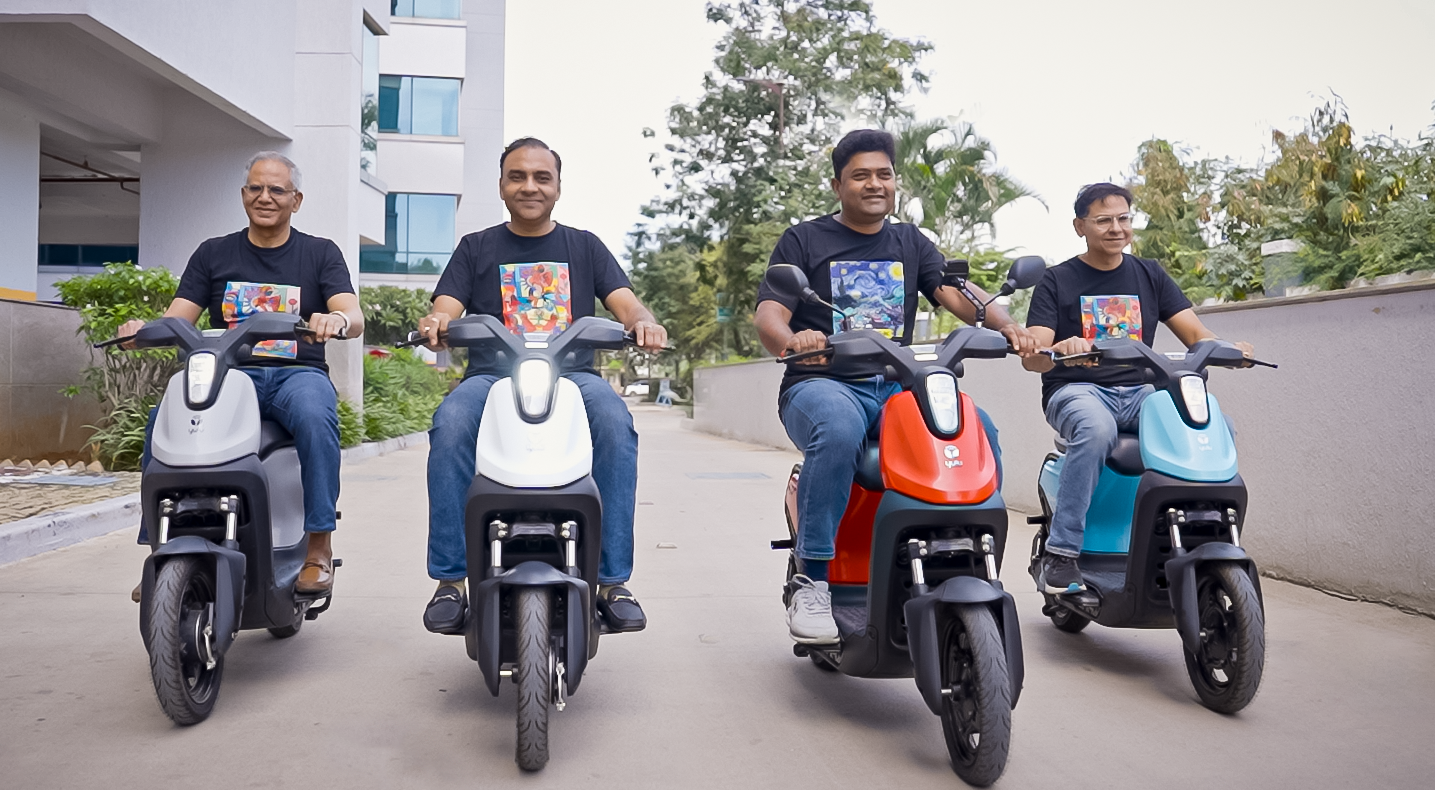
Until public transport is expanded further, how can these users’ needs be met, while also committing to lower carbon emissions? Electric bikes may be part of the answer. Yulu Bikes, started in 2017 by Amit Gupta, RK Misra, Naveen Dachuri, and Anuj Tewari, has been providing green-energy two-wheelers across twelve Indian cities. The benefits include both sustainability and affordability.
What products does Yulu offer?
When it was first launched, Yulu’s main products were bicycles for regular commuters. In 2019, it switched its focus to e-bikes.
Today, it has two product lines for two different kinds of users. The Yulu Dex line, featuring low-speed bikes, caters to gig workers employed as bike taxi drivers or delivery personnel. These bikes are built with safety and low maintenance in mind, and can cover roughly 70–80 km or 7–8 hours of driving per day. The second line of bikes, Miracle, is designed for daily commuters and has similar specifications but runs at a moderate speed.
All of Yulu’s bikes have swappable rather than rechargeable batteries, most of them offering a capacity of 1 kW. Each swap taking less than 2 minutes and battery stations are available every 2 km. This ensures that drivers lose next to no time in between their commutes.
Who uses Yulu bikes?
Over 90% of the users of Yulu bikes are e-commerce and food delivery staff. The remaining 10% mainly consist of daily commuters.
Currently, the Yulu fleet comprises more than 48,000 bikes across the country, making the startup one of India’s largest e-bike manufacturers. These bikes are present in twelve cities, of which four—Delhi, Mumbai, Hyderabad, and Bengaluru—have bikes being owned and sold directly by Yulu. In the remaining eight cities, most of which are tier-2 cities such as Kochi and Indore, local entrepreneurs buy the technology and sell e-bikes with a revenue sharing agreement in place.
Most of the direct clients of Yulu’s business model are not drivers but, rather, franchise partners. Companies such as Swiggy and Zomato hire Yulu Bikes as a service provider, which gives them not only the vehicles but also charging infrastructure, repair and maintenance stations, and vehicle insurance.
Creating impact
Yulu’s bikes have driven over 2.4 billion km so far. This has enabled over 530 million emission-free deliveries of goods, amounting to CO2 savings of >68 million kg. Yulu’s batteries have been swapped at the battery stations over 60 million times.
Since Yulu’s bikes are electric, they do not require driving licenses for operation. This makes them especially useful for working women, who are less likely to have licenses in general. Of the ~580,000 gig workers using the bikes, approximately 12,000 are women drivers.
Partners in development
Yulu started with an investment of $7 million from its founders, who already had access to offices and other resources and thus did not require incubation support. However, the company has since received financial support from different businesses. Most recently, in 2026, Yulu raised $26 million in funding. It has also worked closely with Bajaj Auto Limited to design and manufacture its bikes.
According to the founders, electric bikes are greatly appreciated by real estate companies in particular, who directly see the benefits of improved transport for citizens. Thus, over 97% of the parking spaces used by Yulu have been provided free of cost by such companies.
In recognition of its contributions to urban management, Yulu has won a number of awards, including Inc42’s Most Innovative Startup Award (2018), NASSCOM’s Emerge 50 Award (2020), and a feature on Deloitte’s TechFast50 India 2024 list.
Path forward
The Indian government has already demonstrated confidence in electric bikes and other sustainable transport infrastructure. In Yulu’s case, it subsidizes battery costs by 30–50% depending on the city of operation. By adjusting GST costs—currently 5% for bikes and 18% for batteries—it could further support the startup and similar initiatives.
Multiple global examples have shown that the success of public transportation depends on government action. Through more dedicated parking spaces for green vehicles, and establishing strict bus and bike lanes on roads, state governments can foster a climate of responsibility in commute. At the same time, using both social and print media, they can inspire the public—encouraging them to participate in the mission to make our cities more liveable.
Share Your Story Today, Shape Viksit Bharat Tomorrow
Got an idea, innovation, or experience that's making a difference? Share your story now and ignite India's transformation because your voice can drive the future forward!
Disclaimer:
Features ‘as is’ submissions and neither constitutes endorsement, certification, recommendation, or validation by NITI Aayog nor makes NITI Aayog liable in any manner.
Resources to Replicate This Idea
BUILD YOUR OWN INTERVENTION
Handpicked stories tailored just for you
Explore stories that inspire, inform, and ignite new ideas across tech, innovation, and real-world impact

Pilotless Cargo Flights with Zero Failures: Reimagining Diagnostic Logistics in Indian Cities
An energy-efficient autonomous aircraft combining vertical take-off with fixed-wing cruise has completed over 1,000 flights carrying diagnostic samples between hospitals,...
Read More