
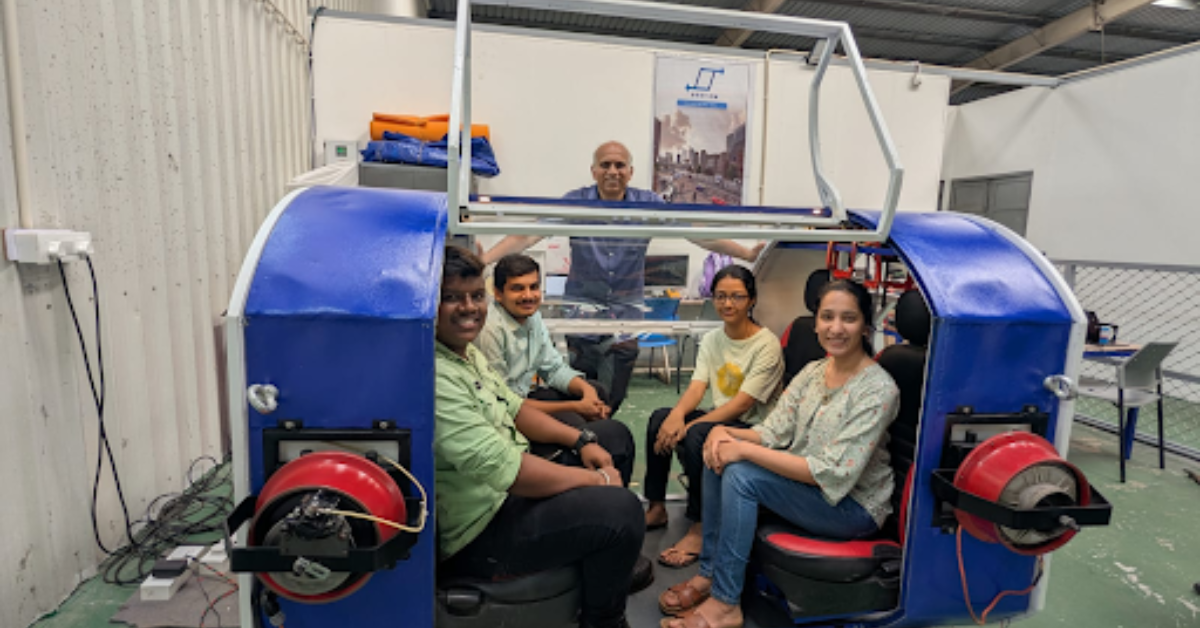
Advancing Sustainable Urban Mobility Through Robotics, AI and Intelligent Infrastructure
Combining robotics, IoT and AI, the innovation introduces a new model of electric personal rapid transit designed to address urban congestion and improve energy efficiency. Through lightweight autonomous pods and compact guideways, it aims to advance sustainable mobility, strengthen public transport connectivity and contribute to cleaner cities.
Updated on: 28 November 2026

Sector

Solution

Technology

State of Origin
Disclaimer:
Features ‘as is’ submissions and neither constitutes endorsement, certification, recommendation, or validation by NITI Aayog nor makes NITI Aayog liable in any manner.
Impact Metrics
35% lower energy consumption
than electric buses, reducing the energy required for passenger transport through lightweight pod design, mechanical innovation and optimised vehicle operations.
45% lower greenhouse gas emissions
than electric buses, aiming to reduce the environmental footprint of urban mobility through energy-efficient electric transportation and smaller battery requirements.
Nearly 10 times lower infrastructure cost
targeting more affordable deployment compared with competing transportation infrastructure solutions.
Intelligent, on-demand mobility
combining robotics, IoT and AI to coordinate autonomous vehicles, optimise routes, anticipate passenger demand and improve the reliability of journeys.
Karnataka-based Gridflow was founded in response to Bengaluru’s persistent urban mobility challenges, including traffic congestion, pollution, and growing pressure on existing transportation infrastructure. Recognising the limitations of conventional road-based transport and the gradual pace of electrification, the company set out to explore an alternative approach to urban mobility.
Positioning itself as a transportation infrastructure company, Gridflow is developing a new form of personal rapid transit. Unlike conventional transport systems that depend on roads, rail tracks or other large-scale infrastructure, its model uses a dedicated, compact guideway designed specifically for its vehicles.
The initiative aims to introduce an alternative mode of transportation that can complement existing systems such as roads and metro networks. By developing a new infrastructure model with the potential to be deployed at a lower cost, this will address urban congestion, improve mobility and contribute to more sustainable transportation in cities.
Integrating robotics, IoT and AI to transform urban mobility
The innovation is built around three interconnected areas: mechanical and robotics engineering, the Internet of Things (IoT), and artificial intelligence and machine learning (AI/ML).
Mechanical engineering and robotics
At the core of the system is the design and development of energy-efficient autonomous pods. Through innovations in mechanical design, vehicle weight optimisation and material selection, the company aims to minimise the energy required to operate the system, ensuring that energy is used primarily to transport passengers.
Its stated design targets include 35 percent greater energy efficiency and 45 percent lower greenhouse gas emissions compared with electric buses. The pods are also being designed to perform complex functions smoothly and efficiently, including track changes and independent wheel control through multi-motor systems.
Internet of Things (IoT)
The second component involves the use of IoT technologies to enable real-time communication, sensing and control across the transportation network. Critical information must be continuously acquired, processed and shared to coordinate autonomous pods, manage their movement and ensure safe, reliable operations.
AI and machine learning
The third component focuses on developing AI- and ML-based algorithms to optimise the movement and availability of pods. These systems will support dynamic routing, demand forecasting and the strategic distribution and storage of vehicles across stations. By analysing passenger movement patterns and demand data, it will minimise waiting and journey times while ensuring that pods are available when and where they are needed.
Together, these three technological pillars are intended to create an integrated, responsive and energy-efficient transportation infrastructure that delivers reliable, on-demand urban mobility.
Developing energy-efficient electric mobility infrastructure
The transportation system is entirely electric, with a focus on reducing dependence on large, heavy battery systems. The vehicles operate on dedicated guideways rather than conventional roads. These compact structures, approximately two metres wide, feature a rail-based design that allows the pods to travel in a controlled and stable manner. The guideways are designed to be installed above existing spaces, such as footpaths and road medians, allowing pedestrians and road traffic to continue using the space below. Where necessary, the infrastructure can also be adapted to underground routes.
The system is designed to minimise disruption to existing urban infrastructure. Rather than requiring extensive land acquisition, road alterations or tree removal, Gridflow aims to integrate its guideways into the existing urban landscape. It can also complement metro networks by providing first- and last-mile connectivity, linking metro stations with nearby residential complexes and other destinations that may not have convenient access to public transport.
The guideways also offer the potential to incorporate solar panels on their upper surfaces, enabling the system to generate a portion of the electricity required for operations, depending on factors such as orientation and solar exposure.
It’s an opportunity to serve the growing demand for shared and on-demand transportation by offering an additional mobility option that can complement existing transport networks and improve urban connectivity.
Contributing to India’s sustainable goals
Rapid urbanisation, growing travel demand and rising vehicle numbers have placed increasing pressure on India’s urban transportation infrastructure. Congestion, deteriorating air quality, high energy consumption and inadequate first- and last-mile connectivity remain significant challenges for cities. While the transition to electric vehicles is an important part of building cleaner mobility systems, electrification alone cannot address the inefficiencies associated with vehicle weight, road congestion and fragmented public transport networks.
India’s electric mobility transition requires more than the replacement of internal combustion engines with electric vehicles. It also calls for transportation systems that use energy efficiently, support shared mobility and reduce dependence on congested road networks. Gridflow offers an infrastructure-led approach to this transition by combining electric propulsion with lightweight vehicles, autonomous operations and intelligent resource allocation.

By reducing energy consumption per journey and supporting a shift towards shared public transportation, Gridflow has the potential to complement India’s expanding electric bus and EV ecosystem. Its compact guideways could provide additional mobility capacity and strengthen connections between existing public transport systems and the communities they serve.
With a patent already secured and plans to develop a broader portfolio of at least seven patents, Gridflow is continuing to advance its technology and strengthen its intellectual property.
Share Your Story Today, Shape Viksit Bharat Tomorrow
Got an idea, innovation, or experience that's making a difference? Share your story now and ignite India's transformation because your voice can drive the future forward!
Disclaimer:
Features ‘as is’ submissions and neither constitutes endorsement, certification, recommendation, or validation by NITI Aayog nor makes NITI Aayog liable in any manner.
Resources to Replicate This Idea
BUILD YOUR OWN INTERVENTION
Handpicked stories tailored just for you
Explore stories that inspire, inform, and ignite new ideas across tech, innovation, and real-world impact


Advancing AI Literacy and Cyber Safety for Underserved Communities
The initiative equips underserved communities with the digital skills and AI capabilities needed to develop practical solutions to real-world challenges....
Read More