
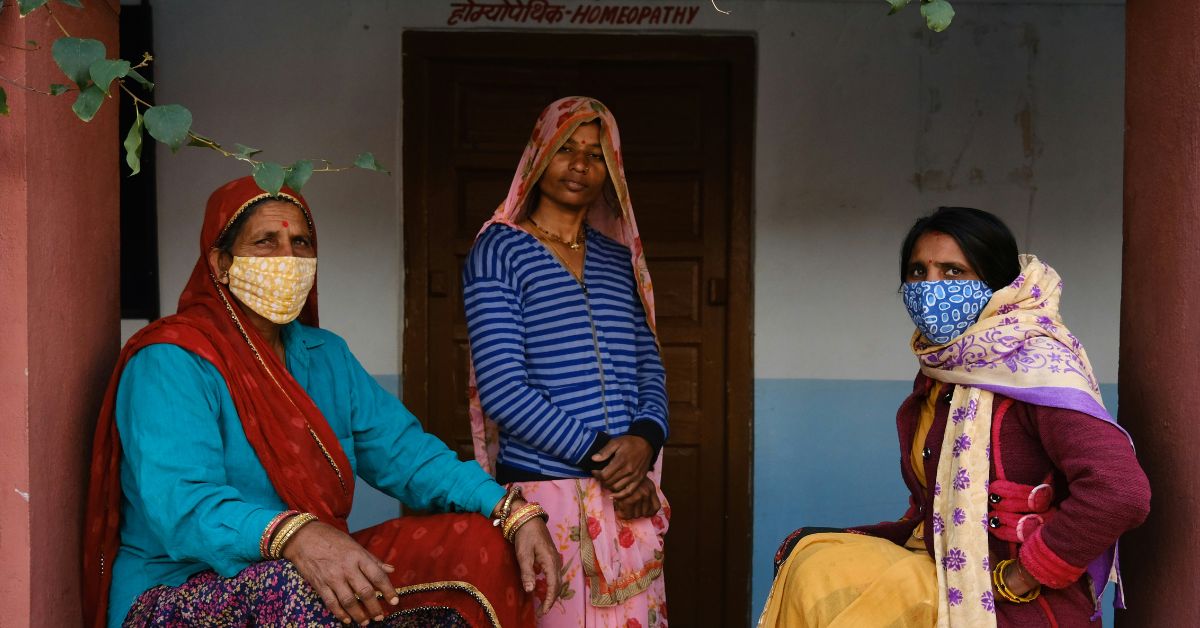
40,000 Digital Runners, 3.2 Million Lives Reached: The Tech Transforming Rural India’s Access to Healthcare
An AI-powered, GPS-enabled platforms has built a network of 40,000 ‘Digital Runners’ across 540 districts, helping organisations deliver trusted last-mile services to India’s most remote communities.
Updated on: 21 July 2026

Sector

Solution

Technology

State of Origin
Disclaimer:
Features ‘as is’ submissions and neither constitutes endorsement, certification, recommendation, or validation by NITI Aayog nor makes NITI Aayog liable in any manner.
Impact Metrics
40,000+ Digital Runners
creating a nationwide technology-enabled workforce that delivers verified last-mile services across rural India.
11,000 PIN codes connected
extending technology-driven service delivery into some of India's most remote and underserved regions.
540 districts covered
enabling organisations to execute field operations at scale through a GPS-enabled digital platform.
3.2 million villagers counselled for COVID-19 vaccination
using a tech-enabled network that combined digital registration, community outreach and real-time monitoring to combat vaccine hesitancy.
Anaxee, an Indore-based deep-tech startup, has built one of India’s largest last-mile execution networks by connecting organisations with a distributed workforce of local youth called Digital Runners. Founded by Govind Agrawal, Arti Agrawal and Nilesh Maheshwari, the company addresses a long-standing challenge faced by businesses, governments and NGOs, which is reaching people and places in remote and underserved parts of India.
While digital connectivity has expanded rapidly, physical access to rural communities has remained difficult. Anaxee bridges this gap by enabling trusted local individuals to complete on-ground tasks using a smartphone.
Initially founded as a biometric technology company, Anaxee pivoted after the 2008 financial crisis and, around 2016, introduced the Digital Runner model. Similar to how ride-hailing platforms connect drivers with passengers, Anaxee connects local workers with field assignments delivered through its mobile application. These assignments include address verification, merchant onboarding, household surveys, data collection, retail expansion, market audits and support for healthcare, agriculture, climate and government outreach programmes.
Digital Runners typically accept tasks within a short radius of their homes, complete them, upload photographic and GPS-verified proof, and receive payments after quality checks are completed.
The platform is powered by a cloud-based technology ecosystem comprising mobile applications, web dashboards and APIs. Every field activity is captured using GPS coordinates, timestamps and photographic evidence, while AI-based validation tools, automated calls and human quality assurance teams ensure data accuracy before client approval. Organisations can monitor assignments in real time through dashboards, giving them visibility into progress, locations and reports across thousands of sites simultaneously.
Today, Anaxee operates across 540 districts, 11,000 PIN codes and nearly 1.2 lakh villages and towns, supported by a network of over 40,000 Digital Runners.
Beyond solving India’s last-mile delivery challenge, Anaxee has created flexible livelihood opportunities for thousands of young people in rural and semi-urban India. By allowing them to earn income close to home instead of migrating to cities, the company is strengthening local economies while helping organisations access reliable, real-time field intelligence from even the country’s most remote locations. Its asset-light, technology-driven model demonstrates how digital platforms can create both economic opportunity and more effective service delivery across rural India.
Beyond this, it’s helping strengthen rural India’s access to vaccination.
How Project Swaraksha was managed using technology-enabled data collection
Project Swaraksha is Anaxee’s flagship social impact initiative that leverages its nationwide network of Digital Runners and a technology-enabled last-mile delivery platform to address critical public health challenges in rural India.
Launched during the COVID-19 pandemic, the initiative was designed to overcome vaccine hesitancy and bridge the digital divide that prevented millions of rural citizens from accessing vaccination services. While India’s CoWIN platform successfully digitised vaccine registration, many in villages lacked smartphones, internet access or the digital literacy needed to register for appointments. At the same time, misinformation and fear surrounding vaccines discouraged many from getting vaccinated.
To address these challenges, Anaxee deployed its network of trained Digital Runners to conduct door-to-door outreach across villages. Rather than simply sharing information, the runners engaged in one-on-one counselling, answered questions about vaccine safety, dispelled misinformation and built trust within local communities. They also provided practical assistance by registering beneficiaries on the CoWIN portal, booking vaccination appointments and helping people download their vaccination certificates after receiving both doses.
The initiative went beyond digital support by working closely with local authorities to improve vaccine accessibility. In areas where vaccination centres were too far away, Digital Runners coordinated with government officials to organise local vaccination camps, ensuring that distance did not become a barrier to immunisation. They also conducted household visits to estimate the exact number of vaccine doses required for each village, enabling more efficient planning and reducing wastage.
Project Swaraksha has demonstrated the effectiveness of combining technology with trusted local networks. The campaign counselled over 3.2 million villagers, confirmed 1.8 million vaccinations, and operated across 560 districts.
At its core, Project Swaraksha illustrates how locally embedded human networks can complement digital public infrastructure. By integrating mobile applications, real-time monitoring and community engagement, Anaxee transformed Digital Runners into trusted intermediaries who connected rural citizens with essential public services.
Beyond increasing COVID-19 vaccination uptake, the initiative established a scalable model for delivering healthcare awareness, government programmes and future social interventions in underserved communities. Today, Anaxee continues to use the same technology-enabled framework to support healthcare campaigns, agricultural outreach, climate initiatives and other development programmes, demonstrating how last-mile innovation can bridge service delivery gaps across rural India.
How scaling Anaxee’s model could positively impact rural India
A study conducted by researchers at the Center for Disease Dynamics, Economics & Policy, Washington DC, USA, examined how the quality of public health facilities influences childhood vaccination outcomes in rural India.
Although stating that national immunisation coverage has improved from 62 percent in 2015–16 to 76 percent in 2019–20, it said that millions of children continue to miss essential vaccines, particularly in rural and low-income communities.
While previous research has largely focused on access to healthcare, this study investigated whether the quality of health infrastructure and vaccination services also affects immunisation rates.
Researchers analysed data from the nationally representative Integrated Child Health and Immunization Survey (INCHIS) 2015–16, covering 44,571 households and 1,346 public primary health sub-centres across 24 Indian states. They developed two indices to measure healthcare quality: one assessing the overall quality of health infrastructure, including facilities and resources, and another evaluating the quality of vaccine service delivery. These were then compared with vaccination outcomes among children under two years of age while accounting for household socioeconomic characteristics.
The findings revealed a strong positive relationship between health facility quality and childhood immunisation, while highlighting significant inequalities in immunisation. Children from poorer households were less likely to be fully vaccinated, partly because the health facilities serving them were of lower quality. However, proximity to vaccination centres helped narrow this gap, indicating that both healthcare quality and physical accessibility influence vaccine uptake.
Overall, the research concludes that strengthening the quality of primary healthcare facilities is critical for improving childhood immunisation in India.
Scaling Anaxee’s Digital Runner model could significantly strengthen India’s healthcare ecosystem by improving last-mile healthcare delivery, increasing awareness, and bridging the gap between digital public health infrastructure and rural communities.
While India has made major investments in the Ayushman Bharat Digital Mission, access to these services remains uneven due to digital illiteracy, limited internet connectivity and shortages of frontline healthcare workers in many rural regions.
Anaxee’s technology-enabled network of trained local youth can act as a trusted bridge between healthcare systems and communities. Beyond vaccination campaigns, Digital Runners could support routine immunisation drives, maternal and child healthcare, tuberculosis screening, nutrition programmes, non-communicable disease awareness, mental health outreach and preventive health education.
Their familiarity with local languages and communities enables them to build trust, counter misinformation and encourage timely healthcare seeking, particularly among vulnerable populations.
The model can also improve the efficiency of public health programmes by supporting digital registrations, appointment scheduling, telemedicine consultations and follow-up care. Through Anaxee’s mobile platform, health authorities can monitor outreach activities in real time using GPS-enabled data, timestamps and photographic verification, creating greater transparency and accountability.
The same network could assist in identifying high-risk populations, conducting household surveys, reporting disease outbreaks and supporting public health surveillance in remote areas.
During emergencies such as pandemics, floods or disease outbreaks, Digital Runners could rapidly disseminate verified information, coordinate relief efforts and connect affected communities with healthcare services. Their decentralised presence across thousands of villages enables faster response than traditional centralised systems.
As India’s healthcare increasingly embraces digital technologies, scalable last-mile networks like Anaxee can ensure these innovations translate into real-world impact. By complementing Accredited Social Health Activists (ASHAs), Auxiliary Nurse Midwives (ANMs) and primary healthcare centres rather than replacing them, the model can extend the reach of existing healthcare infrastructure.
Ultimately, combining digital platforms with trusted community-based delivery can improve healthcare access, strengthen disease prevention, enhance programme implementation and contribute to more equitable health outcomes across rural India.

Share Your Story Today, Shape Viksit Bharat Tomorrow
Got an idea, innovation, or experience that's making a difference? Share your story now and ignite India's transformation because your voice can drive the future forward!
Disclaimer:
Features ‘as is’ submissions and neither constitutes endorsement, certification, recommendation, or validation by NITI Aayog nor makes NITI Aayog liable in any manner.
Resources to Replicate This Idea
BUILD YOUR OWN INTERVENTION
Handpicked stories tailored just for you
Explore stories that inspire, inform, and ignite new ideas across tech, innovation, and real-world impact

Frontier GaN Technology: Scaling India’s Semiconductor Ambitions Through Indigenous Innovation
Gallium Nitride (GaN) is emerging as a frontier semiconductor technology with the potential to transform India’s defence, telecommunications and power...
Read More