The Future of Assistive Healthcare: How Robotics is Empowering Mobility-Impaired Patients in 16 Indian States
Robotics opens up myriad possibilities in the realm of assistive healthcare, especially for patients requiring physiotherapy or other mobility-related support. Rymo Technologies of Navi Mumbai, Maharashtra brings some of these possibilities to life with its three unique products.
Updated on: 31 July 2026

Sector

Solution
Disability

Technology

State of Origin
Disclaimer:
Impact Metrics
500+ medical centers
using Rymo's products to improve patient recovery from mobility impairments.
~30% of customer base in Tier-2 cities,
bringing advanced assistive healthcare to smaller urban regions in India.
80–90% cost savings
for customers purchasing Rymo products as opposed to imported options.
~15 min of recovery time provided
per session for patients using Rymo products.
One of the strongest indicators of inclusive development is access to healthcare for all citizens. While medical technology has grown rapidly in the past decades, its distribution remains uneven across the world, making it difficult to access for many populations.
In India, this is evident in, for example, the case of treatment options for patients with mobility impairments. Outside of the country’s top multi-speciality hospitals, advanced mobility aids are difficult to procure, even in Tier-I cities. The main reason for this is that most of these aids are manufactured abroad and hence come with high import costs.
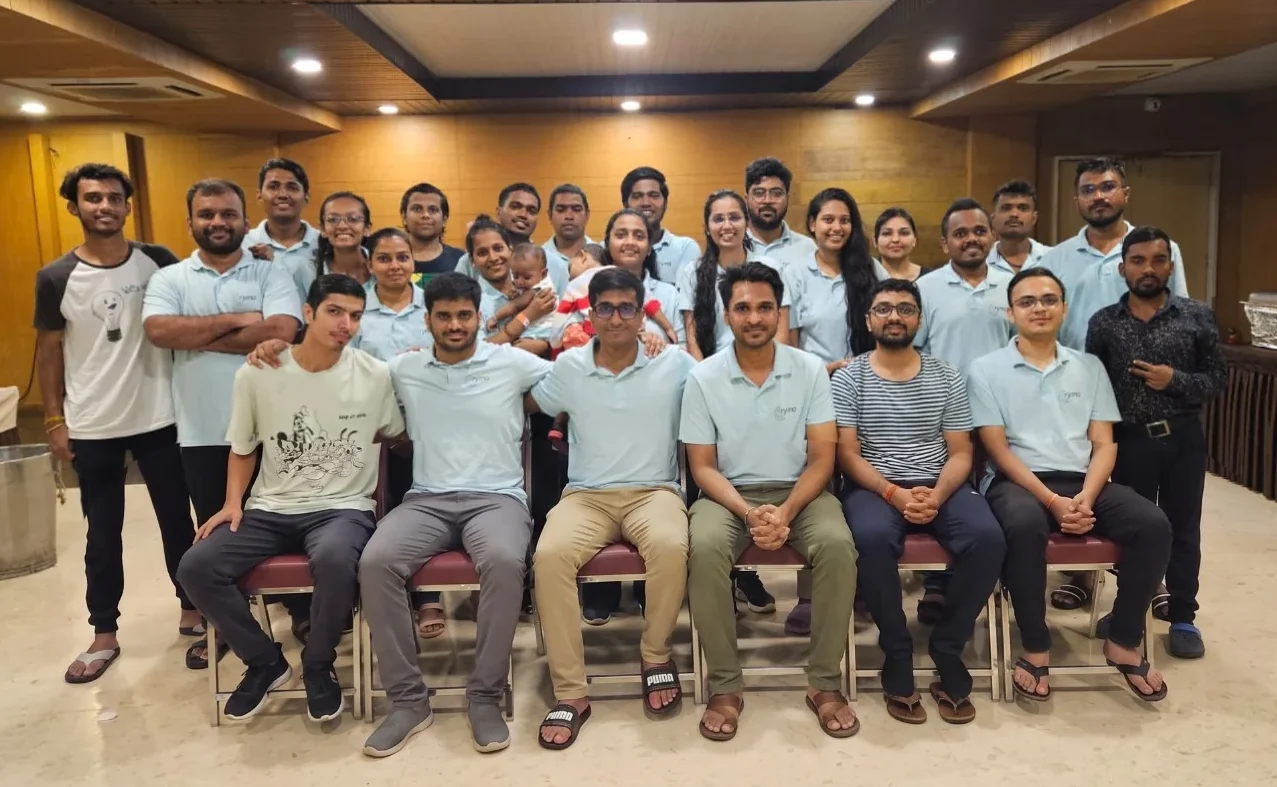
So, why not design and build indigenous alternatives that Indian customers can afford? This was the thought that, in 2018, inspired Chirag Shah and Abhishek Rai to launch Rymo Technologies. Drawing from the founders’ expertise in robotics, this Navi Mumbai-based company has designed smart rehabilitation products that boost patient autonomy and reduce doctor workloads. Its name—an abbreviation of the phrase ‘Rediscover Your Mobility’—summarizes its empathetic approach to assistive healthcare.
What products are currently available?
Rymo’s flagship product is the Mobi-L, a robotic system that helps patients navigate injury recovery—from the initial stages, when patients experience the most difficulty moving, to later stages, where they can move but require physiotherapy to build up their mobility. The Mobi-L system offers 20+ exercises for different body parts, aiming to improve a patient’s range of motion, strength, speed, stamina, and other health indicators over time. These indicators are tracked with the help of smart sensors integrated built into the robotic components.
As a patient performs any suggested exercise, they will find that it is highly gamified, with their real-life movements reflected on a virtual application. This digital platform, available on tablets, encourages them to view recovery as a rewarding process. Additionally, it provides the ability to generate longitudinal mobility reports for clinicians, revealing any progression or delays in treatment.
Following the positive reception of the Mobi-L, Rymo announced two new products. The first of these, called Mend, is a digital device that allows patients to work on improving their physical balance. The other is Nudge, a system that boosts patient cognition and reflexes using minigames.
Rymo’s development journey
Rymo began as a project at Mumbai’s K.J. Somaiya College of Engineering, involving an affiliated physiotherapy institute to assess customer needs from a healthcare perspective. In the same phase, with the help of IIT Madras’s Incubate program, the founders went on to interview ~100 physiotherapists from different hospitals.
Next, IIT Bombay and IKP Hyderabad financed this project with the DHT Nidhi Praya scheme and BIRAC’s BIG grant, respectively, enabling Rymo to focus on R&D for prototypes. Around the COVID-19 pandemic (2020), Rymo found its first customer. Over the next two years, more pilot testing was conducted with hospitals and clinics, supported by Social Alpha and some other good angel investors.
What impact does Rymo promise?
Today, Rymo’s products are used in 500+ centers across India, cumulatively numbering ~700 installations. The states with the highest concentrations of installations are Maharashtra and Gujarat, but the company has a presence in 14 others. Of all the urban centers covered, ~30% are in Tier-II cities, which have historically had low access to advanced medical care.
The average Rymo product costs between 10% and 20% of its foreign competitors without compromising in terms of quality. Currently, it can provide a patient with roughly 15 minutes of recovery time per session, allowing them to challenge themselves at their own pace while also saving time for physiotherapists.
Rymo has received several awards from both private and public entities. For example, in 2023, it received recognition and a sum of ~INR 3.2 lakh via the Qualcomm Design in India Challenge. In 2025, it was shortlisted as one of the top six innovators under the UK–India HealthTech Accelerator Programme. As of 2026, it is in talks with the UK Department of Business and Trade to conduct pilot tests of its products in the United Kingdom, potentially opening up an entirely new national market.
Plans for the future
According to Mr. Shah, the company’s current aim is to increase the provided recovery time to 90 minutes per session, incorporate higher-tech mobility tools such as virtual reality and computer vision, and expand the company’s roster to offer 8–10 products over the next year. These investments, if actualized, would significantly boost outcomes for both mobility-impaired patients and their doctors.
At a policy level, Rymo would benefit from formal incorporation in government-supported medical facilities, such as in the stroke recovery centers present across India’s districts. To improve the quality of care for patients using assistive health products, State governments could announce official standards. Finally, considering that some medical professionals may still find it difficult to procure these products, the conceptualization of more health financing options would be useful.
Such macro-level recognition and investment would increase adoption by the public, consequently reducing the costs of mobility-related healthcare for millions of Indians.
Share Your Story Today, Shape Viksit Bharat Tomorrow
Got an idea, innovation, or experience that's making a difference? Share your story now and ignite India's transformation because your voice can drive the future forward!
Disclaimer:
Resources to Replicate This Idea
BUILD YOUR OWN INTERVENTION
Handpicked stories tailored just for you
Explore stories that inspire, inform, and ignite new ideas across tech, innovation, and real-world impact


Solar-Charged, AI-Optimised Boats Cut Fuel Costs by 95% and Make Water Cleanup Safer
AI-optimised, remote-controlled electric boats collect organic and inorganic waste from lakes, ponds, and ports using predictive, zigzag coverage. They gather...
Read More