30-Minute Farm Loans, 60,000+ Lending Opportunities: How AI Is Transforming Agricultural Credit
Satellite imagery, AI and geospatial analytics are helping banks assess farmland in real time, reducing loan approvals from up to 15 days to under 30 minutes. The technology has already analysed 2.1 million farms, covered 85 million hectares and generated over 60,000 farm-lending opportunities across India.
Updated on: 29 June 2026

Sector

Solution

Technology

State of Origin
Disclaimer:
Features ‘as is’ submissions and neither constitutes endorsement, certification, recommendation, or validation by NITI Aayog nor makes NITI Aayog liable in any manner.
Impact Metrics
2.1M+ farmer plots
analysed using satellite imagery and AI to assess crop health, productivity and creditworthiness.
85M+ hectares of farmland
mapped and monitored through geospatial analytics to support faster, data-driven agricultural lending.
60,000+ farm-lending opportunities
generated for financial institutions using AI-powered farm risk assessments.
Under 30-minute loan decisions
reducing agricultural loan processing times from 10–15 days to less than an hour, with same-day disbursals becoming possible.
Agriculture is the undisputed backbone of India’s economy. But while the past decade has witnessed policy reforms, bank nationalisations, priority sector lending and targeted agricultural credit schemes, which have expanded institutional finance, credit access to farmers remains limited.
According to research, despite the Government of India’s continued efforts to promote agricultural lending, only around 29 percent of farmers have access to formal credit. Small and marginal farmers (SMFs), who account for 86.2 percent of the country’s farming population, remain particularly underserved.
Nearly half of all SMFs are unable to access credit from either formal or informal sources. Among those who do borrow, 59 percent (around 36 million farmers) obtain loans through formal financial institutions, while the remaining 41 percent continue to rely on informal lenders, highlighting the persistent gap in financial inclusion.
This credit gap restricts farmers’ ability to invest in quality inputs, modern technologies and sustainable farming practices. Research indicates that access to agricultural credit can increase farm productivity by 24 percent while reducing downside risk by 16 percent. In addition to this, we know that affordable and timely finance also enables farmers to diversify incomes, adopt climate-smart practices such as precision agriculture, crop rotation and water-efficient farming, and improve long-term resilience.
But why are lenders often reluctant to extend credit to farmers? The biggest challenge is repayment risk. And that’s not entirely their fault.
An unpredictable harvest
In 2016, researchers at Stanford University found that while access to formal agricultural credit had expanded across India, it was not enough to improve farmers’ incomes or productivity on its own.
Studying the Kisan Credit Card (KCC) programme (introduced to provide credit support to farmers), they discovered that many farmers repaid their low-interest institutional loans by borrowing money from relatives, friends and local moneylenders.
These short-term informal loans, often carrying high interest rates, helped farmers avoid default so they could remain eligible for future KCC loans. As a result, official repayment rates appeared high, but they concealed significant levels of hidden indebtedness.
The researchers identified the unpredictability of harvests as the primary reason behind this cycle.
Droughts, erratic monsoons and other weather-related shocks frequently reduced or wiped out crop yields, leaving farmers without enough income to repay their loans. To maintain access to affordable institutional credit, many turned to informal lenders for short-term, high-interest borrowing until the next KCC loan was sanctioned.
Delayed and often inadequate crop insurance payouts further compounded the problem, offering little financial relief when crops failed.
The study concluded that expanding access to credit is only the first step toward improving rural livelihoods. Sustainable agricultural finance also requires effective risk management, timely insurance support and lending systems that account for the realities of climate uncertainty and seasonal farm incomes.
But now, a tool powered by artificial intelligence (AI) might have a solution to this twin challenge: credit gaps and unpredictability of harvest.
When the skies determine farmers’ access to credit
SatSure is an Indian deep-tech company that is transforming agricultural lending by combining satellite imagery, artificial intelligence (AI) and geospatial analytics to help financial institutions make faster, more informed lending decisions.
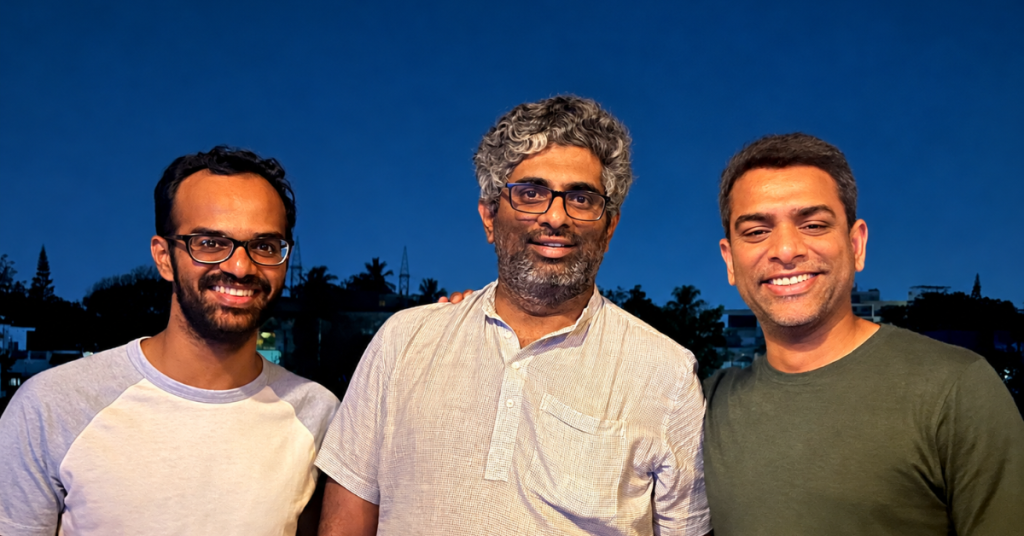
Founded in Bengaluru in 2017 by former ISRO propulsion systems engineer Prateep Basu and CTO Rashmit Singh Sukhmani, the company applies space technology to real-world challenges across agriculture, climate resilience, insurance and financial services.
In agriculture, SatSure’s primary focus is helping banks and lending institutions evaluate farmland using objective, data-driven insights rather than relying solely on paperwork, field visits and manual inspections.
Its platform analyses high-resolution satellite imagery alongside AI models to assess key agricultural indicators such as crop type, acreage, sowing and harvesting cycles, crop health, vegetation growth and historical yield trends.
It also incorporates environmental factors including rainfall, temperature, evapotranspiration, groundwater availability and air quality to understand how climatic conditions may affect farm productivity.
One of SatSure’s key innovations is the creation of digital twins of farms. These virtual representations continuously monitor farmland across multiple cropping seasons, including kharif, rabi and summer crops.
Using this information, the company generates a farm-level risk score that is delivered through its SatSource Report. Rather than making lending decisions itself, SatSure provides these reports to banks, government agencies and financial institutions through a Business-to-Business-to-Consumer (B2B2C) or Business-to-Government-to-Consumer (B2G2C) model.
Lenders use the reports to answer critical questions such as whether the land is actively cultivated, what crops are being grown, whether they are healthy and whether irrigation is available.
By replacing lengthy manual verification processes with automated satellite-based assessments, SatSure significantly reduces loan processing times.
Agricultural loans that traditionally required multiple field visits and 10 to 30 days of assessment can now be processed in less than an hour, with many lending decisions completed within 30 minutes and same-day disbursals becoming possible.
Faster decisions allow farmers to access credit when they need it most, particularly during time-sensitive sowing and cultivation periods.
The platform’s success is reflected in its numbers: more than 2.1 million farmer plots have been analysed, data has been processed from over 85 million hectares of farmland, and nearly 1.95 lakh villages across India have been covered.
These insights have also generated over 60,000 farm-lending opportunities for financial institutions.
Beyond lending, SatSure is increasingly helping institutions understand climate risk. Its Climate Vulnerability Index enables banks to monitor weather-related exposure across their agricultural portfolios, identify early signs of crop stress and integrate climate resilience into lending and crop insurance decisions.
How could access to credit revolutionise the future of farming?
Expanding agricultural credit is not simply about increasing the amount of money available, but ensuring that formal financial systems can effectively identify, assess and serve underserved farming communities.
SatSure demonstrates how satellite imagery, artificial intelligence and geospatial analytics can make agricultural lending faster, more transparent and more inclusive.
As these technologies become more affordable and widely available, similar models could be adopted by banks, non-banking financial companies (NBFCs), cooperatives and government agencies across India. Integrating satellite-based farm intelligence with digital public infrastructure, land records, weather forecasts and crop insurance platforms could create a unified ecosystem for assessing creditworthiness in real time.
This will reduce dependence on manual field inspections, lower operational costs and extend formal credit to millions of smallholder farmers who currently lack verifiable financial histories.
Beyond loan approvals, continuous monitoring of crop health and climate risks could enable dynamic lending, early-warning systems and quicker insurance settlements. In the future, such data-driven credit models could help financial institutions move from reactive lending to proactive risk management, ensuring farmers receive timely, affordable finance while building a more resilient and climate-ready agricultural economy.
Sources:

Share Your Story Today, Shape Viksit Bharat Tomorrow
Got an idea, innovation, or experience that's making a difference? Share your story now and ignite India's transformation because your voice can drive the future forward!
Disclaimer:
Features ‘as is’ submissions and neither constitutes endorsement, certification, recommendation, or validation by NITI Aayog nor makes NITI Aayog liable in any manner.
Resources to Replicate This Idea
BUILD YOUR OWN INTERVENTION
Handpicked stories tailored just for you
Explore stories that inspire, inform, and ignite new ideas across tech, innovation, and real-world impact


Turning Chemistry Into Code: The Technology Making Complex Diagnostics Faster and More Precise
Algorithmic Biologics is turning chemistry into code, using programmable DNA molecules to simplify complex diagnostic testing. Its technology could enable...
Read More