2,000 Machines, 15 Countries, Zero Groundwater: The Rise of Atmospheric Water Infrastructure
With groundwater depletion worsening across Indian cities, a Kolkata-based startup is generating drinking water directly from atmospheric humidity. Its systems, now deployed across 15 countries, have produced over 100 million litres of water while helping industries, hospitals, and urban campuses reduce dependence on borewells, tankers, and bottled water.
Updated on: 13 May 2026

Sector

Solution

Technology

State of Origin
Disclaimer:
Impact Metrics
2,000+ atmospheric water systems
installed globally across 15 countries including India, UAE, Bahrain, Saudi Arabia, Philippines, and more.
100+ million litres
of drinking water generated from atmospheric humidity.
Up to 4 litres
of water per unit of electricity generated in ideal humidity conditions.
India’s cities are running out of easy answers to water scarcity. Bengaluru’s groundwater levels continue to plunge, Chennai has repeatedly edged towards “Day Zero”, and even cities like Mumbai and Kolkata are beginning to feel the strain of rising demand, erratic rainfall, and overburdened infrastructure.
For decades, urban water planning has focused on pipelines, reservoirs, and groundwater extraction. But as climate pressures intensify, a new category of decentralised water infrastructure is beginning to emerge — systems that generate drinking water directly where it is needed.
One such solution is atmospheric water generation technology, which extracts potable water from humidity in the air.
Building Drinking Water Systems Without Groundwater
In 2017, Kolkata-based entrepreneur Navkaran Singh Bagga founded Akvo Atmospheric Water Systems to explore whether cities could reduce dependence on groundwater, tanker networks, and bottled water altogether.
Coming from a finance and accounting background rather than environmental engineering, Bagga was drawn to the sector after noticing how unevenly access to safe drinking water was distributed across urban India.
The company’s approach was simple but ambitious: use atmospheric moisture as an untapped water source.
Since its first commercial deployment in 2018, Akvo has installed more than 2,000 atmospheric water systems across 15 countries, collectively generating over 100 million litres of drinking water without extracting groundwater.
The systems are now deployed across six Indian cities — Bengaluru, Chennai, Mumbai, Goa, Kolkata, and Ahmedabad — along with international markets including the UAE, Bahrain, Saudi Arabia, the Philippines, Chile, Ecuador, and Colombia.
Turning Humidity Into Drinking Water

Akvo’s Atmospheric Water Generators (AWGs) function by converting moisture present in ambient air into potable water.
The machines first draw in air through industrial fans and pass it through filtration systems that remove dust and airborne contaminants. The filtered air is then cooled to its dew point, triggering condensation. The resulting water droplets are collected in stainless steel tanks and sent through multiple purification stages, including sediment filtration, activated carbon treatment, and ultraviolet sterilisation.
Minerals such as calcium and magnesium are then added to improve taste and nutritional quality.
Unlike traditional filtration systems that depend on an existing water source, atmospheric water systems create water independently from the surrounding environment.
Why the Technology Fits Urban India
The technology is particularly effective in humid and coastal cities where atmospheric moisture levels remain consistently high.
In ideal conditions, Akvo’s systems can produce up to four litres of water per unit of electricity consumed. Even in relatively drier cities such as Bengaluru, the systems reportedly generate around 2.5 litres per unit.
This makes the systems suitable for high-density urban environments where drinking water demand is rising but supply infrastructure remains unreliable.
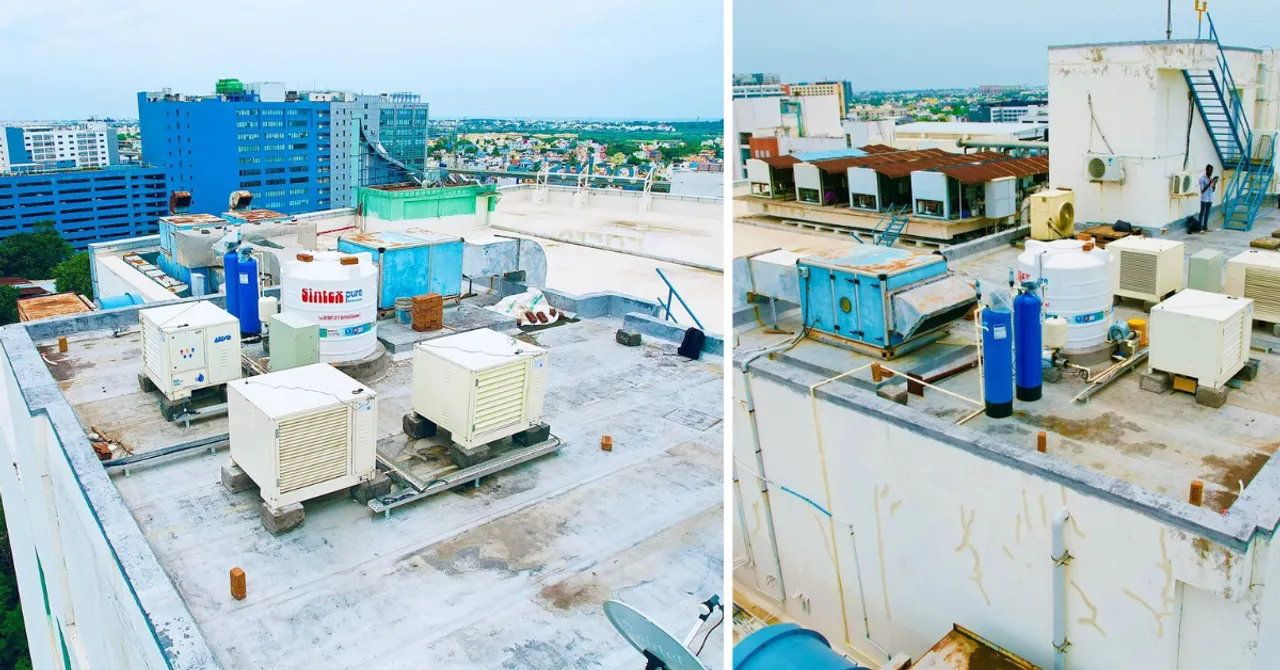
The machines are also designed to run on conventional electricity, solar power, or diesel generators, allowing deployment across industrial campuses, institutional buildings, remote infrastructure projects, and disaster-response zones.
The company currently offers systems ranging from compact 50-litre-per-day units to industrial-scale installations capable of producing up to 30,000 litres of water daily.
From Corporate Sustainability to Urban Resilience
What began as an alternative drinking water technology is increasingly being adopted as part of broader urban sustainability and ESG strategies.
At Gujarat-based PGP Glass Private Limited, the company’s systems were introduced to reduce dependence on packaged water while lowering operational waste. Meanwhile, Corewire Surface Technology adopted the technology as part of efforts to reduce plastic bottle consumption across its facilities.
One of the more significant deployments is at the Tuppadahalli Wind Farm in Karnataka operated by renewable energy company Acciona. The site now generates both electricity and drinking water on-site, reducing logistical dependence on bottled water deliveries.
In Mumbai, a hospital using the system reportedly reduced water procurement costs by 22% after shifting part of its drinking water supply to atmospheric generation systems.
Rethinking Water Access Through Decentralisation
A major challenge in sustainable infrastructure adoption is upfront capital investment. To address this, Akvo introduced a BOOT (Build, Own, Operate, Transfer) model under which the company installs and manages the systems while clients pay based on water consumption rather than purchasing infrastructure outright.
The approach lowers entry barriers for industries and institutions looking to adopt sustainable water systems without major capital expenditure.
Notably, the company has scaled operations with a relatively lean team of 38 people and without external investors, allowing it to retain operational control while expanding across multiple geographies.
The Larger Urban Development Shift
Atmospheric water generation is unlikely to replace municipal water systems entirely. However, its rise reflects a broader shift in urban development thinking — one that increasingly favours decentralised and climate-resilient infrastructure.
As cities grapple with water stress, distributed systems such as rainwater harvesting, wastewater recycling, decentralised treatment plants, and atmospheric water generation are becoming part of the larger conversation around urban resilience.
Akvo’s model demonstrates how alternative water infrastructure can complement traditional supply systems, particularly in rapidly urbanising regions where conventional networks are struggling to keep pace with demand.
In a future shaped by climate uncertainty, the ability to generate drinking water directly from the air may no longer seem unconventional — it may become necessary.
Share Your Story Today, Shape Viksit Bharat Tomorrow
Got an idea, innovation, or experience that's making a difference? Share your story now and ignite India's transformation because your voice can drive the future forward!
Disclaimer:
Resources to Replicate This Idea
BUILD YOUR OWN INTERVENTION
Handpicked stories tailored just for you
Explore stories that inspire, inform, and ignite new ideas across tech, innovation, and real-world impact

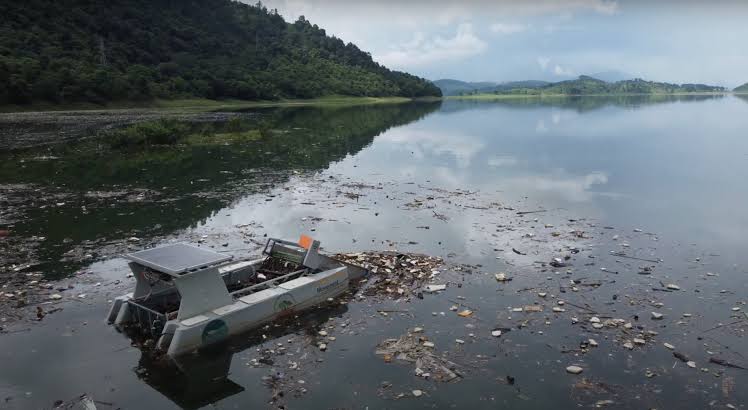
Solar-Charged, AI-Optimised Boats Cut Fuel Costs by 95% and Make Water Cleanup Safer
AI-optimised, remote-controlled electric boats collect organic and inorganic waste from lakes, ponds, and ports using predictive, zigzag coverage. They gather...
Read More