Inside India’s Water-Tech Revolution Powered by IoT, Solar Energy & Decentralised Purification
A large-scale rural infrastructure company is deploying IoT-enabled water purification systems, wastewater treatment plants, and solar irrigation technology across 25,000 villages, advancing India’s clean energy and sustainable urban development goals.
Updated on: 12 May 2026

Sector

Solution

Technology
IoT

State of Origin
Disclaimer:
Features ‘as is’ submissions and neither constitutes endorsement, certification, recommendation, or validation by NITI Aayog nor makes NITI Aayog liable in any manner.
Impact Metrics
9,130+ plants
for water purification installed across India.
626 MLD+
installed purification capacity.
25,000+ villages
impacted across Maharashtra, Rajasthan, Madhya Pradesh, Chhattisgarh, Jharkhand, Bihar, and others.
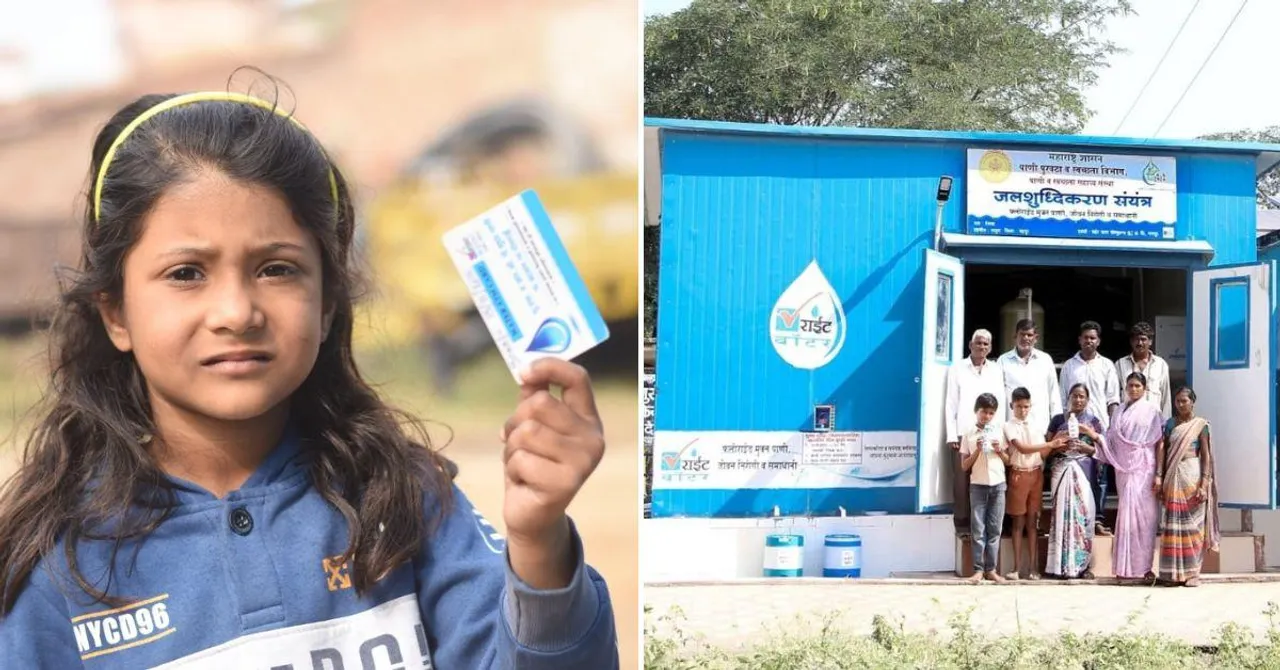
In 2009, the residents of Dongargaon village in Maharashtra’s Mulshi taluka were living with a silent public health crisis. High fluoride levels in groundwater had left many villagers — including children — with brown teeth, brittle bones, joint pain, and signs of skeletal fluorosis. Access to safe drinking water was limited, and for many families, illness had become normalised.
When engineer Abhijeet Gan travelled nearly 100 kilometres to study the problem firsthand, he encountered more than a technical challenge. He saw a systems failure: contaminated groundwater, weak rural infrastructure, unreliable electricity, and the absence of scalable last-mile water treatment systems.
That visit would eventually shape the trajectory of Nagpur-based Rite Water Solutions, a cleantech and rural infrastructure company that today operates across more than 25,000 villages in India through water purification systems, solar irrigation infrastructure, wastewater treatment technologies, and IoT-enabled rural utility platforms.
Over the last decade and a half, the company has evolved from a water purification startup into a large-scale integrated rural technology provider — one increasingly positioned at the intersection of water security, renewable energy, public health, and urban development.
Engineering a Low-Cost Fluoride Removal Technology
Founded by Abhijeet Gan, a BITS Pilani graduate with an MBA from SP Jain Institute of Management & Research, Rite Water began with a core focus on decentralised drinking water purification systems for underserved rural regions.
Rather than relying solely on centralised municipal infrastructure, the company developed village-scale purification plants tailored to local contaminants. Its systems address fluoride, arsenic, nitrate, iron, salinity, and biological contamination — all major contributors to groundwater-linked health risks across India.
The company’s first breakthrough came through a defluoridation technology based on electrolysis. The process enabled fluoride compounds to settle out of contaminated groundwater, making the water safe for consumption. Following the success of the Dongargaon installation, the Maharashtra government commissioned dozens of similar plants across affected regions.
Over time, Rite Water expanded its technology stack significantly. Its purification ecosystem today includes electrochlorination-based disinfection systems, reverse osmosis (RO) purification units, decentralised water treatment plants, solar-powered purification systems, wastewater treatment and recycling units, and mobile water ATMs.
The Patented Tech Using Salt Instead of Chemicals
One of Rite Water’s most distinctive innovations is its patented electrochlorination process, which generates chlorine onsite using common salt instead of externally sourced chemicals.
The system converts salt solution into chlorine through electrochemical reactions, allowing rural operators to disinfect water without depending on complex chemical supply chains. The model is particularly relevant in remote geographies where chemical procurement and logistics remain major barriers.
Since salt is widely available, the system becomes easier to maintain at village scale while also lowering operational costs. The technology has enabled the company to deploy water purification systems even in regions with inconsistent infrastructure and limited technical manpower.
While the company initially focused on chemical contamination removal, it later expanded into biological treatment technologies capable of handling microbial contamination — similar in principle to household filtration systems, but engineered for community-scale use.
Creating Smart, IoT-Enabled Water Infrastructure
What differentiates Rite Water from conventional water treatment providers is its integration of digital infrastructure into rural utility management.
The company has deployed IoT-driven water management systems that enable real-time monitoring of purification plants, leakage detection, predictive maintenance, and optimisation of water distribution networks. These systems allow operators and local governments to monitor plant health remotely, reducing downtime and improving service reliability.
The scale of deployment is substantial. Rite Water has now established more than 9,130 water purification plants across India, with installed purification capacity exceeding 626 million litres per day (MLD). Its wastewater treatment infrastructure contributes an additional 30 MLD of installed capacity.
The company’s systems have also enabled implementation of over 165 substation monitoring systems and impacted more than 21,800 villages through ongoing and completed projects.
This technology-led approach aligns closely with India’s broader urban development and smart infrastructure priorities. While most smart-city conversations focus on metros, the pressure on urban systems increasingly originates from peri-urban and rural distress — especially around water access, sanitation, migration, and agricultural instability.
By strengthening rural water infrastructure, decentralising treatment systems, and improving resource efficiency, companies like Rite Water are effectively building foundational resilience for future urbanisation.
Enter Solar Pumps: Rite Water’s Clean Energy Expansion
Rite Water’s next major growth phase emerged through renewable energy and agricultural infrastructure.
In less than two years after entering the solar irrigation segment, the company became one of the fastest-growing solar pump implementers under Maharashtra’s flagship “Magel Tyala Saur Krushi Pump” scheme.
In December 2025, Maharashtra achieved a Guinness World Record after installing 45,911 solar agricultural pumps within 30 days through the Mahavitaran (MSEDCL) initiative. Rite Water alone contributed 2,497 installations during the record-breaking month, placing it among the top ten implementing agencies in the state.
The company has now crossed 25,000 solar pump installations across Maharashtra and Rajasthan.
The significance of solar irrigation extends far beyond clean energy adoption. In rural India, agricultural productivity is often constrained by erratic electricity supply, expensive diesel pumps, and overloaded distribution infrastructure. Solar-powered irrigation systems address all three simultaneously.
For farmers, the systems provide reliable daytime irrigation, reduced electricity dependency, elimination of diesel costs, lower operating expenditure, and improved crop productivity.
For utilities and governments, decentralised solar infrastructure reduces transmission losses, lowers power purchase costs, and eases stress on rural feeders and transformers.
Why This Matters for Urban Development
Rite Water’s evolution reflects a larger shift underway in India’s infrastructure landscape — where water, energy, climate resilience, and digital systems are becoming deeply interconnected.
The company today operates at the convergence of rural water security, decentralised renewable energy, wastewater recycling, smart utility management, climate-resilient infrastructure, and public health delivery.
Its projects support both Jal Jeevan Mission objectives and broader sustainability goals linked to groundwater conservation, rural electrification, and decentralised service delivery.
As Indian cities continue expanding, the sustainability of urban growth will increasingly depend on the resilience of surrounding rural ecosystems. Safe drinking water, efficient wastewater management, energy access, and climate-adaptive agriculture are no longer isolated rural concerns — they are core urban development priorities.
Rite Water’s model demonstrates how integrated cleantech systems can bridge this divide.
Scaling Rural Infrastructure for the Next Decade
From a single fluorosis-hit village in Maharashtra to tens of thousands of villages across India, the company’s journey underscores how decentralised infrastructure, when combined with indigenous engineering and digital monitoring, can create scalable public impact.
Today, Rite Water is positioning itself not merely as a water treatment company, but as a rural infrastructure and sustainability platform — one capable of integrating water purification, solar energy, wastewater management, and smart monitoring into a unified ecosystem.
As India accelerates its clean energy transition and rural infrastructure expansion, companies building scalable, technology-led systems for last-mile communities are likely to become central to the country’s future development story.
Share Your Story Today, Shape Viksit Bharat Tomorrow
Got an idea, innovation, or experience that's making a difference? Share your story now and ignite India's transformation because your voice can drive the future forward!
Disclaimer:
Features ‘as is’ submissions and neither constitutes endorsement, certification, recommendation, or validation by NITI Aayog nor makes NITI Aayog liable in any manner.
Resources to Replicate This Idea
BUILD YOUR OWN INTERVENTION
Handpicked stories tailored just for you
Explore stories that inspire, inform, and ignite new ideas across tech, innovation, and real-world impact


Pilotless Cargo Flights with Zero Failures: Reimagining Diagnostic Logistics in Indian Cities
An energy-efficient autonomous aircraft combining vertical take-off with fixed-wing cruise has completed over 1,000 flights carrying diagnostic samples between hospitals,...
Read More