India’s Next Clean Energy Shift May Be Shared, Digital, and Decentralised
Digital solar platform can allow households and businesses to access shared renewable energy without installing rooftop panels. From peer-to-peer energy trading to digital batteries, one startup is helping shape India’s emerging decentralised and software-driven clean energy ecosystem.
Updated on: 12 May 2026

Sector

Solution

Technology

State of Origin
Disclaimer:
Features ‘as is’ submissions and neither constitutes endorsement, certification, recommendation, or validation by NITI Aayog nor makes NITI Aayog liable in any manner.
Impact Metrics
18,000+ electricity bills
offset across India through its digital solar platform.
3.5MW solar capacity
managed as of 2026, scaled from roughly 500 kW in 2023.
2 crore units
of power credits facilitated for consumers nationwide.
In India’s rapidly urbanising cities, millions of people live in apartments, rented homes, and commercial complexes where rooftop solar simply isn’t practical. Limited roof access, high upfront installation costs, shaded buildings, and short-term leases have kept clean energy out of reach for a large segment of urban consumers.
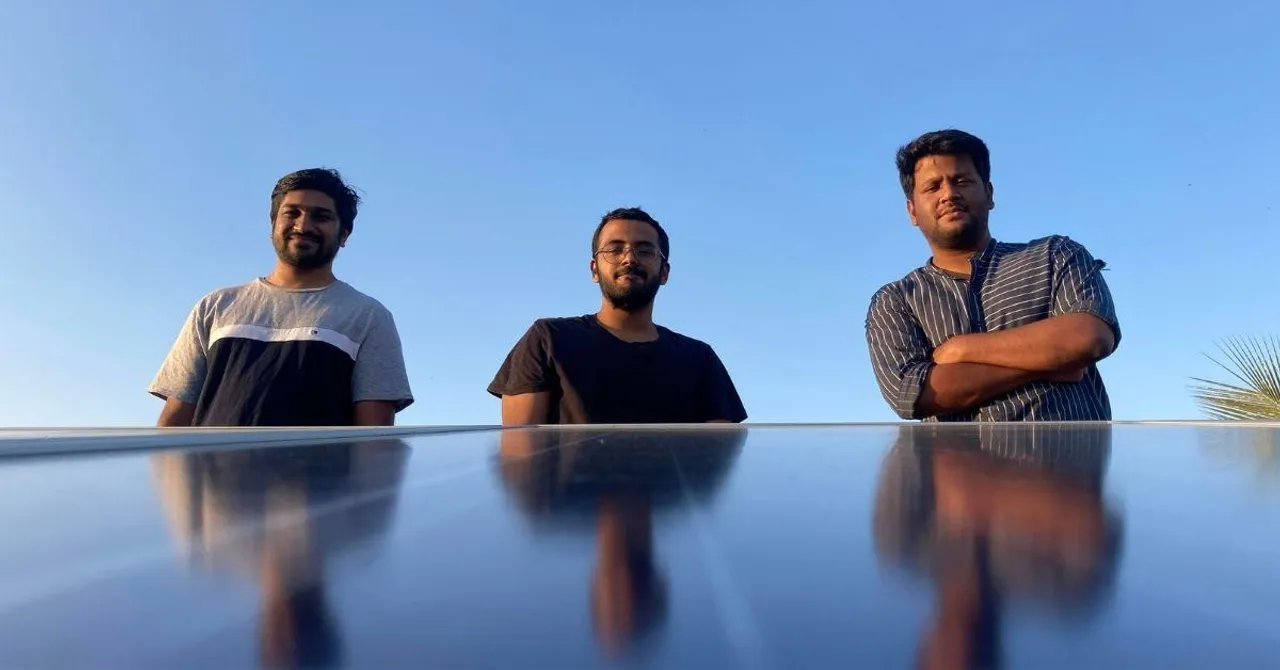
It was this everyday urban challenge that sparked the idea behind SundayGrids. Founded in Bengaluru by Mathew Samuel, Naseer Sathyala, and Tarun Joseph, the startup set out to make solar energy accessible without requiring users to install panels on their own rooftops.
Their solution was “digital solar” — fractional ownership of remotely hosted solar infrastructure through what the company calls “solar biscuits”.
Turning Solar Into a Shared Digital Asset
SundayGrids allows users to reserve portions of a shared solar plant online. Each “solar biscuit” represents a small unit of solar capacity that generates energy credits. These credits are then used to offset electricity bills, enabling consumers to benefit from solar energy without owning physical infrastructure.
The model addresses several barriers that have historically limited rooftop solar adoption in Indian cities.
“There are many reasons why people don’t install solar panels in their homes,” says co-founder Mathew Samuel. “Financial constraints, limited roof space, temporary accommodation, shaded buildings, or even emotional attachment to rooftops — digital solar creates an alternative for all these users.”
Instead of investing in a personal rooftop system, users participate in centrally hosted solar plants operated by SundayGrids and its partners. Consumers can monitor generation, credits, and savings through a real-time digital dashboard.
The company began operations with small pilot systems in Bengaluru. One of its earliest projects, a 5 kW residential installation in RT Nagar, generated roughly 300 kWh of electricity each month over a projected 20-year lifespan.
What started as an experiment in shared clean energy has since scaled significantly.
Scaling Shared Solar Across India
When SundayGrids last spoke publicly about its operations in 2023, the company managed roughly 500 kW of solar capacity. By 2026, that figure has grown to 3.5 MW, driven largely by retail participation from domestic consumers across India.
The platform has now offset nearly 18,000 power bills nationwide and facilitated close to two crore units of power credits, according to the founders.
While the initial user base consisted largely of individual households, the company is increasingly seeing demand from urban commercial consumers — particularly offices operating within leased commercial complexes.
“These businesses often don’t own the rooftops or are only in a building for a few years,” says Mathew. “Digital solar becomes attractive because they can still participate in renewable energy without installing infrastructure.”
SundayGrids has also begun working with utilities and public institutions including BESCOM, Kerala State Electricity Regulatory Commission, and other state power stakeholders on distributed energy systems and regulatory ecosystem development.
Building the Foundation for Peer-to-Peer Energy
The startup’s evolution is now extending beyond shared solar ownership into broader decentralised energy infrastructure.
A key area of work involves collaborations with the Ministry of Power and the Ministry of New and Renewable Energy around emerging digital energy frameworks, including the India Energy Stack — a developing interoperable architecture intended to connect utilities, smart meters, EV chargers, batteries, and distributed renewable assets.
Within this ecosystem, SundayGrids is piloting peer-to-peer energy trading models.
The idea is simple: households or entities generating surplus solar power can digitally sell that energy to consumers elsewhere who want access to green electricity.
The company is currently building pilot infrastructure in Delhi to test this model between distributed consumers.
Mathew compares the evolution of energy systems to the evolution of computing.
“We moved from large mainframe computers to personal computers and eventually to cloud computing,” he explains. “Energy is undergoing a similar shift — from large thermal plants to rooftop solar, and now toward cloud-based distributed energy systems.”
According to the founders, digital solar can eventually become an “operating system” on top of which multiple clean energy applications are built.
The Next Layer: Digital Batteries and EV Integration
SundayGrids is also experimenting with another emerging concept — “digital batteries”.
Instead of owning an individual home UPS or battery system, users could reserve fractional capacity within a centrally managed battery infrastructure. This could help consumers optimise electricity consumption based on time-of-day tariffs, storing cheaper electricity and using it during peak pricing hours.
The concept also connects with future vehicle-to-grid systems, where EV batteries themselves become decentralised energy storage assets capable of supplying electricity back to the grid.
The company already allows users to offset EV charging costs using their digital solar credits, regardless of where they charge in the country.
As India’s electricity ecosystem becomes increasingly decentralised and software-driven, platforms like SundayGrids are positioning themselves at the intersection of renewable energy, fintech, and digital public infrastructure.
Reimagining Urban Sustainability
At its core, SundayGrids is attempting to solve a structural urban problem: how to make renewable energy accessible in dense cities where ownership of physical infrastructure is fragmented.
By separating solar access from rooftop ownership, the company is enabling renters, apartment residents, leased commercial offices, and distributed consumers to participate in the clean energy transition.
The founders believe this model could play a significant role in future urban sustainability systems, especially as India expands EV adoption, distributed storage, smart grids, and renewable energy integration.
Rather than treating solar as a static rooftop asset, SundayGrids is building toward a future where energy becomes shareable, tradable, and digitally networked — much like the internet itself.
Share Your Story Today, Shape Viksit Bharat Tomorrow
Got an idea, innovation, or experience that's making a difference? Share your story now and ignite India's transformation because your voice can drive the future forward!
Disclaimer:
Features ‘as is’ submissions and neither constitutes endorsement, certification, recommendation, or validation by NITI Aayog nor makes NITI Aayog liable in any manner.
Resources to Replicate This Idea
BUILD YOUR OWN INTERVENTION
Handpicked stories tailored just for you
Explore stories that inspire, inform, and ignite new ideas across tech, innovation, and real-world impact

18,000+ Datasets, 2.5 Million Documents: How Frontier AI Is Making Public Data Accessible to India
FACTLY’s frontier AI projects, Dataful, Tagore AI, and GoPie, are transforming how India accesses, understands, and uses public data. With...
Read More