Helping India Eat Healthier: The AI App that Demystified 6 Lakh Food Labels in Its First Year
FactsScan, developed in Ahmedabad, is an app that explains the complex technical information on food labels in simple language. Using AI, it is making nutritional information accessible to all Indians.
Updated on: 18 June 2026

Sector

Solution

Technology

State of Origin
Impact Metrics
93K app downloads
as of April 2026.
9 states included
in core user base.
19,939 products
added to the database by active users.
The food we consume has a direct relationship with our lifestyle and, consequently, long-term health. While India’s packaged food market grows at an annual rate of 6.5%, the percentage of deaths due to lifestyle diseases has risen from 37.9% in 1990 to over 61% in the present. One important factor underlying these numbers is a lack of awareness regarding the nutritional content of various foods available on supermarket shelves.
Following FSSAI regulations, all licensed brands must display this information clearly on their labels. However, the contents of such labels are often presented in complex technical language, making them inaccessible for the average consumer. What digital tools do exist to bridge such gaps are tailored for Western contexts and hence provide little support in India.
Aiming to fill this gap in the market, health startup HustleHeaven Pvt. Ltd. has developed a digital solution: FactsScan. This app, available on the Google and Apple playstores, uses AI to explain the nutritional data of various Indian packaged foods—thus bridging the information asymmetry between consumers and sellers.
What does the app do?
FactsScan is based on two main technologies. The first of these is standard barcode scanning, which allows users to scan the labels attached to various food products. Once a label has been scanned, the app uses its second component, AI, to match the scanned data to a database and derive analytics.
During this phase, it gathers information on the nutritious profile, ingredient safety, and level of processing of each product. It also comes up with a health score (out of 100) and grade (A–E) for the product, as well as a list of healthier alternatives for the user to consider.
Finally, it shares these insights with the user in simple layman language. The process is almost instantaneous.
How widely is it used?
As of April 2026—within a year of launch—the app had been downloaded more than 93,000 times, suggesting that appromixately that many customers had used it at least once. Moreover, the January–March period had served an average of 30,000 active monthly users. This indicated a 31% user retention rate, which was higher than the 10–20% typical for health management apps.
Another sign of positive user engagement was that 19,939 products had been added to the app’s database by users and verified by the developers. This database already includes all major pan-Indian food brands and is in the process of adding local brands from Tier-2 and Tier-3 cities.
Most importantly, over the same months, a total of 6 lakh scans had been completed, indicating that the app was well utilized for its intended purpose. According to FactsScan’s co-founder Sweety Patel, the core users of the app are health-conscious families from urban and semi-urban regions—for example, parents purchasing snacks for their children, young professionals learning to build healthy diets, and fitness enthusiasts. This demographic recognizes that following the insights of the app could lower the chances of disease related to poor food consumption.
FactsScan is available across India but most of its users are from Gujarat, with sizable user bases in Maharashtra, the Delhi–NCR region, Karnataka, Tamil Nadu, Rajasthan, Madhya Pradesh, Uttar Pradesh, and Punjab.
In Gujarat, the FactsScan app has been recognized for its role in supporting public health by aligning with programs such as Obesity-Free Gujarat. Its incubation by the Gujarat University Startup & Entrepreneurship Council lent it further credence from the state government. The next step will be to secure national-level partnerships.
The path forward
To begin with, a data-sharing MOU with the FSSAI would be a vital step towards broadening the app’s scope for usage. By allowing it to access the organization’s registry of recognized food products, this MOU would formally integrate FactsScan as a consumer-facing initiative within the Eat Right India campaign. Policy recognition under the Ayushman Bharat Digital Mission (ABDM), and inclusion in health education at the school level, would further increase its legitimacy for the public.
From the perspective of research and development, FactsScan would also benefit from collaboration with institutions such as the Indian Council of Medical Research (ICMR). This would ensure that its AI algorithms reflect an up-to-date understanding of nutritional science.
These collaborations, along with seed funding, would help expand awareness to Tier-2 and Tier-3 cities, strengthen the app’s AI team, and increase the database to include 5,00,000+ Indian food products. With scaling, FactsScan can help India make more health-conscious rather than marketing-driven shopping decisions.
Share Your Story Today, Shape Viksit Bharat Tomorrow
Got an idea, innovation, or experience that's making a difference? Share your story now and ignite India's transformation because your voice can drive the future forward!
Resources to Replicate This Idea

BUILD YOUR OWN
Do you want to know how this innovator scaled their idea, how much it cost them, and what resources/partnerships they deployed?
Handpicked stories tailored just for you
Explore stories that inspire, inform, and ignite new ideas across tech, innovation, and real-world impact

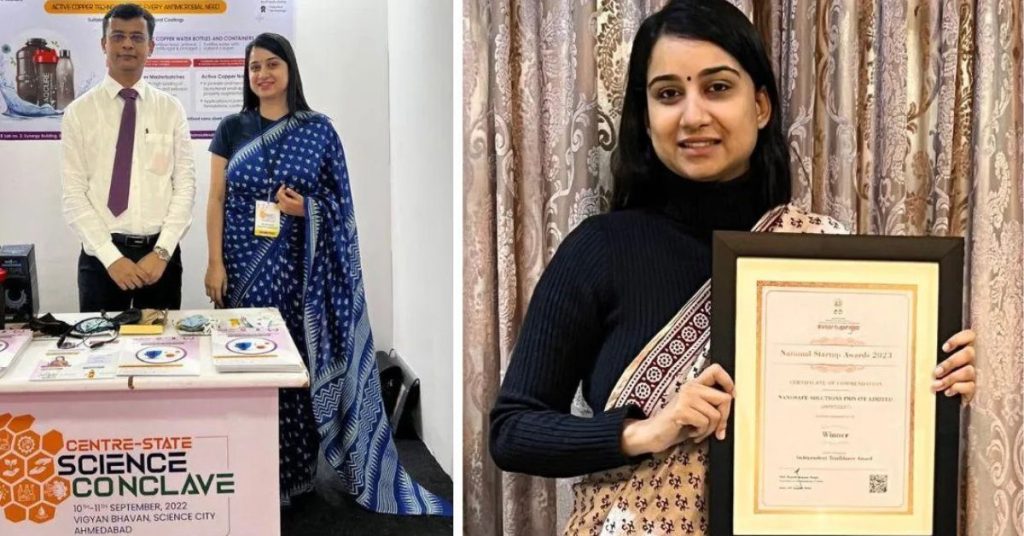
Inside the Copper Nanotechnology Powering 99.99% Antimicrobial Activity
An IIT Delhi innovation is harnessing active copper nanotechnology to deliver 99.99% antimicrobial activity across medical materials, reducing India's reliance...
Read More