This Turbine Converts Waste Heat From Factories Into Electricity And Is 30–40% Cheaper Than Its Competitors
Organic Rankine Systems, which convert waste heat from factories back into electricity, tend to be expensive in India as they rely on imported parts. Pune’s HrimTron Energy Systems has designed a turbine that can achieve this conversion at a fraction of the usual cost.
Updated on: 31 July 2026

Sector

Solution

Technology

State of Origin
Disclaimer:
Features ‘as is’ submissions and neither constitutes endorsement, certification, recommendation, or validation by NITI Aayog nor makes NITI Aayog liable in any manner.
Impact Metrics
~0.85 GWh/yr
projected in energy savings for India's steel industry.
~0.95 GWh/yr
projected in energy savings for India's glass industry.
~1.15 GWh/yr
projected in energy savings for India's cement industry.
100+ kW power generated
by a single mid-sized turbine installation.
India’s industries produce massive amounts of heat every year, released into the atmosphere in the form of high-temperature exhaust gases. Most of this heat comes from manufacturing, with the steel, cement, and chemical sectors—key components of national development—being major emitters. The energy for these sectors comes primarily from grid electricity, which, in turn, is heavily coal-based in India. As a result, heat emissions not only represent wasted resources for companies but also contribute to global warming, hindering the country’s sustainable development.
From a scientific perspective, the technology to convert this waste heat back into electricity—the Organic Rankine Cycle (ORC)—already exists. Until recently, it was relatively difficult to procure in India, being imported from foreign sources and hence coming with high costs.
However, this is no longer the case. HrimTron Energy Systems, of Pune, Maharashtra, has drawn on first principles to develop an indigenous prototype of the ORC. This device’s modular design and high affordability make it a promising solution amidst India’s drive for supply independence and clean energy.
The Āvega turbine
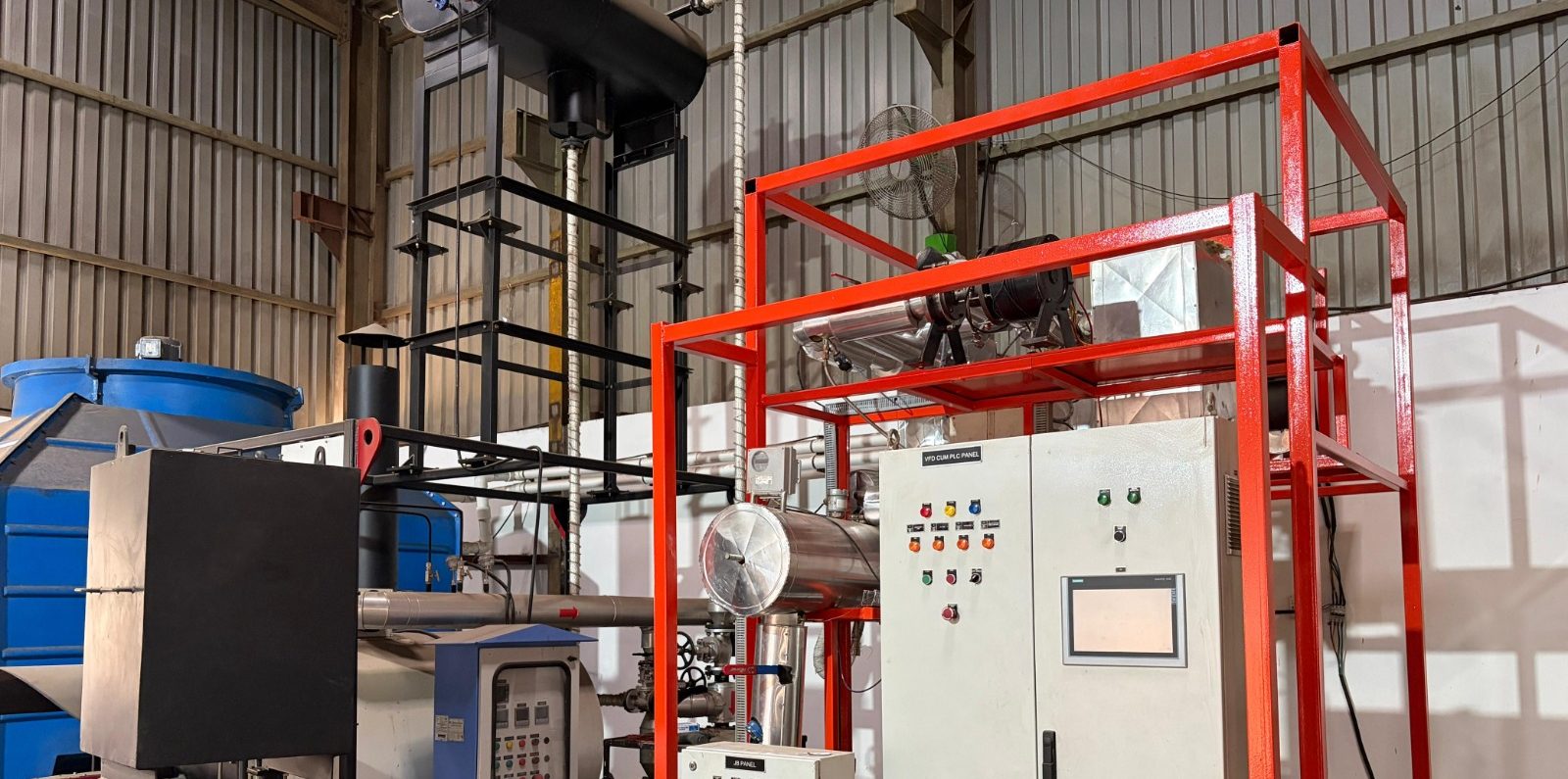
Recognizing that clean energy in India is still highly reliant on mechanical components produced abroad, co-founders Rutik Padamwar and Samyak Sawargaonkar resolved to eliminate the costs of imports with their new ORC model, hence making it simpler for Indian industrialists to adopt the technology. HrimTron’s innovation lies in a new turbomachine that converts factory heat into clean electricity: the Āvega turbine.
Developed with support from DST Nidhi Prayas, a Thoughtworks CSR grant, and Social Alpha, this turbine is highly adaptable to different industrial settings, from steel heating furnaces to biomedical waste incinerators. Moreover, it comes with a wide range of energy capacities (55–520 kWe), allowing it to be scaled for both mid-sized and large sources of industrial heat.
What impact has it had so far?
As India’s first domestically designed and patented Organic Rankine Cycle device, the Āvega turbine represents an opportunity for India to build an independent supply line for clean energy components. The prototype already offers a 30–40% cost advantage over comparable ORC systems imported from abroad. In recognition of these achievements, in 2025, HrimTron was ranked #16 on F6S’s Top Climate Tech Companies in India list.
Currently, the turbine model is in the early stages of development and deployment and is being tested in the steel and waste management sectors. HrimTron is also working to bring it to Western markets by building an MOU with European decarbonization partners.
According to the company’s calculations, a single mid-sized Āvega turbine installation can generate more than 100 kW of power, enabling manufacturers to save costs on grid electricity. With the more widespread adoption of this technology in mind, the company’s projections for future energy savings in India include ~0.95 GWh/yr in the glass industry, ~1.15 GWh/yr in the cement industry, and ~0.85 GWh/yr in the steel industry.
Such projections, if actualized in these and other sectors, could help lower carbon emissions across the board, supporting India’s commitment to the UN’s Sustainable Development Goals—all while minimizing reliance on Western pricing mechanisms.
Scaling the tech for the future
HrimTron’s work aligns strongly with existing national programs such as Make In India. Formal recognition of this by state governments, coupled with financial incentives—e.g., in the form of concessional debt for the first commercial deployments—would play a key role in increasing adoption in the early stages. Companies could be further incentivized to invest in heat-to-electricity technologies if these were part of clean energy frameworks such as the carbon credit system.
At the same time, partnerships with large manufacturers and other industrial entities would add legitimacy to innovations such as the Āvega turbine.
In general, the expansion of high-tech manufacturing is a slow process, requiring years before it can yield high revenues. However, the groundwork laid by this process can support multiple other sectors in the long term, ultimately reducing the costs of industry. At the same time, it can bolster India’s role as a leader in the Global South’s transition to more environmentally sustainable development.
Share Your Story Today, Shape Viksit Bharat Tomorrow
Got an idea, innovation, or experience that's making a difference? Share your story now and ignite India's transformation because your voice can drive the future forward!
Disclaimer:
Features ‘as is’ submissions and neither constitutes endorsement, certification, recommendation, or validation by NITI Aayog nor makes NITI Aayog liable in any manner.
Resources to Replicate This Idea
BUILD YOUR OWN INTERVENTION
Handpicked stories tailored just for you
Explore stories that inspire, inform, and ignite new ideas across tech, innovation, and real-world impact


Frontier AI Is Helping 30 Lakh Farmers in Maharashtra Build Climate Resilience
AI-powered agricultural advisories are transforming how 30 lakh farmers in Maharashtra access weather forecasts, crop guidance and market information. Through...
Read More